Training Benches

Training Benches

El Eslèk positions itself as a leading player in the deployment of cutting-edge educational solutions dedicated to technical and university-level education. In close collaboration with a network of strategic partners, we design and implement innovative learning ecosystems, including advanced educational systems, turnkey practical training laboratories, specialized training centers, and tailor-made training programs.

Driven by a vision centered on excellence and innovation, our mission is to contribute to the development of highly qualified professionals capable of operating efficiently and agilely in complex, rapidly evolving technological environments.

Training Benches

Active filters

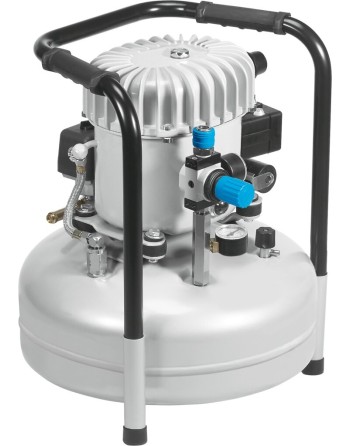
Silent Compressor, 8 bars, 50 l/min


Festo Logo

Reference : 91030


General Description

This oil-lubricated compressor is characterized by its exceptionally quiet operation, with a noise level of only 45 dB(A). It is ideally suited for use in educational environments, such as classrooms and laboratories. The unit is equipped with a pressure regulator and a water separator, ensuring a clean and stable air supply.


P2110105 – Measurement Techniques


Logo Phywe


Reference

  • P2110105 : Measurement Techniques

Principle

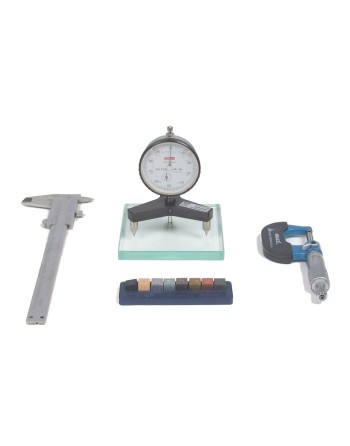
Measuring instruments such as vernier calipers, micrometers, and spherometers enable highly accurate measurements of lengths, thicknesses, diameters, and radii of curvature. This educational module demonstrates measurement procedures, as well as the concepts of measurement accuracy and reading precision.

Key Benefits

  • Provides a fundamental basis for practical science laboratory courses
  • Supports the acquisition of essential skills in measuring basic mechanical quantities
  • Raises awareness of measurement accuracy limitations
  • Encourages the combination of multiple measurements to determine a physical quantity
  • Enables determination of radii of curvature using a spherometer


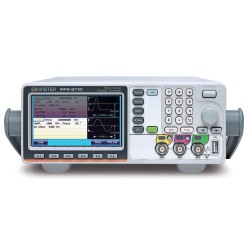
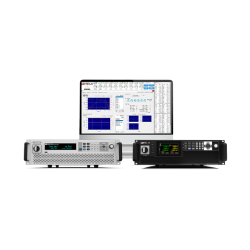
MFG-2000 Series - Multi-Channel Function Generator


Logo GW Instek


References

  • MFG-2110 – 10 MHz single-channel arbitrary function generator with pulse generator.
  • MFG-2120 – 20 MHz single-channel arbitrary function generator with pulse generator.
  • MFG-2120MA – 20 MHz single-channel arbitrary function generator with pulse generator, modulation, and power amplifier.
  • MFG-2130M – 30 MHz single-channel arbitrary function generator with pulse generator and modulation.
  • MFG-2160MF – 60 MHz single-channel arbitrary function generator with pulse generator, modulation, and 160 MHz RF signal generator.
  • MFG-2160MR – 60 MHz single-channel arbitrary function generator with pulse generator, modulation, and 320 MHz RF signal generator.
  • MFG-2230M – 30 MHz dual-channel arbitrary function generator with pulse generator and modulation.
  • MFG-2260M – 60 MHz dual-channel arbitrary function generator with pulse generator and modulation.
  • MFG-2260MFA – 60 MHz dual-channel arbitrary function generator with pulse generator, modulation, 160 MHz RF signal generator, and power amplifier.
  • MFG-2260MRA – 60 MHz dual-channel arbitrary function generator with pulse generator, modulation, 320 MHz RF signal generator, and power amplifier.
  • MFG-2220HM – 200 MHz dual-channel arbitrary function generator with pulse generator and modulation.


MFG-2000 Series Multi-Channel Function Generator

The MFG-2000 Series is a range of high-performance multi-channel arbitrary function generators designed for testing, measurement, and electronic development applications. These instruments provide excellent signal quality, advanced modulation capabilities, and flexible output configurations suitable for laboratory and industrial environments.


Key Features

  • Up to five output channels available.
  • Two high-performance arbitrary waveform channels with frequency ranges from 1 µHz to 10 / 20 / 30 / 60 / 200 MHz depending on the model.
  • RF channel (FG/ARB/MOD) with frequency up to 160 MHz or 320 MHz.
  • Pulse generator with a maximum frequency of 25 MHz.
  • Low-frequency power amplifier (up to 100 kHz) with 20 W output power.
  • True point-by-point arbitrary waveform generation:
    • MFG-2220HM: 250 MSa/s sampling rate with 125 MHz repetition rate.
    • Other models: 200 MSa/s sampling rate with 100 MHz repetition rate.
  • 14-bit resolution with 16k points memory depth.
  • Earth ground isolation between I/O terminals and the instrument chassis (except MFG-2220HM).
  • Built-in frequency counter up to 150 MHz with 8-digit frequency resolution.
  • Supported modulation types: AM, FM, PM, ASK, FSK, PSK, SUM, and PWM.
  • Built-in medical and automotive electronic waveforms (except MFG-2220HM).
  • Communication interfaces: USB Host, USB Device, and LAN (MFG-22XX models only).


GDB-03 Oscilloscope Education and Training Kit


Logo GW Instek


Key Features

  • Designed for oscilloscope demonstration and training
  • Compatible with GDS-3000 / GDS-2000A / MSO-2000A / GDS-2000E series
  • Integrated signal generator for real-world waveform simulation
  • 5 V DC power input with USB power support (Type-B interface)


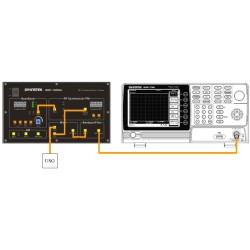
GRF-1300A – RF & Communications Trainer


Logo GW Instek


References

  • GRF-1300A : RF & Communication Training System

The GRF-1300A is a comprehensive RF and communication trainer designed for hands-on learning in academic and technical training environments. It enables students and instructors to explore fundamental and advanced RF concepts through practical experimentation and troubleshooting exercises.

  • Baseband Signal Generation: Sine, triangle, and square waveforms
  • Baseband Frequency Range: 0.1 Hz to 3 MHz
  • RF Frequency Range: 870 MHz to 920 MHz
  • Modulation Modes: AM and FM
  • Integrated Mixer and 2.4 GHz Bandpass Filter
  • Fault Simulation Capability:
    • 5 programmable On/Off switches
    • 5 test points
    • Simulates up to 8 fault conditions for troubleshooting training
  • USB Interface: Supports remote control and system integration

The GRF-1300A provides a practical and interactive platform for understanding RF signal generation, modulation techniques, frequency conversion, and diagnostic procedures.


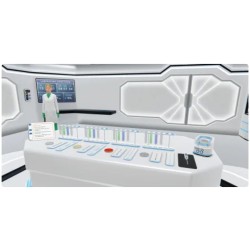
Chemistry Lab Simulator


Constructer Tech Logo


Chemistry Laboratory – Experiment Portfolio

Our chemistry laboratory includes a comprehensive range of experiments:

  1. Acid–Base Titration with Indicators: The Acidity of Beverages
  2. Acid–Base Experiment
  3. Acid–Base Titration with a pH Meter: Identification of an Unknown Acid Solution
  4. Atomic Structure: Flame Test for Metals
  5. Boiling Point Elevation
  6. Bonding and Structure: Conductivity of Ionic vs. Covalent Substances
  7. Bonding in Solids
  8. Buffer Design
  9. Buffering Activity
  10. Chemical Equilibrium: Iron(III) Thiocyanate Complex Ion
  11. Copper Content of Brass
  12. Determining the Copper Content of a Brass Sample
  13. Determining the Heating Curve of Water
  14. Displacement Reactions Between Metals and Their Salts
  15. Enthalpy Change of Solutions
  16. Equilibrium Constant: Iron Thiocyanate Complex Ion
  17. Identification of Anions
  18. Identification of Cations
  19. Introduction to Organic Chemistry
  20. Ion Responsible for the Wavelength of Maximum Absorption
  21. Ionic & Covalent Bonds
  22. Kinetics: Effect of Concentration on Reaction Rate
  23. Molecular Shape Modeling
  24. Paper Chromatography
  25. Precision and Accuracy in Laboratory Measurements
  26. Rate Laws
  27. Redox Titration: Determination of H₂O₂ Concentration
  28. Separating Mixtures
  29. Separation by Extraction
  30. Separation Using a Separatory Funnel
  31. Separation by Simple Distillation
  32. Solubility in Solid–Liquid Systems
  33. Solubility of Ca(OH)₂ in Solid–Liquid Systems
  34. Solubility of KNO₃ in Solid–Liquid Systems
  35. Testing for Functional Groups in Organic Compounds
  36. The Hydrogen Emission Spectrum
  37. The Law of Conservation of Mass
  38. The Law of Definite Proportions: Empirical Formula of a Metal Oxide
  39. The Law of Definite Proportions: Formula of a Hydrate
  40. UV–Vis Spectrophotometry and the Beer–Lambert Law


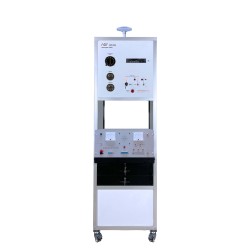
ADF-100A - ADF (Automatic Direction Finder) systems simulator


Logo ADF Didactic

Reference ADF-100A


Our simulator enables trainees to gain hands-on experience with ADF (Automatic Direction Finder) systems. It provides realistic practical training using original aircraft ADF equipment, configured to deliver an authentic learning environment that closely reflects real operational conditions.

The simulator’s design allows trainees to develop a thorough understanding of ADF systems and to adopt a structured and methodical approach to testing, fault diagnosis, and troubleshooting procedures. We carefully analyze our customers’ training requirements and tailor our solutions to meet their specific educational objectives.

The training unit is delivered fully assembled and ready for use, including all required components such as antennas, transmitters, receivers, indicators, and complete cabling.


Optional equipment:

  • ADF test set
  • NAV/COM ramp tester

Please contact us for further information regarding available test equipment.


GSP-730 - Spectrum Analyzer 150 kHz ~ 3 GHz


Logo GW Instek


Reference

  • GSP-730 : Spectrum Analyzer 150 kHz ~ 3 GHz

Key Features

The GSP-730 is a compact and cost-effective spectrum analyzer designed for RF education, laboratory testing, and basic communication signal analysis. Covering a wide frequency range up to 3 GHz, it provides essential measurement capabilities for both academic and industrial environments.

  • Frequency Range: 150 kHz to 3 GHz
  • Autoset Function: Automatic configuration for quick signal detection
  • Noise Floor: ≤ –100 dBm
  • Resolution Bandwidth (RBW): 30 kHz, 100 kHz, 300 kHz, 1 MHz
  • Measurement Functions: ACPR, CHPW (Channel Power), OCBW (Occupied Bandwidth)
  • Display Traces: Up to 3 traces in different colors
  • Split Window Function: Simultaneous display of multiple measurement views
  • Limit Line Function: Pass/Fail evaluation against defined limits
  • Remote Control Software: PC-based instrument control
  • Training Support: Presentation materials available for educational courses
  • Interfaces: USB Device, USB Host, RS-232C

The GSP-730 delivers reliable RF performance and intuitive operation, making it an ideal solution for RF training, troubleshooting, and entry-level spectrum analysis applications.


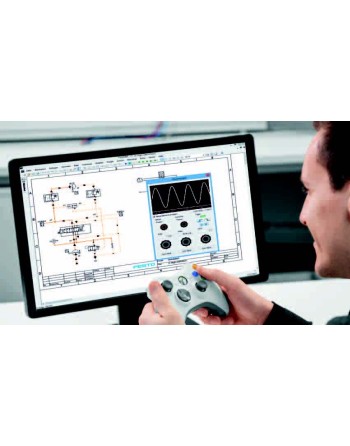
FluidSIM® - Simulation Sofware


Festo Logo


Floating Licenses

  • 8198189 – FluidSIM Pneumatics, Floating License
  • 8198190 – FluidSIM Hydraulics, Floating License
  • 8198191 – FluidSIM Electrical Engineering, Floating License


Learning Objectives

  • Design and develop circuit diagrams
  • Identify and prevent design errors
  • Simulate and optimize circuit solutions
  • Understand structured solution development in automation engineering
  • Analyze the impact of technical modifications within a system architecture through real-time simulation


Key Benefits

  • High-definition interactive simulation
  • Integration of virtual and real measuring instruments
  • Extensive component library
  • Intuitive user interface
  • Comprehensive teaching materials included


FluidLab-PA Closed-Loop


Festo Logo

Reference : 8208217


Step-by-Step Exploration of the Fundamentals of Control Engineering

FluidLab-PA Closed-Loop is an intuitive software platform designed to explore and demonstrate the core principles of control engineering in a structured and practical way.

The software enables measurement, control, and regulation of pressure, temperature, flow, and level control loops using either real or simulated hardware systems, including EduKit PA, MPS PA Compact Workstation, MPS PA Stations, and EDS Water Management systems.


Learning Objectives

  • Master the fundamental principles of control engineering
  • Apply control technology concepts in practical scenarios
  • Integrate hardware components into a complete control system
  • Customize system parameters (sensor values, signal attenuation, simulation modes)
  • Analyze and interpret process data

Key Advantages

  • Provides a realistic and interactive platform that immerses learners in real-world process control scenarios
  • Advanced visualization of complex continuous control and regulation systems
  • Enhances engagement through graphical documentation display and real-time system feedback
  • Customizable parameters to support individualized learning and experimentation
  • Seamless integration with physical training systems for hands-on experience


FluidLab-PA Process


Festo Logo

Reference : 8208223


Introducing Students to Process Engineering with Real or Simulated Training Systems

FluidLab-PA Process is designed to provide an accessible introduction to process engineering using either real or simulated learning systems.

The software supports commissioning, operation, and monitoring of EduKit PA as well as selected workstations from the MPS PA and EDS Water Management systems. It promotes a solid understanding of process control engineering principles through structured and application-oriented learning.


Learning Objectives

  • Understand plant behavior, process operations, and different control strategies
  • Develop commissioning skills to ensure safe and efficient system operation
  • Monitor machine status, manage alarms, and analyze deviations
  • Program process sequences using electrical circuit diagrams, logic diagrams, and GRAFCET

Key Advantages

  • Interactive training that reinforces theoretical knowledge through practical application
  • Redesigned interface ensuring a consistent operating concept across all hardware systems
  • Seamless switching between real and simulated systems, enabling remote learning and curriculum expansion without additional hardware investment
  • Modern software architecture allowing easy integration of additional equipment and updates


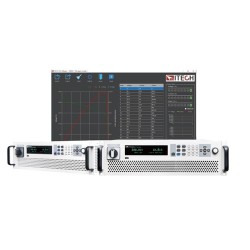
FCS3000 - Fuel Cell Simulation Software


Logo ITECH


Reference

FCS3000 Fuel Cell Simulation Software


The FCS3000 Fuel Cell Simulation Software, when used in combination with the IT6000C bidirectional DC power supply and the IT6000B regenerative power system, enables accurate simulation of fuel cell stack polarization curves.

The system supports output voltages up to 2250 V and scalable power up to 1152 kW, meeting the requirements of high-power fuel cell simulation applications.

FCS3000 is specifically designed to replace real fuel cell stacks in laboratory environments, providing a highly efficient and flexible simulation platform for hydrogen energy and hybrid propulsion system research.

By eliminating the need for physical fuel cell stacks, the software helps reduce testing costs, simplify platform setup, and avoid performance degradation commonly associated with repeated experimental use of real fuel cell systems.

With its intuitive user interface and comprehensive data reporting capabilities, FCS3000 provides reliable experimental support for both practical testing and theoretical research.


Key Features

  • Automatic wide-range output with voltage up to 2250 V
  • Scalable fuel cell simulation power up to 1152 kW
  • User-defined fuel cell polarization curve with up to 4096 programmable points
  • Support for .csv file import for customized curve simulation
  • Data storage and export functions for analysis and reporting
  • Graphical software interface with real-time display of output voltage, current, and power


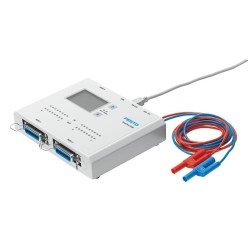
EasyPort Interface


Festo Logo

Reference : 548687


Technical Features

  • 16 digital inputs/outputs
  • 4 analog inputs and 2 analog outputs
  • 8 digital inputs/outputs each wired to a 24-pin SysLink connector (IEEE 488 compliant)
  • Digital input 0 on Port 1 and Port 2 configurable as high-speed counter input
  • Counter inputs operable with voltage levels from 5 to 24 V DC
  • Analog I/O connected via a 15-pin Sub-D connector
  • 12-bit analog-to-digital conversion resolution
  • Sampling rate: 0.5 kHz
  • Data communication via RS232 serial interface or USB
  • Transmission rate: 115.2 kbaud

Up to four EasyPort USB modules can be connected simultaneously via a USB hub or four separate USB ports on a PC. Each module must be assigned a unique address.

For signal exchange between EasyPort USB and PC software, the EzOPC OPC server or the EasyPort USB ActiveX control component is available.


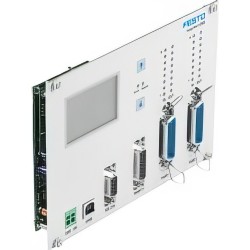
EasyPort Interface, 19" version


Festo Logo

Reference : 8021637


Technical Features

  • 16 digital inputs/outputs
  • 4 analog inputs and 2 analog outputs
  • 8 digital inputs/outputs each wired to a 24-pin SysLink connector (IEEE 488 compliant)
  • Digital input 0 on Port 1 and Port 2 configurable as high-speed counter input
  • Counter inputs operable with voltage levels from 5 to 24 V DC
  • Analog I/O connected via a 15-pin Sub-D connector
  • 12-bit analog-to-digital conversion resolution
  • Sampling rate: 0.5 kHz
  • Data communication via RS232 serial interface or USB
  • Transmission rate: 115.2 kbaud

Up to four EasyPort USB modules can be connected simultaneously via a USB hub or four separate USB ports on a PC. Each module must be assigned a unique address.

For signal exchange between EasyPort USB and PC software, the EzOPC OPC server or the EasyPort USB ActiveX control component is available.


SAS1000 - Solar Array Simulation Software


Logo ITECH


References

SAS1000 Solar array software for IT6500C/IT6000B/IT6000C/IT-M3600

SAS1000L Solar array software for IT6500C/IT6000B/IT6000C/IT-M3600 (power ≤15kW)

SAS1000M Solar array software for IT6500C/IT6000B/IT6000C/IT-M3600 (multi-channel)


ITECH introduces its latest high-speed, high-performance photovoltaic simulation solution. When combined with high-power DC power supplies, the SAS1000/L solar array simulation software accurately reproduces solar array I-V curves, with output voltage up to 2250 V and scalable system power up to 10 MW.

The system delivers fast dynamic response, excellent control accuracy, high repeatability, outstanding stability, and precision performance. It features built-in simulation models compliant with EN 50530, Sandia National Laboratories PV model, NB/T 32004, CGC/GF004, and CGC/GF035.

Users can easily configure test regulations, material types, Vmp, Pmp, and other parameters to simulate I-V curve characteristics and automatically generate test reports. The software is ideal for static and dynamic maximum power point tracking (MPPT) performance testing of photovoltaic inverters.


Product Features

  • Automatic wide-range output, with voltage up to 2250 V
  • Scalable power up to 10 MW
  • Built-in I-V curve mathematical model for accurate solar array simulation
  • Simulation of various solar cell technologies (monocrystalline, polycrystalline, thin-film), including Fill Factor configuration
  • I-V curve simulation under varying temperature and irradiation conditions
  • Shading simulation for solar panels (e.g., cloud or tree shadow scenarios)
  • Static and dynamic MPPT efficiency testing
  • Built-in EN 50530, Sandia National Laboratories PV model, NB/T 32004, CGC/GF004, and CGC/GF035 test programs with automatic report generation
  • Graphical user interface with real-time MPPT status monitoring
  • Automatic programming of up to 100 I-V curves via Voc, Isc, FF, Pm, and other parameter points
  • Support for 100 × 128-point curves and 4096-point high-resolution programming
  • Adjustable output impedance
  • Independent edge configuration for multiple operating modes, with adjustable rise and fall times
  • Seamless bidirectional current switching for rapid cell charge and discharge simulation/li>
  • Built-in DIN 40839 and ISO 16750-2 compliance
  • Standard USB, RS232, GPIB, and LAN (LXI compliant) interfaces
  • Support for up to 20 solar power supplies for multi-channel MPPT testing

Applications

  • Design and validation of PV inverter MPPT circuits and algorithms
  • Verification of inverter MPP voltage range and full-load MPP voltage range/li>
  • Validation of static maximum power tracking efficiency
  • Dynamic MPPT performance testing according to EN 50530, Sandia National Laboratories PV model, NB/T 32004, CGC/GF004, and CGC/GF035
  • Verification of inverter start-up voltage, maximum input voltage, maximum input current, and related electrical parameters
  • MPPT validation under partial shading conditions
  • DC terminal protection testing (OVP, OPP)
  • Validation of microgrid control centers and photovoltaic energy storage control functions
  • MPPT performance verification from sunrise to sunset operating conditions
  • Total and conversion efficiency testing of inverters when used with the IT9100 power analyzer


DCS Learning System (PCS neo)


Festo Logo

Reference : 8232218


Process Workstation

Process Equipment

  • Industrial stainless-steel piping
  • Polyethylene tank – 60.6 L (16 US gal)
  • Large acrylic column with sparger tube and stainless-steel baffle – 30.4 L (8.0 US gal)
  • Small acrylic column – 7.6 L (2.0 US gal)
  • High-capacity brass centrifugal pump – 0.75 kW (1 HP), 208 V
  • Medium-capacity brass centrifugal pump – 0.75 kW (1 HP), 208 V
  • Two SIMATIC G120 variable frequency drives – 0.75 kW
  • 2-way ball valve with manual lever, flow coefficient Kv = 59 m³/h
  • Manual ball valve
  • Check valve with flow coefficient Kv = 9.482 m³/h
  • 20 stainless-steel pressure tapping points
  • Emerson pneumatically actuated ball valve (12 mm / ½"), Kv = 5.16 (Cv = 6), control range 21–90 kPa (3–13 psi)
  • Festo VPPM digital proportional pressure regulator
  • Pressure gauge – 0–690 kPa (0–100 psi)
  • Rotameter – 0–80 LPM (0–20 US gpm)
  • Festo VZWM solenoid valve – 24 V DC
  • Festo VZXF pneumatically piloted angle-seat control valve

Control Components

  • SIMATIC IPC BX-32 with SIMATIC PCS neo V6.0 license and database
  • Siemens CPU410-5H
  • SIMATIC ET 200SP HA IM155-6 PN interface module
  • SIMATIC ET 200SP HA BA 2xRJ45 bus adapter with dual RJ45 ports
  • SIMATIC ET 200SP HA DI 16x24VDC digital input module with channel diagnostics
  • SIMATIC ET 200SP HA AI 16xI 2-wire HART analog input module, 16-bit, with channel diagnostics
  • SIMATIC ET 200SP HA AQ 8xI HART analog output module, 16-bit, with channel diagnostics
  • SCALANCE XC208 managed Layer 2 industrial Ethernet switch
  • Pepperl+Fuchs PPA Ethernet-APL / Profibus PA switch
  • Siemens IPC BX-32A
  • 22” flat panel display (IFP2200)
  • Electronically configurable signal tower with 9 segments and acoustic module
  • SITOP PSU8200 stabilized power supply – 24 V / 20 A
  • SITOP PSE200U 4-channel electronic protection module

Instrumentation (Endress+Hauser)

  • PTC31B pressure switch (IO-Link®)
  • PMD75B differential pressure transmitter (high range, PROFINET over Ethernet-APL, Bluetooth®, Heartbeat Technology)
  • TH15 temperature transmitter with Pt100 RTD (HART®, Bluetooth®)
  • TH55 temperature transmitter with Type J thermocouple (HART®, Bluetooth®)
  • 5P3B15 electromagnetic flowmeter (HART®, WLAN, Heartbeat Technology)
  • FMR51 + FHX50 radar level transmitter with remote display (Bluetooth®, Heartbeat Technology)
  • PMD75B + DA63M differential pressure transmitter with 3-valve manifold for Venturi flow measurement (low range, HART®, Bluetooth®, Heartbeat Technology)
  • PMD75B differential pressure transmitter for level measurement (low range, PROFIBUS PA, Bluetooth®, Heartbeat Technology)

Gas (Air) Control

  • Festo SPAU pressure sensor with display (IO-Link®)
  • Festo VEMD mass flow meter with display and dynamic control (2–100 LPM, Modbus®)
  • Festo MS6N precision pressure regulators – 5–255 kPa (0.7–37 psi), flow rate 1098 LPM (38.8 scfm)


TFM-500 – Thermodynamic Cycles of Reciprocating Machines


Logo ADF Didactic

Référence : TFM-500


General Description

The TFM-500 is a complete educational system designed for studying thermodynamic cycles of reciprocating machines, particularly compressed air generation systems. It enables analysis of a two-stage compressor and visualization of compression processes using a p-V diagram.

Applications

  • Technical and engineering education
  • Industrial pneumatic system training
  • Energy and mechanical engineering laboratories
  • Thermodynamic cycle demonstrations

Main Features

  • Recording characteristics of a two-stage compressor
  • Visualization of compression processes (p-V diagram)
  • Measurement of pressure, temperature, and electrical power
  • Determination of intake volumetric flow rate
  • Intercooling between compression stages
  • Touchscreen control with intuitive interface
  • PLC-based system control
  • Remote operation via integrated router (up to 10 devices)
  • Internal data storage via USB


MecLab® - Basics to Mechatronic


Festo Logo

Reference : 549786


Automation Training System

Automated systems are now an integral part of nearly every industry. With the MecLab® system from Festo Didactic, students gain a practical understanding of how automation technology is applied in real production environments.

The three MecLab stations represent simplified models of typical production processes found in modern automated manufacturing facilities. They provide a realistic yet accessible platform for learning the fundamentals of industrial automation.


Learning Objectives

MecLab® covers a wide range of topics and competencies, including:

  • Introduction to key terminology in industrial automation
  • Planning, development, and implementation of automated systems
  • Technical documentation practices
  • System modeling and simulation development
  • Open-loop and closed-loop control systems
  • Pneumatic and electrical actuators, sensors, and controllers
  • Use of the computer as a tool for programming and simulation


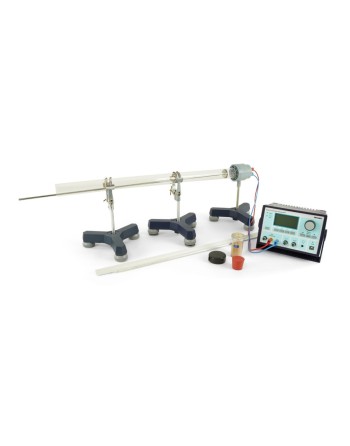
P2150605 - Kundt’s Tube with Digital Function Generator for Measuring the Speed of Sound


Logo Phywe


Reference :

P2150605


This complete educational system is designed to measure the speed of sound in air using a Kundt’s tube and a digital function generator. The experiment demonstrates the formation of standing waves inside an air column and allows direct visualization of pressure nodes through the movement of cork powder inside the glass tube.

When the sound frequency matches one of the natural frequencies of the air volume inside the tube, a standing wave is formed. The cork powder then arranges itself into a pattern showing pressure nodes and areas of maximum vibration. Based on the length of the air column and the number of observed pressure nodes, the speed of sound can be calculated for different natural frequencies.


Educational Applications

This educational setup is particularly suitable for physics laboratories in secondary schools, universities, technical institutes, and higher education institutions.


Possible Experiments

  • Measurement of the speed of sound in air
  • Study of longitudinal waves
  • Observation of standing waves
  • Analysis of the natural frequencies of an air column
  • Study of wavelength
  • Determination of pressure nodes
  • Study of natural vibrations
  • Influence of air column length on resonance frequency

Educational Objectives

  • Determine the speed of sound in air for different air column lengths
  • Understand the relationship between frequency, wavelength, and propagation speed
  • Visualize nodes and antinodes in a standing wave
  • Compare different resonance frequencies
  • Develop experimental and measurement skills


Fuel Cell Trainer


Logo Heliocentris

Reference : FCT-693


The Fuel Cell Trainer is a comprehensive educational system designed to teach the fundamental engineering principles of PEM fuel cell technology. With extensive experimental capabilities and thoroughly revised instructional materials, including predefined experiments, it provides a complete and structured learning solution.

All components of the fuel cell system are individually displayed, ensuring maximum transparency and clarity during instruction. Integrated parameter displays allow real-time monitoring of operating conditions, enhancing both theoretical understanding and practical insight.

Thanks to its modular design, the Fuel Cell Trainer can be easily adapted to different educational levels, from introductory courses to advanced engineering programs. The system is suitable for users with limited prior experience. The included software supports computer-assisted measurement, data acquisition, and experimentation, enabling precise analysis and documentation of results.

Key Features

  • Redesigned system architecture for enhanced engineering education
  • USB interface for simple plug-and-play installation
  • Improved instructional materials for both instructors and students
  • Advanced experimentation software with integrated data acquisition
  • Quick-start guides for fast setup and efficient operation

Learning Objectives

  • Understanding the structure and operating principles of PEM fuel cell systems
  • Application of thermodynamic fundamentals
  • Analysis of characteristic curves and efficiency performance
  • Fundamentals of system integration and power electronics

Areas of Application

Suitable for lectures and practical training in:

  • Electrical Engineering
  • Energy Engineering
  • Process Engineering
  • Mechanical Engineering
  • Automotive Engineering


25274-88 - Student TESS Set Heat 1 – Advanced Physics


Logo Phywe


Reference :

25274-88


General Presentation

This educational heat set is designed to investigate the fundamental principles of heat through a complete range of practical experiments. It covers phenomena ranging from the expansion of liquids and gases to boiling point elevation.

Designed for advanced physics education, this set provides a complete solution for conducting educational experiments related to temperature, heat transfer, thermal energy, phase changes, and solutions.


Educational Applications

The set enables 21 student experiments covering the following topics:

  • Thermal equilibrium and temperature measurement
  • Thermal expansion
  • Heat transfer
  • Thermal energy
  • Change of state
  • Solutions

Benefits

  • Complete ready-to-use equipment set
  • Minimal preparation time
  • Easy and fast experiment setup
  • Designed in accordance with educational curricula
  • Comprehensive coverage of key heat-related topics


200 W Photovoltaic Training System


Hera_carre.jpg

Reference 530.801.000


For Off-Grid and Grid-Connected Applications

The 200 W Photovoltaic Training System is designed to provide a comprehensive understanding of solar power generation and photovoltaic system operation. It enables students and trainees to explore the fundamental principles of solar energy production while gaining hands-on experience with real measurement and analysis tools.

This educational platform allows users to study the electrical characteristics of photovoltaic modules, including the determination of the Maximum Power Point (MPP). It also demonstrates how various environmental factors influence the performance and efficiency of solar panels, such as:

  • Partial shading of the module
  • Solar incidence angle
  • Panel inclination
  • Light intensity
  • Module temperature

The system enables practical experiments and measurements in both DC and AC circuits, allowing users to observe the behavior of the photovoltaic system under different environmental and operating conditions.

Measurement data can be easily recorded, analyzed, and visualized on a computer using the included dual-channel digital multimeter with USB interface, together with the supplied data acquisition software. This allows users to generate graphs, compare results, and better understand the relationship between environmental conditions and energy production.

This training system is particularly suitable for technical education, vocational training, engineering programs, and renewable energy laboratories.

Electrical consumption (full lighting configuration):
3'200 W


MPS®400-1 - Modular Production System i4.0


Festo Logo


MPS 400-1 System – Festo Didactic

Comprehensive, modular learning factory for advanced education in mechatronics, automation, and Industry 4.0

The MPS 400-1 system developed by Festo Didactic is a fully integrated and highly realistic training solution designed to replicate the structure, behavior, and complexity of modern industrial production systems. Based on the modular and industry-proven MPS 400 platform, this learning factory provides a complete environment for teaching and experimenting with the core technologies of Industry 4.0.

The system is composed of three main stations — Distribution Pro, Assembly, and Inline Sorting — forming a coherent and fully automated production line. Each station represents a key stage of industrial manufacturing, from raw material handling to assembly and quality control.

Thanks to its modular architecture, the MPS 403-1 system can be extended with one or two additional stations, such as the Measure Pro station for industrial metrology and the Robotic Assembly station for advanced robotics applications. This scalability allows educators to adapt the system to different levels of training, from basic automation to highly advanced smart factory scenarios.

All stations are interconnected through modern industrial communication protocols, including OPC UA, IO-Link®, PROFINET, and TCP/IP. The entire system is orchestrated by a didactic Manufacturing Execution System (MES), enabling real-time production control, order management, traceability, and data-driven decision-making. 

Integrated Technologies

  • Didactic MES system with web-based interface
  • RFID technology for product traceability
  • IO-Link smart sensors for advanced diagnostics
  • OPC UA and PROFINET for industrial communication
  • IIoT solutions with camera and embedded systems
  • Machine learning algorithms for process optimization
  • Modern HMI systems including touchscreen and web interfaces
  • Augmented Reality (AR) support for interactive learning

Applications

The MPS 403-1 system is suitable for a wide range of educational and industrial training environments:

  • Universities and engineering schools
  • Technical and vocational training centers
  • Industry 4.0 laboratories and innovation hubs
  • Corporate training programs
  • Advanced research and development projects

By combining modular hardware, modern software, and cutting-edge industrial technologies, the MPS 403-1 system provides a future-proof platform for training the next generation of engineers and technicians.

ACS-102 - Cooling Tower Training Unit


Logo ADF Didactic

Reference : ACS-102


General Description

The ACS-102 is a wet cooling tower system designed to replicate industrial cooling processes using forced draft ventilation. This complete educational unit enables detailed study of thermal and air-water interactions within a cooling column.

The system includes a full water circuit with pump, filter, valve, and spray nozzle, along with a radial fan and a three-stage electric heater with thermostat control.

Applications

  • Technical and university education
  • Heat transfer studies
  • Psychrometric analysis
  • HVAC and energy engineering training

Key Features

  • Wet cooling tower with interchangeable column
  • Optional interchangeable wet deck surfaces
  • Forced ventilation via radial fan
  • Airflow control via throttle valve
  • Demister to reduce water losses
  • Make-up water tank for compensation
  • Display of temperature, pressure, flow rate, humidity
  • ADF software for USB data acquisition (Windows)

Educational Capabilities

Process Analysis

  • Full industrial process simulation
  • Evaporation process observation
  • Water distribution visualization


DM-102 – Pump Variations Training System


Logo ADF Didactic

Reference : DM-102


Overview

The DM-102 Pump Variations Training Set is a comprehensive educational system designed for the study and analysis of various pump types and their operating principles.

Educational applications

  • Study of centrifugal and positive displacement pumps
  • Comparison of pump types
  • Series and parallel operation
  • Pipeline pressure losses
  • Performance measurement (flow, pressure, torque, power)

Integrated pump types

Centrifugal pumps

Two centrifugal pumps allowing individual, series, or parallel operation.

Piston pump

Positive displacement pump for controlled flow experiments.

Side-channel pump

Self-priming, capable of handling gases depending on liquid level.

Drive system

Each pump is driven by a three-phase AC motor. Speed control is achieved via frequency converters.

Additional position

One free position with reversible motor allows integration of additional pumps.


FM-150.08 - Bernoulli’s Theorem and Flow Measurement


Logo ADF Didactic

Reference : FM-150.08


Overview

The training unit is designed to demonstrate Bernoulli’s theorem and to perform flow measurement calculations using a variety of flow measurement devices.

Features

This self-contained system includes its own storage tank, integrated pump, and support frame, allowing it to operate independently without the need for external equipment.


FM-204 - Energy Losses in Piping Elements


Logo ADF Didactic

Reference : FM-204


Overview

The FM-204 is a training unit designed for the comprehensive study of pressure losses in piping systems. It enables the visualization and analysis of hydraulic resistance effects caused by pipe elements such as elbows, valves, and cross-section variations.

With its modular design and interchangeable components, this system is ideal for technical and higher education laboratories.

When water flows through a piping system, hydraulic resistances lead to pressure losses, particularly at fittings, valves, and other pipe components.

The FM-204 unit is designed to study and visualize these pressure losses in various piping elements. This experimental setup enables the analysis of how different pipe geometries influence fluid flow.

Equipment Description

The FM-204 experimental unit consists of a pipe section incorporating several elements with different flow resistances, as well as contraction and expansion sections. A ball valve is also integrated into the system.

Pressure measuring points equipped with annular chambers are positioned upstream and downstream of the pipe elements to ensure accurate pressure measurements.

These measuring points can be connected in pairs to six tube manometers, allowing the determination of pressure losses across each piping element.

Educational Applications

- Study of major and minor pressure losses
- Flow analysis in different materials and pipe diameters
- Understanding pressure and flow behavior
- Practical training in measurement and instrumentation
- Fluid mechanics laboratory experiments


FM-300 – Open Wind Tunnel (Eiffel type)


Logo ADF Didactic

Reference : FM-300


The FM-300 is an open-circuit Eiffel-type wind tunnel designed for aerodynamic and fluid mechanics experiments. It enables accurate investigation of airflow behavior around stationary models.

Product Description

In the FM-300 wind tunnel, ambient air is drawn in and accelerated to create a controlled airflow around a model placed in a transparent measuring section. After passing the model, the air is decelerated in a diffuser and expelled by a high-efficiency axial fan.

The optimized nozzle design and flow straightener ensure a uniform velocity profile with minimal turbulence. Air speeds of up to 28 m/s can be achieved.

Key Features

  • Open-circuit Eiffel-type wind tunnel
  • Transparent closed measuring section
  • Uniform flow with low turbulence
  • Variable-speed, energy-efficient axial fan
  • Digital measurement of lift and drag forces
  • Inclined tube manometer for air velocity display
  • Wide range of accessories for extended experiments

Educational Applications

  • Lift and drag measurement
  • Pressure distribution analysis
  • Boundary layer studies
  • Flow visualization
  • Aerodynamics and fluid mechanics experiments


FM-151 - Hydrostatics (Fluid Properties) Training Apparatus


Logo ADF Didactic

Référence : FM-151


The FM-151 is a comprehensive training system designed for the study of hydrostatics, enabling analysis of fluid behavior at rest and the effects of hydrostatic pressure. It is ideal for engineering education in fields such as plumbing, fluid mechanics, aerospace, and marine engineering.

🔬 General Description

The system allows a wide range of experiments including pressure measurement, capillarity, buoyancy, and Boyle’s law demonstration. Its transparent design ensures clear visualization of physical processes in real time.

  • Transparent design for direct observation
  • Integrated air and water supply systems
  • Standalone unit with pump and compressor
  • Durable materials: plastic and galvanized steel

⚙️ Experiments

  • Hydrostatic pressure measurement
  • Center of pressure determination
  • Boyle’s law demonstration
  • Capillarity and surface tension analysis
  • Buoyancy experiments
  • Pressure loss analysis
  • Valve and fitting characteristics
  • Flow rate measurement and calibration


CE-100 - Supply Unit for Chemical Reactors


Logo ADF Didactic

Référence : CE-100 Series


Overview

The reactor is the core component of any chemical production system. Within the reactor, initial substances (reactants) interact to form a new substance (product). The reactor must ensure optimal reaction conditions, particularly with regard to temperature control. Various reactor types are used depending on process requirements.

System Description

The CE-100 is designed as a supply unit compatible with six different reactor types. The reactor under investigation is mounted onto the unit and secured in place using two fixing pins. For continuous operation, two tanks for reactants are integrated into the system.

The supply unit and the reactor are hydraulically connected via hoses equipped with quick-release couplings for easy installation. Two pumps deliver the reactants into the reactor, and the retention time can be adjusted by controlling the pump speed.

Inside the reactor, the reactants are converted into a product. An additional tank and pump are provided for product collection. The unit is also equipped with a heating water circuit, including a pump, tank, and heater, allowing precise temperature control within the reactor.

Features and Instrumentation

The cold-water circuit can be supplied by the CS-100.20 water chiller. Conductivity and temperature within the reactor are measured using a combined sensor. The control cabinet includes all necessary components to operate the stirrers in the different reactors.

Measured values are displayed digitally on the control cabinet and can also be transmitted to a PC via Ethernet. This enables detailed analysis using the data acquisition software included with the system.

Learning Objectives and Experiments

In conjunction with a reactor (CE-100.01 to CE-100.06):

  • Understanding the design and operation of various reactor types
  • Analysis of conversion based on reactor type
  • Effect of retention time on conversion
  • Effect of temperature on conversion
  • Effect of concentration on conversion
  • Fundamentals of saponification reaction
  • Determination of retention time distribution


HS-105 - Efficiency in Heating Technology


Logo ADF Didactic

Reference : HS-105


The HS-105 is a complete educational training system designed for the study of energy efficiency in heating technology. It features a fully functional closed-loop heating circuit for analyzing performance, pressure losses, and system behavior.

Equipped with advanced sensors and software, the system allows real-time visualization of energy flows, control response analysis, and comparison between different circulating pump technologies.

🎯 Educational Applications

  • Heating system analysis
  • Energy efficiency studies
  • PID control training
  • Pump technology comparison


P2130305 – Newton’s Second Law with Low-Friction Track


Logo Phywe


Reference

  • P2130305 : Newton’s Second Law with Low-Friction Track

Principle

The distance-time law, the velocity-time law, and the relationship between mass, acceleration, and force are investigated using a demonstration track designed to study uniformly accelerated rectilinear motion.

Advantages

  • High-precision results thanks to measurements performed under very low friction conditions, ensured by a cart equipped with sapphire bearings.
  • Adjustable feet along the entire length of the track, allowing easy and precise alignment, even on small laboratory tables.
  • Highly robust accessories, designed to prevent overloading of the cart through an elastic bearing system on the base plate, thereby reducing unnecessary failures.
  • Detailed, illustrated step-by-step manual for easy implementation of experiments.
  • The 4-4 timer provides great versatility and can be used for a wide range of experimental applications, including:
    • distance-time law measurements at four distances,
    • velocity measurements at four positions,
    • collision principles,
    • measurement of rotational motion period,
    • direct measurement of the duration of a full oscillation of a mechanical pendulum,
    • short- and long-term measurements using two 8-digit displays by connecting two timers.


FM-303 - Air Flow Experimental Plant


Logo ADF Didactic

Reference : FM-303


The FM-303 is an advanced experimental unit designed for the study of fluid mechanics, specifically focusing on incompressible air flow. It enables precise measurement of pressure distribution and velocity profiles, which are essential for turbomachinery design and fluid system analysis.

🔬 Product Description

With its extensive range of accessories, the FM-303 allows a wide variety of experiments in steady incompressible flow. It is equipped with Pitot tubes for analyzing both free jets and internal pipe flow.

A low-loss inlet and optimized pipe section ensure ideal flow formation. Air flow can be analyzed using interchangeable elements such as a nozzle, orifice plate, or adjustable iris diaphragm.

⚙️ Educational Applications

  • Study of incompressible air flow
  • Pressure distribution measurement
  • Velocity profile analysis
  • Investigation of pipe friction losses
  • Experimental validation of conservation laws


SM-400 – Steam Power Plant Trainer


Logo ADF Didactic

Reference : SM-400


The SM-400 is a complete educational system designed to demonstrate the operation of a steam power plant. It showcases the conversion of thermal energy into mechanical and electrical energy within a realistic and fully instrumented setup.

Description

In a steam power plant, thermodynamic energy from steam pressure is converted into mechanical energy and then into electricity. The SM-400 accurately reproduces this process using real industrial components adapted for educational use.

The system includes a gas-fired boiler for steam generation, a single-cylinder piston steam engine, an electrical generator, a water-cooled condenser, a feed water tank, and a feed water pump. The generated electrical energy is used to power light bulbs, representing real consumers.

Exhaust steam is condensed in a water-cooled condenser, ensuring a closed-loop cycle. Sensors allow real-time monitoring of temperature, pressure, flow rate, voltage, and current.

Key Features

  • Complete demonstration of a steam power plant
  • Real energy conversion: thermal → mechanical → electrical
  • Fully instrumented system with live data display
  • Safe operation with safety valve and temperature monitoring
  • Ideal for technical and scientific education


TE-101 - Temperature Measurement Training Set


Logo ADF Didactic

Reference : TE-101


The TE-101 is a comprehensive training system designed for studying and comparing different temperature measurement methods used in industrial and scientific environments.

It enables analysis of both mechanical and electronic measurement techniques, including steady-state and transient thermal behavior.

🔍 General Description

Various physical principles are used to measure temperature. The TE-101 allows users to observe and compare these methods under real operating conditions using both analog and electronic instruments.

Temperature sensors are mounted on a height-adjustable platform, allowing immersion in a heated water tank up to 80°C. A fan ensures nearly constant ambient conditions, while a second tank with an electronically controlled heater provides precise temperature control.

Measured values can be displayed in analog or digital form and recorded continuously using a 3-channel line recorder, making it possible to analyze response times and temperature variations.

⚙️ Key Features

  • Steady-state and transient temperature measurement
  • Comparison of multiple sensor technologies
  • Controlled temperature steps up to 80°C
  • Analog and digital measurement display
  • Continuous data recording (3-channel recorder)
  • Stable ambient conditions ensured by integrated fan
  • HDMI panel interface

🎯 Applications

  • Technical and academic training
  • Educational laboratories
  • Sensor and instrumentation studies
  • Thermal control system analysis

TE-102 - Fundamentals of Humidity Measurement Training Set


Logo ADF Didactic

Reference : TE-102


The TE-102 is a comprehensive educational system designed for studying the fundamentals of air humidity measurement. It allows direct comparison of different measurement methods commonly used in industrial applications such as drying processes and air conditioning systems.

🔬 Product Description

The trainer features a climatic chamber with a transparent door, enabling real-time observation of humidity changes. Four different measuring instruments are integrated for direct comparison:

  • Psychrometer (evaporation cooling principle)
  • Hair hygrometer (natural fiber-based)
  • Capacitive hygrometer (electronic sensor)
  • Synthetic fiber hygrometer with integrated temperature sensor

The climatic chamber allows precise humidity control using:

  • An ultrasonic humidifier
  • A Peltier-based dehumidification system
  • A fan for air circulation and uniform distribution

⚙️ Key Features

  • Comparison of 4 humidity measurement methods
  • Adjustable humidity climatic chamber
  • Transparent door for direct observation
  • Ultrasonic humidification system
  • Peltier cooling dehumidification
  • Integrated air circulation fan
  • 2 mechanical and 2 electronic measuring instruments

🎓 Educational Applications

  • HVAC and thermal engineering training
  • Humidity sensor studies
  • Measurement method comparison
  • Laboratory practical experiments


TE-105 - Thermal Conductivity of Building Materials


Logo ADF Didactic

Reference : TE-105


The TE-105 is a laboratory and educational device designed for the analysis of thermal conductivity of non-metallic building materials according to DIN 52612 standards. It is ideal for studying thermal insulation performance and improving energy efficiency in construction.

🔍 Product Description

Thermal insulation is a key aspect of building physics, ensuring indoor comfort while minimizing energy consumption. The TE-105 enables precise investigation of thermal conductivity and resistance of various insulating materials.

Included samples (Armaflex, chipboard, PMMA, polystyrene, POM, cork, plaster, etc.) are placed between a heated plate and a water-cooled plate. Heat flow passing through the sample is measured using a dedicated heat flux sensor.

⚙️ Operating Principle

  • Hot plate heated by electric heating element (500 W)
  • Cold plate cooled by water circulation
  • Temperature sensors (inlet, outlet, plate centers)
  • Clamping system for consistent thermal contact
  • Software-controlled temperature regulation (Windows 10 compatible)
  • USB data transfer to PC

🧪 Experiments

  • Determination of thermal conductivity
  • Calculation of thermal resistance
  • Analysis of multiple materials in series

✅ Key Benefits

  • Delivered fully assembled and ready to use
  • Accurate and repeatable measurements
  • Perfect for education and research labs
  • Wide range of tested materials


TE-106 - Free and Forced Convection System


Logo ADF Didactic

Reference : TE-106


The TE-106 is a comprehensive educational system designed for studying and demonstrating thermal convection phenomena, including both natural (free) and forced convection. It is ideal for technical and academic laboratories.

🔬 Product Description

The system is based on a vertical air duct where different heating elements can be inserted. An axial fan located at the top draws ambient air into the duct and forces it through the channel.

As the air flows over the heating elements, it absorbs heat, enabling detailed analysis of convection processes. The unit includes four heating elements with different geometries, two of which can also be used outside the duct for natural convection experiments.

Its compact design ensures fast heating and efficient experimental operation.

⚙️ Key Features

  • Study of free and forced convection
  • Vertical air duct (125 x 125 x 1000 mm)
  • High-sensitivity speed-controlled fan
  • Multi-point temperature measurement system
  • Accurate air velocity sensor
  • Heating power: 290 W
  • Max air velocity: 4 m/s
  • User-friendly software compatible with Windows 10
  • Data acquisition system (DAQ) via Ethernet
  • Emergency stop and main switch included

🧪 Experiments

  • Natural (free) convection experiments
  • Forced convection experiments
  • Heat transfer comparison on different surfaces
  • Heat distribution analysis in the duct
  • Reynolds and Nusselt number calculations
  • Heat transfer coefficient determination
  • Heat transfer rate calculation

Learnline – Universal Laboratory Furniture


Festo Logo

References :

  • 539028 With one profile plate 1100 x 700 mm and ER frame
  • 539030 With one profile plate 700 x 700 mm and ER frame
  • 572155 With two profile plates 700 x 700 mm and ER frame


A Comprehensive System for Technical Education

With Learnline, you benefit from a fully integrated organizational concept designed for immediate use in teaching pneumatics, hydraulics, and electrical engineering. Every detail combines functionality and design to meet the demands of modern education.

The Learnline range includes mobile and fixed base units equipped with cable compartments and oil trays, various mounting systems with extensions, mobile and stationary cabinets, specialized storage solutions, mounting elements, and a wide range of accessories.

Thanks to its modular design, the Learnline workstation system offers a wide variety of configurations and integration possibilities. Used in more than 50 countries, it is supported by experienced consultants who provide tailored solutions.

Festo Quality Standards

No compromises are made when it comes to quality. Both workmanship and functionality meet the highest standards. The torsion-resistant structure, combined with a high-quality coating of the work surface and frame, ensures long service life even under heavy use.

Learnline is designed to withstand both everyday training conditions and dynamic loads, such as those generated during hydraulic positioning adjustments. It easily absorbs high mechanical forces, for example those produced by hydraulic control systems, proportional pneumatics, or robotic applications.

Scalability, Versatility, and Flexibility

Learnline’s design enables it to meet a wide range of technical and educational requirements. Carefully engineered individual components allow configurations to be tailored to user needs, available space, and specific technical challenges.

The functional profile column is at the core of the modular system. As a central mounting point, it offers numerous configuration possibilities. All elements can be securely and easily mounted on the profile plate without the need for force or special tools, using T-nuts or the patented Quick-Fix fastening system.

This fastening system is compatible with all technologies and application areas.

TE-107 - Convection and Radiation Training Set


Logo ADF Didactic

Reference : TE-107


The TE-107 is an advanced educational system designed to analyze and distinguish heat transfer mechanisms by convection and radiation under real operating conditions.

🔍 Description

In real thermal systems, heat transfer occurs simultaneously through conduction, convection, and radiation. The TE-107 enables users to isolate and study the individual contributions of convection and radiation.

The system is based on a heated metal cylinder placed at the center of a pressure vessel. Surface temperature is controlled, while sensors measure temperature and pressure conditions.

⚙️ Key Features

  • Study of heat transfer by convection and radiation
  • Operation under vacuum or positive pressure
  • Comparison between different gases (air, nitrogen, helium, CO₂)
  • Minimized conduction losses via optimized suspension
  • Precise temperature control
  • Data acquisition and analysis via dedicated software

🧪 Possible Experiments

  • Heat transfer under vacuum (radiation dominant)
  • Heat transfer with gases (convection)
  • Gas comparison studies
  • Effect of pressure on heat transfer


TE-109 - Radial and Linear Heat Conduction System


Logo ADF Didactic

Reference : TE-109


The TE-109 system is a complete educational platform designed for experimental analysis of heat conduction in solids under linear and radial conditions. It is ideal for technical and higher education applications.

🔬 General Description

Heat conduction is a fundamental mode of heat transfer based on kinetic energy exchange between molecules. The TE-109 enables steady-state heat conduction experiments using integrated heating and cooling systems.
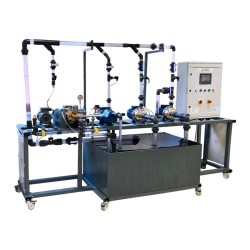
  • Linear heat conduction module
  • Radial heat conduction module

⚙️ Key Features

  • High-precision temperature measurement sensors
  • USB and Ethernet data transmission
  • PC interface with data acquisition software
  • PID temperature control
  • Digital display

🧪 Experiments

  • Verification of Fourier’s Law
  • Linear and radial temperature distribution
  • Thermal conductivity calculation
  • Effect of cross-section variation
  • Surface contact resistance
  • Composite material conduction
  • Insulation heat transfer analysis

🏭 Applications

  • Engineering laboratories
  • Technical training centers
  • Thermal engineering education
  • Heat exchanger studies


TE-110 - Laws of Radiant Heat Transfer and Exchange


Logo ADF Didactic

Reference : TE-110


General Description

The TE-110 is a complete experimental unit designed for studying the laws of radiant heat transfer. Thermal radiation is an energy transfer mechanism via electromagnetic waves emitted by any body above absolute zero.

This educational system allows investigation of thermal and light radiation, including UV, visible, and infrared radiation, making it ideal for physics and thermal science laboratories.

Main Features

The system includes two radiation sources: a thermal radiator and a light source. Detection is carried out using a thermopile for thermal radiation and a photodiode-based lux meter for light radiation.

Optical components such as filters, diaphragms, and absorption plates can be mounted on a graduated optical bench for precise distance measurements.

Measurement and Analysis

All components can be rotated to analyze the effect of angle of incidence on radiation intensity. Measured values are digitally displayed and transferred to a PC via USB for analysis.

Experiments

  • Lambert’s law (direction and distance)
  • Stefan-Boltzmann law
  • Kirchhoff’s laws
  • Radiation absorption and reflection
  • Thermal and light radiation studies
  • Influence of distance and angle
  • Wide experimental range
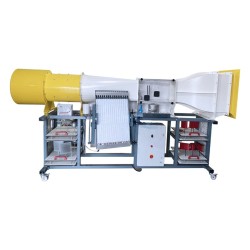


TE-121 - Heat Exchanger Training Bench


Logo ADF Didactic

Reference : TE-121


General Description

The TE-121 is an educational laboratory equipment designed for studying the construction, operation, and performance of various types of heat exchangers used in industrial applications.

Educational Applications

Experiments and Studies

  • Study of heat exchanger operating principles
  • Thermal performance analysis
  • Understanding heat transfer mechanisms
  • Evaluation of heat losses

Types of Heat Exchangers Studied

  • Shell and tube heat exchanger
  • Plate heat exchanger
  • Air/water heat exchanger
  • Pipe-in-pipe heat exchanger
  • Jacketed stirred vessel heat exchanger

Included Modules

  • TE-121.01 – Tubular Heat Exchanger Module
  • TE-121.02 – Plate Heat Exchanger Module
  • TE-121.03 – Shell & Tube Heat Exchanger Module
  • TE-121.04 – Jacketed Stirrer Module


CP-120 - Biotechnical Ethanol Production Unit


Logo ADF Didactic

Référence : CP-120


General Description

The CP-120 is a complete laboratory and pilot-scale unit designed for batch conversion of starch-based raw materials into ethanol. It integrates mashing, fermentation, and distillation processes with advanced automation control.

Main Features

Integrated Process

  • Mash tank with agitator and water jacket cooling
  • Steam injection for thermal processing
  • Closed fermentation tank with thermal control
  • Distillation unit with 3 bubble cap trays

Control and Automation

  • pH control via metering pumps (acid and caustic)
  • PID regulation for temperature and flow rates
  • PLC control with touchscreen interface
  • Data acquisition software via USB (Windows 8/10)


CBT-100B – Advanced Aircraft Cockpit Instrumentation Trainer


Logo ADF Didactic

Reference : CBT-100B


General Description

The CBT-100B is a fully functional aircraft cockpit simulation system designed for advanced training in aircraft instrumentation, maintenance, and system understanding.

It is ideal for aviation training centers, PART 147 organizations, and technical institutions requiring hands-on cockpit instrumentation training.


Training Applications

  • Aircraft instrument maintenance training
  • Gyroscopic and pitot-static system demonstration
  • Instrument removal and installation training
  • EASA PART 147 ATA-31-00-00 practical tasks

Main Features

  • Complete cockpit simulation (analog + digital)
  • Digital ADAHRS with GPS
  • 3 DOF instrument panel (roll, pitch, yaw)
  • High-resolution touch PFD/MFD display
  • Electronic sensor simulation
  • Fully instrumented engine monitoring system

Smart PFD/MFD Display

Specifications

  • Resolution: 1280 x 800 pixels
  • Brightness: 1200+ nits
  • Capacitive multi-touch screen
  • Dimensions: 7.64” x 5.59” x 3.13”

Functions

  • Flight and engine data display
  • GPS moving map
  • Synthetic vision
  • Split-screen capability
  • Integrated timer
  • Auto brightness control


CBT-100D - Aircraft EFIS/EICAS Cockpit Trainer


Logo ADF Didactic

Reference : CBT-100D

General Description

AIRCRAFT EFIS/EICAS Trainer (CBT-100D) is a complete and fully functional simulation of a typical aircraft cockpit. It includes essential flight, engine, and pitot-static instruments.

This training system provides hands-on maintenance training while also functioning as a demonstration tool for instructors. It demonstrates the principles of gyros, altimeter, and engine instruments, and can also be used for teaching instrument removal and replacement.


Important Notes

If you wish to upgrade this system with navigation systems such as VOR/ILS/VHF, please contact us.

The trainer can be customized with sensors and indicators according to your training needs. Please contact us for special requests.

This trainer also allows performing practical tasks of EASA PART 147 ATA-31-00-00.


Features

  • The system combines primary flight instrumentation, aircraft systems instrumentation, and engine instrumentation.
  • Trainer uses the latest GPS and Digital ADAHRS (Air Data and Attitude Heading and Reference Systems).
  • ADAHRS provides highly accurate and reliable aircraft position, rate, vector, and acceleration data.
  • Three degrees of freedom instrument panel enables full demonstration of attitude and directional gyro functions.
  • Functional engine monitoring system can be connected to engine sensors.
  • Primary flight display mounted on a panel simulating roll, pitch, and yaw controlled by a control yoke.
  • Provision of engine sensor simulation.
  • Pitot-static system for conducting pitot-static checks.
  • Instructor panel for fault insertion.


CBT-100E - Aircraft EFIS Trainer – Complete Avionics Training System


Logo ADF Didactic

Reference : CBT-100E


General Description

The Aircraft EFIS Trainer is a complete and fully functional simulation of a typical aircraft cockpit. It includes essential flight instruments and pitot-static instruments.

This training system provides hands-on maintenance training while also functioning as a demonstration tool for instructors. It demonstrates the principles of gyros, flight instruments, and can be used for teaching display removal and replacement procedures.

NOTE: The system can be upgraded with engine monitoring systems, CBT-100D
NOTE: The trainer can be customized with sensors and indicators according to training requirements.


CBT-100F - Analogue Cockpit Instrumentation System Trainer


Logo ADF Didactic

Reference : CBT-100F


General Description

The CBT-100F is a complete and fully functional analogue cockpit instrumentation training system, designed to replicate a typical aircraft cockpit. It includes essential flight instruments, engine instruments, and a pitot-static system.

This training system provides hands-on maintenance training and serves as a demonstration platform for instructors. It allows understanding of gyroscopic principles, altimeter operation, and engine instrumentation, as well as instrument removal and replacement procedures.


Customization

The trainer can be customized with various sensors and indicators according to specific training requirements.


Training Applications

Practical Training

  • Instrument maintenance training
  • Removal and installation procedures
  • Fault simulation exercises

Compliance Training

Supports practical tasks compliant with EASA PART 147 ATA-31-00-00.


GSC-100A - Aircraft Glass Cockpit Trainer


Logo ADF Didactic

Reference : GSC-100A


Overview

The GSC-100A Aircraft Glass Cockpit Trainer is a fully functional simulation platform replicating a modern aircraft cockpit environment. It integrates essential flight, engine, autopilot, and pitot-static instruments.


Applications

  • Pilot training
  • Avionics technician training
  • Aviation training centers
  • Technical institutes


15275-88 - Student TESS Set Heat 2 – Advanced Physics


Logo Phywe


Reference :

15275-88


Function and Applications

The Student Set Heat 2, TESS Advanced Physics is an advanced educational kit designed for the in-depth study of thermal phenomena. It enables a wide range of experiments, from temperature measurement using a thermocouple to the conversion of mechanical energy into internal energy.

This kit is a supplementary equipment set for the Student Set Heat 1 and, when used together, allows 13 additional student experiments in the following areas:

  • Thermal equilibrium and temperature measurement
  • Thermal expansion
  • Heat transfer
  • Thermal energy
  • Change of state
  • Solutions

Benefits

  • Additional thermodynamics experiments covering heat conduction, heat capacity, and energy conversion.
  • Complete equipment set including all required components for minimal preparation time and fast experiment setup.
  • Digital experiment descriptions available through QR codes.
  • Aligned with educational curricula and covering all key thermodynamics topics.

Technical Specifications

  • Supplied in a durable and stackable storage box.
  • Custom-fit foam insert for secure component protection.
  • Quick and easy inventory checking through organized storage.
  • Includes all essential components required to perform the experiments.
  • Equipment must comply with CE standards.


25271-88 - Student TESS Set, Mechanics 1


Logo Phywe


Reference :

25271-88


25271-88 - Student Set Mechanics 1, TESS Advanced Physics

Function and Applications

The Student Set Mechanics 1, TESS Advanced Physics is a complete educational kit designed for the study of the fundamental principles of mechanics. It enables a wide range of experiments, from Hooke’s Law to coupled pendulums.

This basic equipment set allows the performance of 32 experiments covering the following topics:

  • Physical quantities and characteristics
  • Forces
  • Elementary machines
  • Liquids and gases
  • Oscillations

Benefits

  • Complete ready-to-use equipment set with minimal preparation time.
  • Digital experiment descriptions available via QR code.
  • Aligned with educational curricula.
  • Modular stand material that is flexible, durable, and stable.
  • Color-coded movable parts to facilitate understanding of mechanical processes.

Equipment and Technical Data

The set is supplied in a sturdy and stackable storage box containing all components required to conduct the experiments.

The storage box includes a precisely fitting foam insert to protect the components and allow quick checking for completeness.


EduKit-PA - Kit for a Processing Station


Festo Logo

References :

  • Basic Version : 549822
  • Advanced Version : 564631 (Add-on)


The EduKit-PA Process Automation Kit is a comprehensive educational solution designed to provide structured, hands-on training in process automation, mechatronics, and Industry 4.0 technologies. Its modular architecture supports progressive learning — from fundamental principles to fully software-controlled automation systems.

Key Advantages

  • Structured introduction to mechatronics, automation technology, and core Industry 4.0 concepts
  • Highly modular design enabling scalable learning: from standalone modules to complete workstations and software-controlled learning factories
  • Flexible configuration allowing independent system modifications and project-based expansion
  • Comprehensive instructional materials that break complex topics into manageable learning units
  • Dedicated educational software environment built around a Manufacturing Execution System (MES) developed specifically for teaching
  • Integration of modern learning tools such as QR codes and augmented reality for enhanced interaction and engagement


Hydrogen Generator with Photovoltaic Bench


Logo Heliocentris

References :

  • SHE-811 Solar Hydrogen Extension 30 nl/h
  • SHE-812 Solar Hydrogen Extension 72 nl/h


The Solar Hydrogen Trainer is a 400 Wp off-grid photovoltaic system combined with an electrolyzer for on-site hydrogen production. Using clean solar energy, the system generates hydrogen sustainably and can be integrated with the Fuel Cell Trainer or the Nexa® Training System to form a comprehensive micro-laboratory platform.

The system enables complete energy balancing of the solar hydrogen generation process. Performance and production data from the PV modules, power electronics, battery storage, and electrolyzer are displayed in the included software and can be logged and exported for further analysis. Energy flows between individual components are clearly visualized, providing full system transparency.

Mobile solar modules with adjustable tilt angles and optional solar sensors allow for advanced experimentation in photovoltaic performance and system optimization.


Key Features

  • Fundamentals of solar photovoltaic power generation
  • Operating principles of off-grid solar systems
  • Efficiency analysis of solar hydrogen production
  • System dimensioning of solar hydrogen applications
  • Dedicated focus on Power-to-Gas training concepts

Sample Experiments

  • Optimization of solar module alignment
  • Determination of electrolyzer efficiency
  • Performance analysis and behavior of photovoltaic modules


FM-100B - Fundamental Fluid Mechanics Training Set


Logo ADF Didactic

Reference : FM-100B


General Description

The FM-100B Fundamental Fluid Mechanics Training Set is a base module designed to supply various experimental units in fluid mechanics. It provides a complete educational platform featuring a closed water circuit with a storage tank, submersible pump, and measuring tank.

This system is ideal for engineering laboratories and technical training environments, enabling hands-on experiments and accurate analysis of hydraulic phenomena, including volumetric flow rate measurement and flow behavior.


Compatible Modules

The FM-100B unit supports the following experimental modules:


FM-100.02 - Bernoulli’s Principle


Logo ADF Didactic

Reference : FM-100.02


Product Description

The FM-100.02 experimental unit is designed to demonstrate Bernoulli’s principle, which describes the relationship between fluid flow velocity and pressure. According to this principle, an increase in flow velocity results in a decrease in static pressure, while the total pressure remains constant. This is a direct application of the conservation of energy in fluid flow.

This educational unit is ideal for technical training and laboratory environments, enabling clear visualization and accurate measurement of pressure variations within a Venturi nozzle.


Installation and Supply

The experimental unit can be easily and securely positioned on the working surface of the FM-100B base module. Water supply and flow rate measurement are provided directly by this module, ensuring simple, efficient, and reliable operation in laboratory and educational environments.


FM-100.04 - Method of Flow Measurement


Logo ADF Didactic

Reference : FM-100.04


Product Description

Flow rate measurement is a fundamental aspect of measurement technology. The FM-100.04 experimental unit enables students to explore, understand, and apply various flow measurement methods in pipe systems.

Featuring transparent components and integrated measuring instruments, this unit allows direct visualization of internal processes, enhancing practical learning and comprehension of fluid mechanics principles.


Educational Applications

This unit is ideal for:

  • Fluid mechanics laboratory experiments
  • Technical and engineering education
  • Demonstration of flow measurement principles
  • Comparative analysis of measurement devices


FM-100.03 - Osborne Reynolds Experiment


Logo ADF Didactic

Reference : FM-100.03


General Description

The FM-100.03 - Osborne Reynolds Experiment is a didactic training unit designed to clearly demonstrate the flow characteristics of liquids. It enables the visualization of laminar and turbulent flow regimes through a vertical representation of flow lines.


Educational Benefits

  • Direct visualization of fluid dynamics phenomena
  • Clear understanding of flow regimes
  • Safe and easy operation
  • Ideal for teaching laboratories and technical training centers


Applications

  • Fluid mechanics education
  • Hydraulic engineering laboratory work
  • Academic demonstrations
  • Technical and university training programs


FM-100.07 - Cavitation Module


Logo ADF Didactic

Reference : FM-100.07


Product Description

The FM-100.07 is an educational unit designed to demonstrate cavitation phenomena in fluid systems. Cavitation occurs when the static pressure drops to the vapor pressure due to increased flow velocity, leading to the formation of vapor bubbles.

These bubbles collapse when pressure rises again, making the process observable and measurable.


Installation and Supply

The experimental unit can be easily and securely positioned on the working surface of the FM-100B base module. Water supply and flow rate measurement are provided directly by this module, ensuring simple, efficient, and reliable operation in laboratory and educational environments.


FM-100.08 - Centrifugal Pump Training Unit


Logo ADF Didactic

Référence : FM-100.08


General Description

The FM-100.08 is an experimental unit designed for the comprehensive study of centrifugal pumps. This turbomachine enables users to understand fluid transport principles and to record typical pump characteristic curves.

The unit includes a self-priming centrifugal pump, a ball valve on the outlet side, and manometers on both inlet and outlet sides. It is powered by an asynchronous motor with continuously adjustable speed via a frequency converter.


Benefits

  • Ideal for education and technical training
  • Clear visualization of pump performance
  • Precise and easy adjustments
  • Robust and safe design


Installation and Supply

The experimental unit can be easily and securely positioned on the working surface of the FM-100B base module. Water supply and flow rate measurement are provided directly by this module, ensuring simple, efficient, and reliable operation in laboratory and educational environments.


FM-100.10 – Measurement of Jet Forces


Logo ADF Didactic

Reference : FM-100.10


General Description

The FM-100.10 is an educational and experimental unit designed to study forces generated by fluid jets. When a flowing fluid is accelerated, decelerated, or deflected, its velocity changes, resulting in a variation of momentum and consequently producing measurable forces.

In practical engineering applications, these forces are used to convert kinetic energy into mechanical work, such as in Pelton turbines.


Operating Principle

The unit generates a water jet directed at interchangeable deflectors. The jet is deflected at different angles, producing forces that can be measured.

The jet force is adjusted by varying the flow rate. Experiments allow investigation of:

  • The influence of flow velocity
  • The effect of flow rate
  • The impact of different deflection angles

Measured forces are compared with theoretical values calculated using the momentum equation.


Scope of Delivery

  • Transparent tank for visual observation
  • Nozzle for jet generation
  • 4 interchangeable deflectors
  • Weight-loaded scale for force measurement
  • Set of calibrated weights


Installation & Compatibility

The unit is designed for easy and secure placement on the FM-100B base module.

Water supply and flow rate measurement are provided by the base module. Alternatively, the unit can be operated using a laboratory water supply.


Process Simulation Panel for Simatic PLC


Hera_carre.jpg

References :

  • 950.062.200 Process Simulation Panel for PLC S7-1500
  • 950.032.800 Process Simulation Panel for PLC S7-1200


General Description

The PLC Process Simulation Panel provides a practical and efficient solution for simulating industrial processes without the need for PC-based software. Output signals are visualized directly through LEDs, running lights, a 7-segment display, and an acoustic buzzer.

This system is ideal for training, testing, and validating PLC programs in both educational and industrial environments.


Included Process Simulations

The panel includes multiple pre-configured process simulations:

  • Star-Delta Connection
  • Staircase Lighting
  • Intruder Alarm System
  • Traffic Lights (traffic-dependent and independent)
  • Conveyor Belt with Buffer Storage
  • Segment Gate Control
  • Machining Station
  • Bottling Plant
  • Mixing Vessel


Compatibility and Integration

The panel is equipped with a DIN rail for mounting Siemens PLCs, including:

  • Siemens S7-1200 (e.g., S7-1215C DC/DC/DC)
  • Siemens S7-1500 (e.g., S7-1512C-1PN)
  • ET200S for decentralized control

It can also be controlled using an external PLC via 4 mm input/output connectors.


FM-100.12 - Pipe Friction in Laminar and Turbulent Flow


Logo ADF Didactic

Référence : FM-100.12


General Description

The FM-100.12 experimental unit is designed for the detailed study of pressure losses in pipes under both laminar and turbulent flow conditions. During fluid flow through pipes, pressure losses occur due to internal fluid friction as well as friction between the fluid and the pipe wall.

This unit enables the determination of the friction factor, a dimensionless parameter essential for calculating pressure losses. The friction factor is closely related to the Reynolds number, which represents the ratio of inertial forces to viscous forces.

The system allows analysis of the relationship between pressure loss and flow velocity, as well as experimental determination and comparison of friction factors with theoretical values.


Operating Principle

The unit includes a small-diameter pipe section where both laminar and turbulent flows can be generated. The Reynolds number and friction factor are determined based on measured flow rate and pressure losses.

In turbulent flow conditions, the pipe is directly supplied from the water network. For laminar flow, a constant pressure is maintained using a standpipe with overflow. Flow rate is controlled using valves.


Experiments

  • Measurement of pressure losses in laminar flow
  • Measurement of pressure losses in turbulent flow
  • Determination of critical Reynolds number
  • Determination of pipe friction factor
  • Comparison of experimental and theoretical friction factors