
Simulators

Simulators

El Eslèk is a specialized provider of educational simulation solutions designed for scientific and technical learning environments. We develop and deliver innovative didactic simulators that enable institutions to offer immersive, interactive, and academically aligned learning experiences.

Our simulation platforms support a wide range of laboratories, including:

  • Mechanical Engineering Laboratories
  • Physics Laboratories
  • Chemistry Laboratories
  • Medical and Health Sciences Laboratories
  • And other scientific and technical disciplines

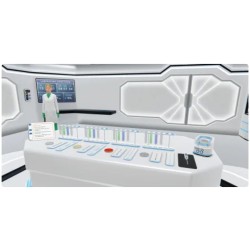
Designed to accurately replicate real laboratory conditions, our simulators allow students to manipulate virtual equipment, analyze real-time data, and develop practical skills within a safe and controlled environment.

By integrating our solutions, educational institutions can enhance hands-on training, expand access to laboratory experiences, and ensure rigorous scientific instruction aligned with modern academic standards.

At El Eslèk, we are committed to supporting institutions and educators in adopting advanced educational technologies that foster academic excellence and pedagogical innovation.

Simulators

Active filters

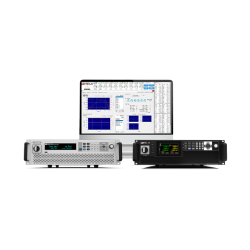
IT7900P Series - High-Performance Regenerative Grid Simulator


Logo ITECH


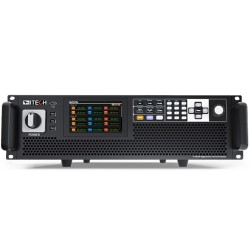
Built on advanced SiC (Silicon Carbide) technology, the IT7900P series delivers a comprehensive, all-in-one power testing solution. It can operate as:

  • A grid simulator
  • A four-quadrant power amplifier
  • A four-quadrant regenerative AC/DC electronic load

With full four-quadrant operation and regenerative capability, the system feeds energy back to the grid, supporting environmentally friendly testing while significantly reducing electricity consumption and heat dissipation costs.

Its compact, modular, and high-efficiency design enables up to 15 kVA in a 3U chassis, with scalable power up to 960 kVA through master-slave parallel configuration.

A color touch screen with an intuitive graphical user interface allows users to directly define and customize output waveforms. Multiple operating modes—single-phase, three-phase, reverse-phase, and multi-channel—provide exceptional flexibility for applications in photovoltaic (PV), energy storage systems (ESS), electric vehicles (EV), and other advanced power electronics fields.


Key Parameter Features

  • Advanced SiC technology
  • High power density: up to 15 kVA in 3U
  • Output voltage up to 350 V L-N
  • Master-slave current sharing; scalable up to 960 kVA (up to 64 units in parallel for 3U models)*¹
  • High-efficiency regenerative operation
  • Selectable working modes: single-phase, three-phase, reversed phase, and multi-channel
  • Inverted mode voltage extension up to 200% of rated voltage
  • LIST, SWEEP, and Surge & Sag waveform modes
  • Built-in waveform library
  • Harmonic simulation and analysis up to the 50th order, compliant with IEC 61000-3-2 and IEC 61000-3-12
  • Arbitrary waveform generation with CSV import capability
  • Adjustable phase angle: 0–360°
  • Touchscreen interface with intuitive UI
  • Standard USB / CAN / LAN / Digital I/O interfaces; optional GPIB / Analog & RS232
  • Comprehensive protection functions including automatic clearing, POVP, watchdog, etc.
  • Support for CANopen, Modbus, LXI, SCPI communication protocols


Source Mode Features

  • Regenerative grid simulator & full four-quadrant AC/DC power source
  • Frequency range: 16–2400 Hz*⁴
  • Power amplifier function for PHiL applications
  • Professional islanding test mode supporting R, L, C, active and reactive power settings*⁷
  • Four output modes: AC / DC / AC+DC / DC+AC
  • Multi-channel function: one unit can test 1–3 DUTs simultaneously*⁵
  • Programmable output impedance for real-world grid simulation
  • Harmonic and inter-harmonic synthesis
  • Frequency lock and phase lock functions enabling 6-phase and 12-phase output
  • Compliance testing including LVRT, phase jump, frequency variation, and harmonic injection
  • Supported regulatory tests including IEC 61000-4-11, IEC 61000-4-13, IEC 61000-4-14, IEC 61000-4-28, etc.
  • Advanced trigger configuration with synchronized waveform capture for DUT voltage acquisition and simulation
  • Optional software for pre-compliance testing in civil avionics and marine electrical systems according to international safety regulations*³


Load Mode Features

  • Regenerative full four-quadrant AC/DC electronic load
  • Frequency range: 16–500 Hz
  • AC mode supports CC / CP / CR / CS / CC+CR / CE modes
    • CE mode simulates various circuit topologies such as single-phase rectifier RLC and shunt RLC
  • DC mode supports 9 operating modes including CC / CR / CP / CV
  • AC mode supports rectified and non-rectified operation
  • Adjustable crest factor: 1.414–5.0
  • Phase shift adjustment range: **-180° to 180°***⁶
  • Unity power factor mode for dynamic current tracking of voltage waveform
  • Adjustable unloading angle: 0–359°


Notes

*¹ For 3U models, up to 64 units can be connected in parallel.
*² Harmonic analysis in source mode (voltage) and load mode (current); fundamental frequency ≤ 60 Hz.
*³ Optional software module.
*⁴ 16–150 Hz in grid simulator and island simulation modes.
*⁵ Not available for single-phase models.
*⁶ Phase shift range may be limited when rectification mode is enabled.
*⁷ Not available in multi-channel mode.

SAS1000 - Solar Array Simulation Software


Logo ITECH


References

SAS1000 Solar array software for IT6500C/IT6000B/IT6000C/IT-M3600

SAS1000L Solar array software for IT6500C/IT6000B/IT6000C/IT-M3600 (power ≤15kW)

SAS1000M Solar array software for IT6500C/IT6000B/IT6000C/IT-M3600 (multi-channel)


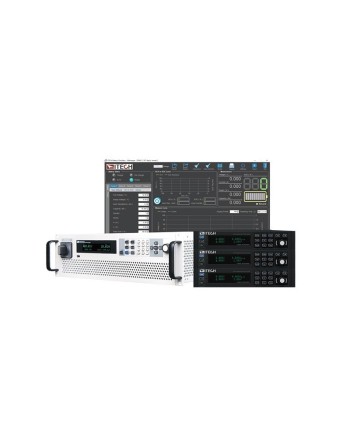
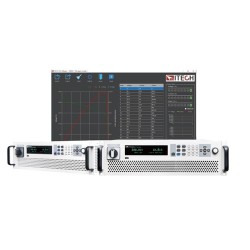
ITECH introduces its latest high-speed, high-performance photovoltaic simulation solution. When combined with high-power DC power supplies, the SAS1000/L solar array simulation software accurately reproduces solar array I-V curves, with output voltage up to 2250 V and scalable system power up to 10 MW.

The system delivers fast dynamic response, excellent control accuracy, high repeatability, outstanding stability, and precision performance. It features built-in simulation models compliant with EN 50530, Sandia National Laboratories PV model, NB/T 32004, CGC/GF004, and CGC/GF035.

Users can easily configure test regulations, material types, Vmp, Pmp, and other parameters to simulate I-V curve characteristics and automatically generate test reports. The software is ideal for static and dynamic maximum power point tracking (MPPT) performance testing of photovoltaic inverters.


Product Features

  • Automatic wide-range output, with voltage up to 2250 V
  • Scalable power up to 10 MW
  • Built-in I-V curve mathematical model for accurate solar array simulation
  • Simulation of various solar cell technologies (monocrystalline, polycrystalline, thin-film), including Fill Factor configuration
  • I-V curve simulation under varying temperature and irradiation conditions
  • Shading simulation for solar panels (e.g., cloud or tree shadow scenarios)
  • Static and dynamic MPPT efficiency testing
  • Built-in EN 50530, Sandia National Laboratories PV model, NB/T 32004, CGC/GF004, and CGC/GF035 test programs with automatic report generation
  • Graphical user interface with real-time MPPT status monitoring
  • Automatic programming of up to 100 I-V curves via Voc, Isc, FF, Pm, and other parameter points
  • Support for 100 × 128-point curves and 4096-point high-resolution programming
  • Adjustable output impedance
  • Independent edge configuration for multiple operating modes, with adjustable rise and fall times
  • Seamless bidirectional current switching for rapid cell charge and discharge simulation/li>
  • Built-in DIN 40839 and ISO 16750-2 compliance
  • Standard USB, RS232, GPIB, and LAN (LXI compliant) interfaces
  • Support for up to 20 solar power supplies for multi-channel MPPT testing

Applications

  • Design and validation of PV inverter MPPT circuits and algorithms
  • Verification of inverter MPP voltage range and full-load MPP voltage range/li>
  • Validation of static maximum power tracking efficiency
  • Dynamic MPPT performance testing according to EN 50530, Sandia National Laboratories PV model, NB/T 32004, CGC/GF004, and CGC/GF035
  • Verification of inverter start-up voltage, maximum input voltage, maximum input current, and related electrical parameters
  • MPPT validation under partial shading conditions
  • DC terminal protection testing (OVP, OPP)
  • Validation of microgrid control centers and photovoltaic energy storage control functions
  • MPPT performance verification from sunrise to sunset operating conditions
  • Total and conversion efficiency testing of inverters when used with the IT9100 power analyzer


FCS3000 - Fuel Cell Simulation Software


Logo ITECH


Reference

FCS3000 Fuel Cell Simulation Software


The FCS3000 Fuel Cell Simulation Software, when used in combination with the IT6000C bidirectional DC power supply and the IT6000B regenerative power system, enables accurate simulation of fuel cell stack polarization curves.

The system supports output voltages up to 2250 V and scalable power up to 1152 kW, meeting the requirements of high-power fuel cell simulation applications.

FCS3000 is specifically designed to replace real fuel cell stacks in laboratory environments, providing a highly efficient and flexible simulation platform for hydrogen energy and hybrid propulsion system research.

By eliminating the need for physical fuel cell stacks, the software helps reduce testing costs, simplify platform setup, and avoid performance degradation commonly associated with repeated experimental use of real fuel cell systems.

With its intuitive user interface and comprehensive data reporting capabilities, FCS3000 provides reliable experimental support for both practical testing and theoretical research.


Key Features

  • Automatic wide-range output with voltage up to 2250 V
  • Scalable fuel cell simulation power up to 1152 kW
  • User-defined fuel cell polarization curve with up to 4096 programmable points
  • Support for .csv file import for customized curve simulation
  • Data storage and export functions for analysis and reporting
  • Graphical software interface with real-time display of output voltage, current, and power


Chemistry Lab Simulator


Constructer Tech Logo


Chemistry Laboratory – Experiment Portfolio

Our chemistry laboratory includes a comprehensive range of experiments:

  1. Acid–Base Titration with Indicators: The Acidity of Beverages
  2. Acid–Base Experiment
  3. Acid–Base Titration with a pH Meter: Identification of an Unknown Acid Solution
  4. Atomic Structure: Flame Test for Metals
  5. Boiling Point Elevation
  6. Bonding and Structure: Conductivity of Ionic vs. Covalent Substances
  7. Bonding in Solids
  8. Buffer Design
  9. Buffering Activity
  10. Chemical Equilibrium: Iron(III) Thiocyanate Complex Ion
  11. Copper Content of Brass
  12. Determining the Copper Content of a Brass Sample
  13. Determining the Heating Curve of Water
  14. Displacement Reactions Between Metals and Their Salts
  15. Enthalpy Change of Solutions
  16. Equilibrium Constant: Iron Thiocyanate Complex Ion
  17. Identification of Anions
  18. Identification of Cations
  19. Introduction to Organic Chemistry
  20. Ion Responsible for the Wavelength of Maximum Absorption
  21. Ionic & Covalent Bonds
  22. Kinetics: Effect of Concentration on Reaction Rate
  23. Molecular Shape Modeling
  24. Paper Chromatography
  25. Precision and Accuracy in Laboratory Measurements
  26. Rate Laws
  27. Redox Titration: Determination of H₂O₂ Concentration
  28. Separating Mixtures
  29. Separation by Extraction
  30. Separation Using a Separatory Funnel
  31. Separation by Simple Distillation
  32. Solubility in Solid–Liquid Systems
  33. Solubility of Ca(OH)₂ in Solid–Liquid Systems
  34. Solubility of KNO₃ in Solid–Liquid Systems
  35. Testing for Functional Groups in Organic Compounds
  36. The Hydrogen Emission Spectrum
  37. The Law of Conservation of Mass
  38. The Law of Definite Proportions: Empirical Formula of a Metal Oxide
  39. The Law of Definite Proportions: Formula of a Hydrate
  40. UV–Vis Spectrophotometry and the Beer–Lambert Law


IT-N2100 - Solar Array Simulator


Logo ITECH


References

IT-N2121 Solar array simulator 80 V, 25 A, 800 W

IT-N2131 Solar array simulator 80 V, 25 A, 1500 W

IT-N2123 Solar array simulator 150 V, 10 A, 800 W

IT-N2133 Solar array simulator 150 V, 10 A, 1500 W


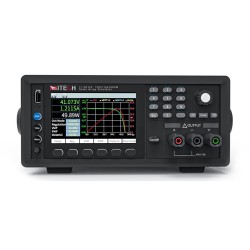
The IT-N2100 Series Solar Array Simulator is a high-performance DC power supply designed to accurately replicate real-world photovoltaic (PV) array behavior. With ultra-fast I–V curve response and advanced simulation capabilities, it enables precise testing of solar microinverters, power optimizers, and PV power systems under dynamic environmental conditions.

The system faithfully reproduces solar panel characteristics across varying temperature, irradiance, shading, and aging scenarios. Its high-voltage architecture, ultra-low ripple performance, and rapid MPPT response make it an ideal solution for R&D, validation, and production testing environments.


Key Features

  • High-precision simulation of silicon, GaAs, and other PV technologies
  • Ultra-fast dynamic response optimized for MPPT efficiency testing
  • Up to 1500V DC common-mode voltage for series DUT testing
  • Advanced I–V curve modeling, including dynamic and cloud-shading simulations
  • Built-in compliance testing for EN50530, Sandia, NB/T32004, CGC/GF004, and CGC/GF035 standards with automated reporting
  • 4096-point I–V curve fitting in table mode
  • Four-point rapid I–V curve generation (Voc, Isc, Vmp, Imp)
  • Multi-channel synchronous control capability
  • Ultra-low ripple and high-precision measurement performance
  • Comprehensive protection: OVP, OCP, OPP, OTP
  • Compact 2U half-rack design
  • 4.3” HD graphical interface with real-time MPPT monitoring
  • LAN, USB, and digital I/O interfaces with SCPI command support

The IT-N2100 provides a reliable, flexible, and standards-compliant solution for advanced photovoltaic system validation.


BSS2000 - Battery Simulation Software


Logo ITECH


References :

BSS2000 Battery Simulation Software

BSS2000 Pro Battery Simulation Software, Pro Version

BSS2000M Battery Simulation Software (multi-channel)


BSS2000 / BSS2000 Pro Battery Simulation Software

The BSS2000 series battery simulation software, including BSS2000, BSS2000 Pro, and BSS2000M multi-channel versions, is designed to work seamlessly with ITECH’s latest high-performance bidirectional DC power supplies, including:

  • IT6000B
  • IT6000C
  • IT6000PV
  • IT-M3600
  • IT-M3400
  • IT2700
  • IT6600C
  • IT6600PV
  • T-M3900B
  • IT-M3900C

Covering power ranges up to 10 MW, the solution provides comprehensive battery simulation capabilities—from low-power battery modules to high-power traction battery systems. The BSS2000 software family is specifically engineered for advanced battery testing applications. It helps reduce the cost and logistical challenges associated with purchasing, storing, and maintaining multiple physical battery types. In addition, the simulator enables rapid configuration of different State of Charge (SoC) levels without performing actual charge/discharge cycles, significantly improving test efficiency and repeatability.


Key Features

  • Battery simulation range up to 2250 V / 10 MW
  • Multi-channel battery module status simulation
  • Bidirectional regenerative battery simulation with efficiency up to 95%
  • Seamless switching between charging and discharging modes
  • Support for user-defined battery characteristic curve import
  • Rapid configuration of battery curves using standard parameter inputs
  • .mat file import support*²
  • Customizable BMS protocol with CAN bus communication to external control units
  • Built-in battery models including:
    • Lead-acid
    • Lithium-ion (Li-ion)
    • LMO
    • NMC (LNMCO)
    • LNMCO & LMO hybrid
    • LFP
    • LTO
    • NiMH*¹
  • Configurable battery protection parameters
  • Adjustable initial State of Charge (SoC) settings
  • Automated data report generation
  • Battery curve preview and real-time curve display
  • Flexible parallel expansion for higher current and power requirements
  • Support for up to 20 battery simulation channels*³

Version Notes

*¹ The BSS2000 basic version supports simulation of lead-acid and lithium-ion batteries.
*² Available in BSS2000 Pro and BSS2000M multi-channel versions.
*³ Available in the BSS2000M multi-channel version.


FluidSIM® - Simulation Sofware


Festo Logo


Floating Licenses

  • 8198189 – FluidSIM Pneumatics, Floating License
  • 8198190 – FluidSIM Hydraulics, Floating License
  • 8198191 – FluidSIM Electrical Engineering, Floating License


Learning Objectives

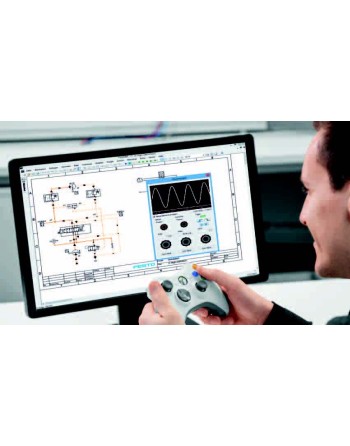
  • Design and develop circuit diagrams
  • Identify and prevent design errors
  • Simulate and optimize circuit solutions
  • Understand structured solution development in automation engineering
  • Analyze the impact of technical modifications within a system architecture through real-time simulation


Key Benefits

  • High-definition interactive simulation
  • Integration of virtual and real measuring instruments
  • Extensive component library
  • Intuitive user interface
  • Comprehensive teaching materials included