
- New
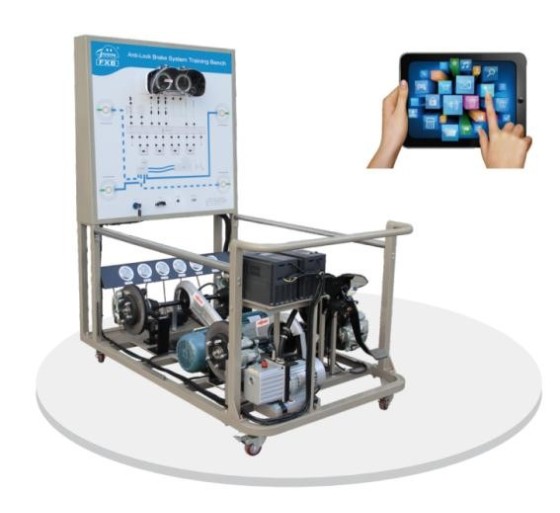
Reference : FXB-E04001 Anti-Lock Braking System (ABS) Training Bench
The FXB-E04001 training bench is designed for the study, demonstration, and diagnosis of the Anti-Lock Braking System (ABS) used in Volkswagen Jetta vehicles. It enables learners to visualize hydraulic braking operation, simulate braking conditions with and without ABS intervention, and perform practical electrical and hydraulic diagnostic exercises.
Designed for technical schools, vocational training centers, and automotive training institutions, this equipment supports the teaching of modern braking systems and helps learners develop practical skills in automotive diagnostics and troubleshooting.
The FXB-E04001 training bench is developed around the ABS system of a Volkswagen Jetta. It is designed to demonstrate the structure, operating principles, and main diagnostic and maintenance procedures of the Anti-Lock Braking System.
By integrating actual automotive components, explanatory diagrams, and measurement devices, the training bench combines theoretical instruction with hands-on practical exercises. It is particularly suitable for training in automotive technology, braking systems, automotive electronics, and vehicle safety system diagnostics.
1. Actual Automotive ABS System
The bench incorporates an actual ABS system to demonstrate the structure and operation of the main components of an anti-lock braking system. Operating diagrams help learners understand the interaction between the hydraulic, electrical, and electronic components.
2. Braking and ABS Operation Simulation
A three-phase asynchronous motor drives the front and rear shafts to simulate vehicle wheel rotation. When the operator presses the brake pedal, the ABS system operates according to the simulated conditions. The rotation of the braking components and the vibration felt at the brake pedal help demonstrate the operating principle of the anti-lock braking system.
3. Training Panel and Structure
The training panel is made of aluminium-plastic composite material with a minimum thickness of 4 mm. Its construction provides resistance to corrosion, impact, moisture, and contamination, as well as fire-resistant properties.
The panel surface receives a special treatment and primer coating. Electrical circuit diagrams and operating principle diagrams are durably printed and protected by a transparent finishing coat. These diagrams enable learners to study system operation by comparing the schematic representations with the actual components.
4. Electrical Signal Measurement Terminals
Measurement terminals are provided for checking the electrical signals of the sensors and electronic control unit (ECU). Depending on the characteristics of the circuits concerned, measurements can include resistance, voltage, current, and frequency.
5. Hydraulic Pressure Measurement
The training bench is equipped with six pressure gauges for real-time monitoring of hydraulic pressure within the braking circuit, including the master cylinder and wheel cylinders. This instrumentation helps learners study pressure transmission and hydraulic circuit behaviour during different braking phases.
6. Electronic Diagnostics and Fault Code Reading
A fault indicator lamp and a diagnostic connector allow connection to a compatible automotive diagnostic tool. Available functions include reading and clearing fault codes, viewing live data, and accessing ABS electronic control unit self-diagnostic functions, depending on the capabilities of the system and the diagnostic tool used.
7. Mobile Supporting Frame
The training bench is mounted on a steel frame with a painted finish. Lockable castors allow the equipment to be moved easily and secured in position during training sessions.
8. Training Documentation
An English-language user manual is supplied with the equipment. It includes an introduction to the training bench, operating procedures, fault-setting methods, and troubleshooting procedures. This documentation supports instructors and learners in carrying out practical exercises and assessing acquired skills.
9. Wireless Fault Insertion and Assessment System
The bench is equipped with a wireless fault-setting and educational assessment system. Instructors can use a tablet to introduce simulated faults and ask learners to identify them and determine their causes. This feature helps develop systematic diagnostic methods, technical reasoning, and troubleshooting skills.

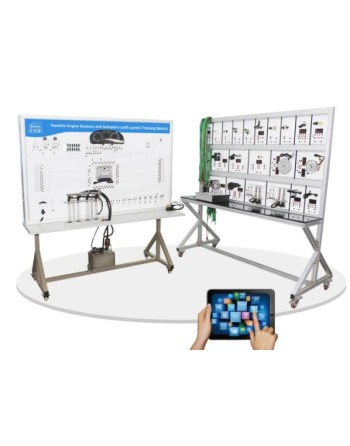
Reference : FXB-A25001 Gasoline Engine Sensors and Actuators Training Bench with Training Panel
This training bench is designed for the study, demonstration, and diagnosis of an automotive gasoline engine electronic management system. Based on original engine sensors and actuators, it enables students to understand the operation of the main components, signal exchanges with the engine electronic control unit (ECU), and the operating principles of fuel injection and ignition control.
The equipment consists of an engine training bench and a training panel. The sensors and actuators are connected to the corresponding terminals on the panel using connection cables, allowing students to study their operation and perform various electrical measurements.
Electronic Engine Management System Study
Integrated Sensors and Actuators
The training bench includes the following components, among others:
Training and Control Panel
The training panel incorporates the main components required for studying the engine management system:
Electrical Measurements and Signal Analysis
Measurement terminals are provided to allow students to observe and analyze the main electrical signals of the system. Practical activities include:
Electronic Diagnostics and Fault Simulation
The training bench is equipped with a diagnostic socket for connecting a compatible automotive diagnostic tool. Depending on the functions supported by the ECU, this interface allows users to:
The wireless fault-setting and educational assessment system allows instructors to introduce faults using a tablet. Students must then identify the anomalies, carry out the required checks, and determine the cause of each fault. This feature supports the assessment of students' knowledge and the development of automotive diagnostic and troubleshooting skills.
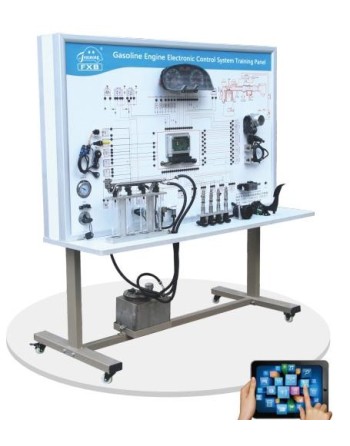
Reference : FXB-A15003 Gasoline Engine Electronic Control System Training Panel
The FXB-A15003 training panel is designed for studying, understanding and diagnosing gasoline engine electronic control systems. Based on actual components from the engine management system of a Volkswagen Jetta 1.6L, it enables trainees to study system architecture, operating principles and the interactions between sensors, actuators and the engine electronic control unit (ECU).
Suitable for technical schools, vocational training centers and automotive training institutions, this training panel supports electrical measurements, component signal analysis and practical fault diagnosis using a compatible automotive diagnostic tool.
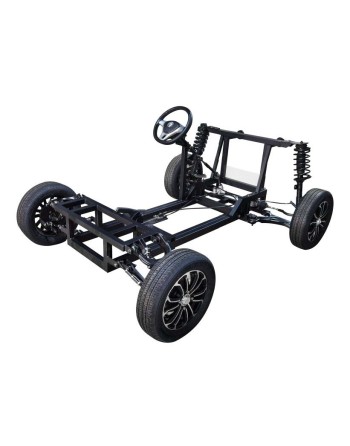
Référence : FXB-G02003 Front and Rear Axle Alignment Training Bench
The FXB-G02003 training bench is designed for studying and practicing front and rear axle geometry inspection and adjustment procedures. Based on the Volkswagen Passat B5, it reproduces the layout of the main suspension and steering components of the actual vehicle, enabling trainees to become familiar with the inspection and adjustment procedures specified by the vehicle manufacturer.
The training bench allows students to study the main angles and parameters involved in wheel alignment.
Front Axle Geometry
Rear Axle Geometry
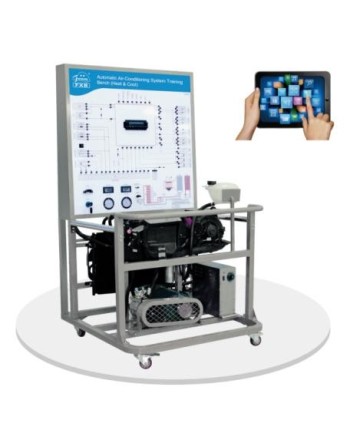
Reference : FXB-I02002 Automatic Automotive Air Conditioning Training Bench
The FXB-I02002 training bench is designed for the study, demonstration, and diagnosis of automatic automotive air conditioning systems incorporating heating and cooling functions. Based on an operational automotive air conditioning system, it enables trainees to analyze refrigeration circuits, control components, and the electronic air conditioning control unit.
Equipped with pressure gauges, thermometers, electrical measurement terminals, and a fault simulation system, this training bench allows trainees to measure pressure, temperature, and electrical signals, as well as perform diagnostic exercises, leak detection, and refrigeration circuit servicing activities. It is suitable for technical education institutions, vocational training centers, and laboratories specializing in automotive maintenance.
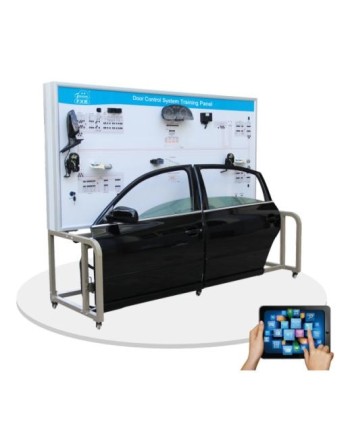
Reference : FXB-I10008 Automotive Door Control System Training Panel
The FXB-I10008 is a didactic training panel designed for studying, demonstrating, and diagnosing automotive door control systems. Based on a Volkswagen vehicle configuration, it incorporates functional components for studying power mirrors, central locking, electric windows, and the anti-theft system. Equipped with electrical test points, LED status indicators, and an intelligent fault simulation system, it is a suitable training solution for technical and vocational education institutions and automotive maintenance training centers.
The FXB-I10008 training panel is particularly suitable for training courses covering:
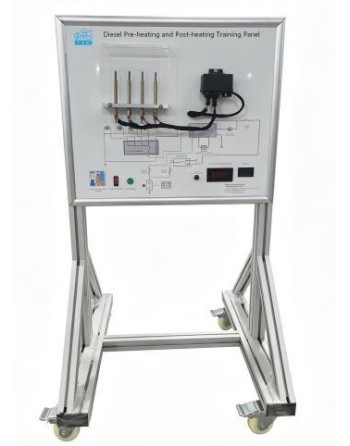
Reference : FXB-A21002 Diesel Engine Preheating and Postheating Training Panel
The FXB-A21002 training panel is designed for studying, demonstrating, and diagnosing diesel engine preheating and postheating systems. Based on a diesel engine configuration, it enables learners to analyze the operating cycles of glow plugs, the glow plug relay, and the electronic control module. Equipped with electrical measurement terminals and a fault simulation system, it allows trainees to perform measurements, identify malfunctions, and conduct diagnostic exercises under different engine temperature conditions. It is suitable for technical education institutions, vocational training centers, and automotive maintenance laboratories.
The FXB-A21002 training panel is particularly suitable for training courses covering:
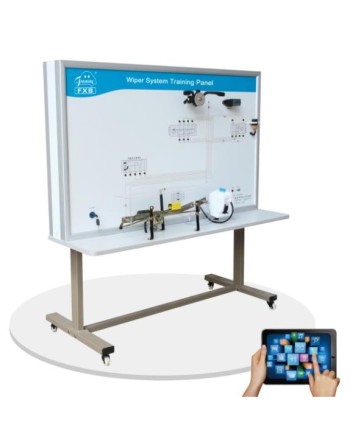
Reference : FXB-I14009
The FXB-I14009 training panel is designed for studying and demonstrating the operation of automotive windshield wiper and washer systems. Based on a Volkswagen vehicle system, it enables learners to operate the main wiping modes, including intermittent, low-speed, and high-speed wiping, as well as the windshield washing function. Equipped with electrical test points and an intelligent fault simulation system, it is a suitable educational solution for technical education institutions, vocational training centers, and automotive maintenance laboratories.
The FXB-I14009 training panel is particularly suitable for training courses covering:
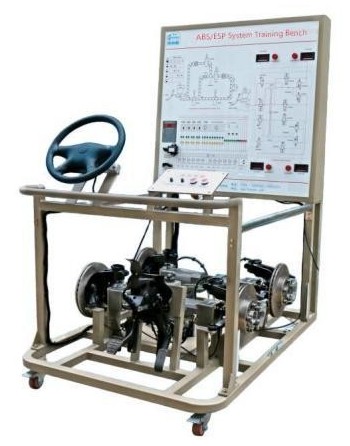
Reference : FXB-XXH013 ABS/ESP System Training Bench
The FXB-XXH013 ABS/ESP System Training Bench is designed for the study, demonstration, and diagnosis of Anti-lock Braking Systems (ABS) and Electronic Stability Programs (ESP). Based on actual automotive components, it enables trainees to visualize system operation, study hydraulic and electrical circuits, measure sensor and actuator signals, and simulate various faults.
Suitable for technical and vocational schools, automotive training centers, and institutions specializing in vehicle maintenance, this training bench provides a practical teaching platform for theoretical and hands-on training in electronic braking and active vehicle safety systems.
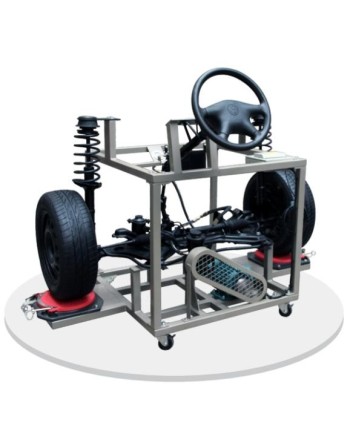
Reference : FXB-F01001 Power Steering and Independent Suspension Training Bench
The Power Steering and Independent Suspension Training Bench is based on the front axle assembly of a Volkswagen Jetta. It is designed to provide a practical demonstration of the structure, operating principles, and functionality of the power steering and front independent suspension systems.
This automotive training equipment is intended for technical and vocational schools, vocational training centers, and institutions specializing in automotive education. It provides a practical teaching platform for theoretical instruction and hands-on training in steering and suspension systems.
The training bench supports component identification, functional demonstrations, operating simulations, and practical assembly and disassembly exercises.
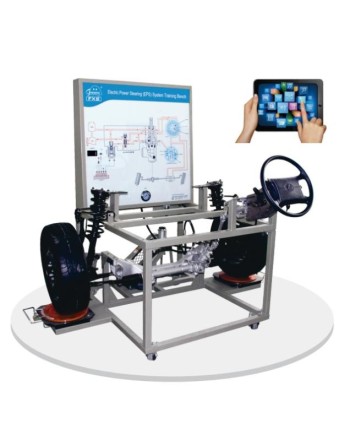
Reference : FXB-F02002 Electric Power Steering (EPS) System Training Bench
This training bench is based on a Volkswagen Magotan-type front axle assembly. It is designed to demonstrate and explain the structure, operation, and control principles of the Electric Power Steering (EPS) system, together with the associated front axle and suspension components.
Designed for technical and vocational schools, specialized educational institutions, and automotive training centers, this equipment provides a practical learning platform for studying electric power steering systems, their electronic components, and their control mechanisms.
The training bench enables users to observe system operation, perform electrical measurements, carry out diagnostic procedures, and practice fault-finding and control-signal analysis.
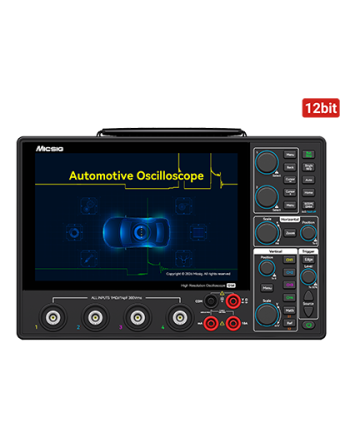

The Micsig AHO1 Series is a professional high-resolution automotive oscilloscope designed for advanced vehicle diagnostics. It features a 12-bit ADC, 200 MHz bandwidth, 4 analog channels, a 1 GSa/s real-time sampling rate, and 110 Mpts memory depth, delivering accurate and reliable measurements for automotive workshops and technical laboratories.
Its ultra-slim 3.1 cm portable design, integrated high-capacity lithium-ion battery, and USB Type-C charging capability make it ideal for mobile diagnostics and on-site maintenance operations.
With its innovative dual software architecture for automotive and general-purpose applications, along with dedicated testing modes for engines, sensors, actuators, and EV systems, the AHO1 Series supports diagnostics for both internal combustion and new energy vehicles.
Reference : FXB-E04001 Anti-Lock Braking System (ABS) Training Bench
The FXB-E04001 training bench is designed for the study, demonstration, and diagnosis of the Anti-Lock Braking System (ABS) used in Volkswagen Jetta vehicles. It enables learners to visualize hydraulic braking operation, simulate braking conditions with and without ABS intervention, and perform practical electrical and hydraulic diagnostic exercises.
Designed for technical schools, vocational training centers, and automotive training institutions, this equipment supports the teaching of modern braking systems and helps learners develop practical skills in automotive diagnostics and troubleshooting.