

Reference : TE-105
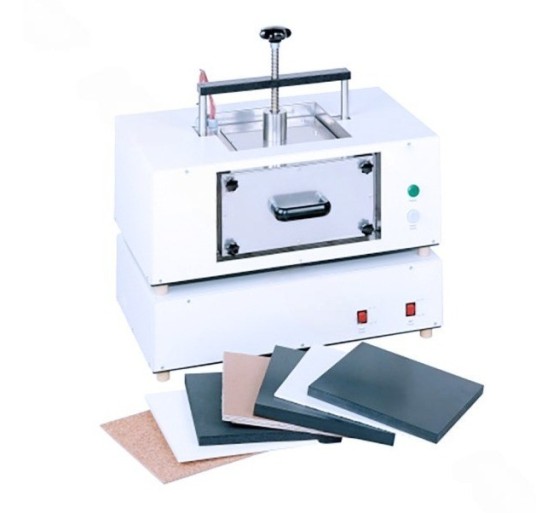
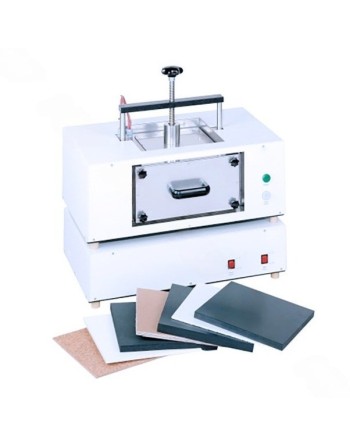
The TE-105 is a laboratory and educational device designed for the analysis of thermal conductivity of non-metallic building materials according to DIN 52612 standards. It is ideal for studying thermal insulation performance and improving energy efficiency in construction.
Thermal insulation is a key aspect of building physics, ensuring indoor comfort while minimizing energy consumption. The TE-105 enables precise investigation of thermal conductivity and resistance of various insulating materials.
Included samples (Armaflex, chipboard, PMMA, polystyrene, POM, cork, plaster, etc.) are placed between a heated plate and a water-cooled plate. Heat flow passing through the sample is measured using a dedicated heat flux sensor.

Reference : TE-109
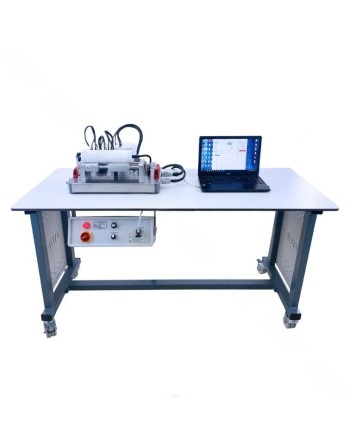
The TE-109 system is a complete educational platform designed for experimental analysis of heat conduction in solids under linear and radial conditions. It is ideal for technical and higher education applications.
Heat conduction is a fundamental mode of heat transfer based on kinetic energy exchange between molecules. The TE-109 enables steady-state heat conduction experiments using integrated heating and cooling systems.
Reference : TE-110
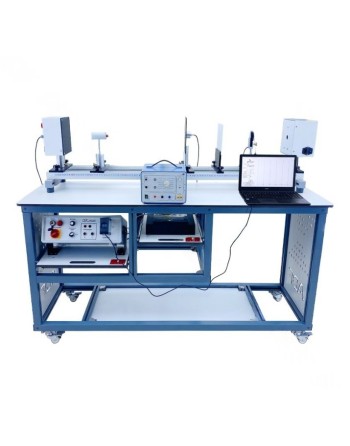
The TE-110 is a complete experimental unit designed for studying the laws of radiant heat transfer. Thermal radiation is an energy transfer mechanism via electromagnetic waves emitted by any body above absolute zero.
This educational system allows investigation of thermal and light radiation, including UV, visible, and infrared radiation, making it ideal for physics and thermal science laboratories.
The system includes two radiation sources: a thermal radiator and a light source. Detection is carried out using a thermopile for thermal radiation and a photodiode-based lux meter for light radiation.
Optical components such as filters, diaphragms, and absorption plates can be mounted on a graduated optical bench for precise distance measurements.
All components can be rotated to analyze the effect of angle of incidence on radiation intensity. Measured values are digitally displayed and transferred to a PC via USB for analysis.
Reference : TE-107
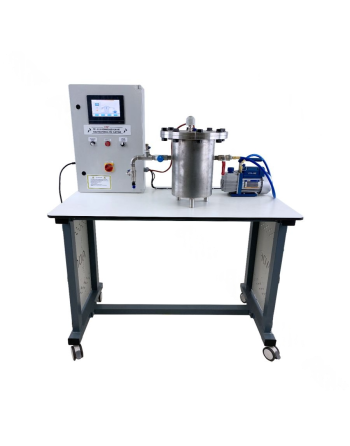
The TE-107 is an advanced educational system designed to analyze and distinguish heat transfer mechanisms by convection and radiation under real operating conditions.
In real thermal systems, heat transfer occurs simultaneously through conduction, convection, and radiation. The TE-107 enables users to isolate and study the individual contributions of convection and radiation.
The system is based on a heated metal cylinder placed at the center of a pressure vessel. Surface temperature is controlled, while sensors measure temperature and pressure conditions.

Reference : TE-121
The TE-121 is an educational laboratory equipment designed for studying the construction, operation, and performance of various types of heat exchangers used in industrial applications.
Experiments and Studies
Types of Heat Exchangers Studied
Reference : TE-106
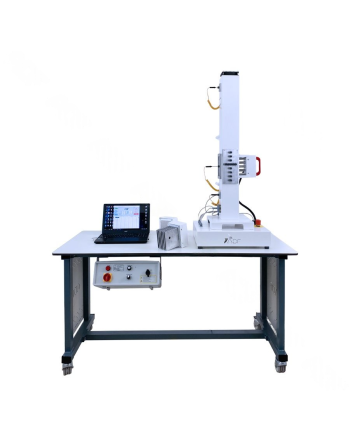
The TE-106 is a comprehensive educational system designed for studying and demonstrating thermal convection phenomena, including both natural (free) and forced convection. It is ideal for technical and academic laboratories.
The system is based on a vertical air duct where different heating elements can be inserted. An axial fan located at the top draws ambient air into the duct and forces it through the channel.
As the air flows over the heating elements, it absorbs heat, enabling detailed analysis of convection processes. The unit includes four heating elements with different geometries, two of which can also be used outside the duct for natural convection experiments.
Its compact design ensures fast heating and efficient experimental operation.
Reference : TE-105
The TE-105 is a laboratory and educational device designed for the analysis of thermal conductivity of non-metallic building materials according to DIN 52612 standards. It is ideal for studying thermal insulation performance and improving energy efficiency in construction.
Thermal insulation is a key aspect of building physics, ensuring indoor comfort while minimizing energy consumption. The TE-105 enables precise investigation of thermal conductivity and resistance of various insulating materials.
Included samples (Armaflex, chipboard, PMMA, polystyrene, POM, cork, plaster, etc.) are placed between a heated plate and a water-cooled plate. Heat flow passing through the sample is measured using a dedicated heat flux sensor.