Physics

Physics


El Eslèk is a specialized provider of high-end educational equipment dedicated to Physics laboratory practical training, serving secondary schools, technical institutes, universities, and scientific training centers. Our solutions are designed to promote hands-on learning and a deep understanding of both fundamental and applied physical phenomena.


In close collaboration with academic and scientific partners, we develop and implement innovative didactic solutions covering a wide range of disciplines, including mechanics, electricity, electronics, optics, thermodynamics, and wave physics. These systems enable learners to effectively bridge theory and practice within modern, structured learning environments.


Our equipment is developed with the support of educators, engineers, and pedagogical experts, ensuring solutions that are robust, accurate, and educationally advanced, fully aligned with academic curricula and the requirements of contemporary scientific education.


Driven by a commitment to excellence, we deliver high-quality educational equipment under competitive conditions, while ensuring continuous product improvement and an exceptional user experience in support of both teaching effectiveness and student success.


Physics

Active filters

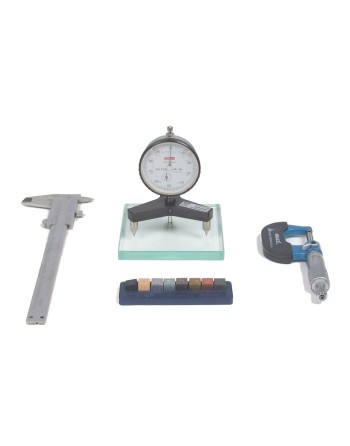
P2110105 – Measurement Techniques


Logo Phywe


Reference

  • P2110105 : Measurement Techniques

Principle

Measuring instruments such as vernier calipers, micrometers, and spherometers enable highly accurate measurements of lengths, thicknesses, diameters, and radii of curvature. This educational module demonstrates measurement procedures, as well as the concepts of measurement accuracy and reading precision.

Key Benefits

  • Provides a fundamental basis for practical science laboratory courses
  • Supports the acquisition of essential skills in measuring basic mechanical quantities
  • Raises awareness of measurement accuracy limitations
  • Encourages the combination of multiple measurements to determine a physical quantity
  • Enables determination of radii of curvature using a spherometer


ACS-102 - Cooling Tower Training Unit


Logo ADF Didactic

Reference : ACS-102


General Description

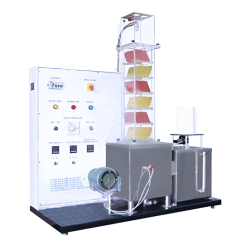
The ACS-102 is a wet cooling tower system designed to replicate industrial cooling processes using forced draft ventilation. This complete educational unit enables detailed study of thermal and air-water interactions within a cooling column.

The system includes a full water circuit with pump, filter, valve, and spray nozzle, along with a radial fan and a three-stage electric heater with thermostat control.

Applications

  • Technical and university education
  • Heat transfer studies
  • Psychrometric analysis
  • HVAC and energy engineering training

Key Features

  • Wet cooling tower with interchangeable column
  • Optional interchangeable wet deck surfaces
  • Forced ventilation via radial fan
  • Airflow control via throttle valve
  • Demister to reduce water losses
  • Make-up water tank for compensation
  • Display of temperature, pressure, flow rate, humidity
  • ADF software for USB data acquisition (Windows)

Educational Capabilities

Process Analysis

  • Full industrial process simulation
  • Evaporation process observation
  • Water distribution visualization


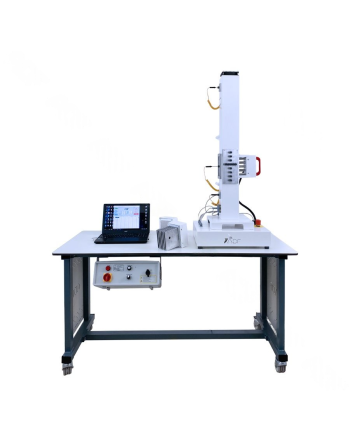
TE-101 - Temperature Measurement Training Set


Logo ADF Didactic

Reference : TE-101


The TE-101 is a comprehensive training system designed for studying and comparing different temperature measurement methods used in industrial and scientific environments.

It enables analysis of both mechanical and electronic measurement techniques, including steady-state and transient thermal behavior.

🔍 General Description

Various physical principles are used to measure temperature. The TE-101 allows users to observe and compare these methods under real operating conditions using both analog and electronic instruments.

Temperature sensors are mounted on a height-adjustable platform, allowing immersion in a heated water tank up to 80°C. A fan ensures nearly constant ambient conditions, while a second tank with an electronically controlled heater provides precise temperature control.

Measured values can be displayed in analog or digital form and recorded continuously using a 3-channel line recorder, making it possible to analyze response times and temperature variations.

⚙️ Key Features

  • Steady-state and transient temperature measurement
  • Comparison of multiple sensor technologies
  • Controlled temperature steps up to 80°C
  • Analog and digital measurement display
  • Continuous data recording (3-channel recorder)
  • Stable ambient conditions ensured by integrated fan
  • HDMI panel interface

🎯 Applications

  • Technical and academic training
  • Educational laboratories
  • Sensor and instrumentation studies
  • Thermal control system analysis

P2130305 – Newton’s Second Law with Low-Friction Track


Logo Phywe


Reference

  • P2130305 : Newton’s Second Law with Low-Friction Track

Principle

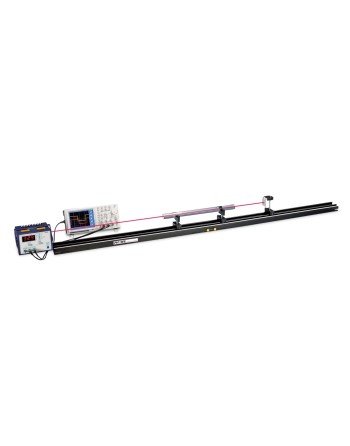
The distance-time law, the velocity-time law, and the relationship between mass, acceleration, and force are investigated using a demonstration track designed to study uniformly accelerated rectilinear motion.

Advantages

  • High-precision results thanks to measurements performed under very low friction conditions, ensured by a cart equipped with sapphire bearings.
  • Adjustable feet along the entire length of the track, allowing easy and precise alignment, even on small laboratory tables.
  • Highly robust accessories, designed to prevent overloading of the cart through an elastic bearing system on the base plate, thereby reducing unnecessary failures.
  • Detailed, illustrated step-by-step manual for easy implementation of experiments.
  • The 4-4 timer provides great versatility and can be used for a wide range of experimental applications, including:
    • distance-time law measurements at four distances,
    • velocity measurements at four positions,
    • collision principles,
    • measurement of rotational motion period,
    • direct measurement of the duration of a full oscillation of a mechanical pendulum,
    • short- and long-term measurements using two 8-digit displays by connecting two timers.


TE-105 - Thermal Conductivity of Building Materials


Logo ADF Didactic

Reference : TE-105


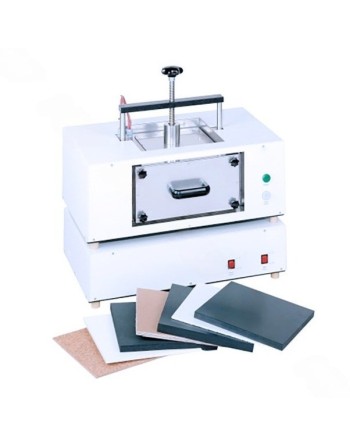
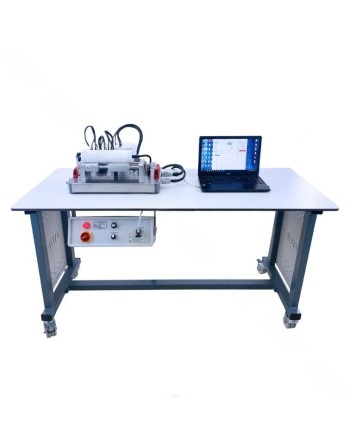
The TE-105 is a laboratory and educational device designed for the analysis of thermal conductivity of non-metallic building materials according to DIN 52612 standards. It is ideal for studying thermal insulation performance and improving energy efficiency in construction.

🔍 Product Description

Thermal insulation is a key aspect of building physics, ensuring indoor comfort while minimizing energy consumption. The TE-105 enables precise investigation of thermal conductivity and resistance of various insulating materials.

Included samples (Armaflex, chipboard, PMMA, polystyrene, POM, cork, plaster, etc.) are placed between a heated plate and a water-cooled plate. Heat flow passing through the sample is measured using a dedicated heat flux sensor.

⚙️ Operating Principle

  • Hot plate heated by electric heating element (500 W)
  • Cold plate cooled by water circulation
  • Temperature sensors (inlet, outlet, plate centers)
  • Clamping system for consistent thermal contact
  • Software-controlled temperature regulation (Windows 10 compatible)
  • USB data transfer to PC

🧪 Experiments

  • Determination of thermal conductivity
  • Calculation of thermal resistance
  • Analysis of multiple materials in series

✅ Key Benefits

  • Delivered fully assembled and ready to use
  • Accurate and repeatable measurements
  • Perfect for education and research labs
  • Wide range of tested materials


TE-106 - Free and Forced Convection System


Logo ADF Didactic

Reference : TE-106


The TE-106 is a comprehensive educational system designed for studying and demonstrating thermal convection phenomena, including both natural (free) and forced convection. It is ideal for technical and academic laboratories.

🔬 Product Description

The system is based on a vertical air duct where different heating elements can be inserted. An axial fan located at the top draws ambient air into the duct and forces it through the channel.

As the air flows over the heating elements, it absorbs heat, enabling detailed analysis of convection processes. The unit includes four heating elements with different geometries, two of which can also be used outside the duct for natural convection experiments.

Its compact design ensures fast heating and efficient experimental operation.

⚙️ Key Features

  • Study of free and forced convection
  • Vertical air duct (125 x 125 x 1000 mm)
  • High-sensitivity speed-controlled fan
  • Multi-point temperature measurement system
  • Accurate air velocity sensor
  • Heating power: 290 W
  • Max air velocity: 4 m/s
  • User-friendly software compatible with Windows 10
  • Data acquisition system (DAQ) via Ethernet
  • Emergency stop and main switch included

🧪 Experiments

  • Natural (free) convection experiments
  • Forced convection experiments
  • Heat transfer comparison on different surfaces
  • Heat distribution analysis in the duct
  • Reynolds and Nusselt number calculations
  • Heat transfer coefficient determination
  • Heat transfer rate calculation

TE-107 - Convection and Radiation Training Set


Logo ADF Didactic

Reference : TE-107


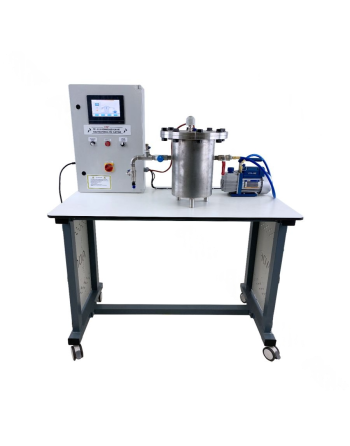
The TE-107 is an advanced educational system designed to analyze and distinguish heat transfer mechanisms by convection and radiation under real operating conditions.

🔍 Description

In real thermal systems, heat transfer occurs simultaneously through conduction, convection, and radiation. The TE-107 enables users to isolate and study the individual contributions of convection and radiation.

The system is based on a heated metal cylinder placed at the center of a pressure vessel. Surface temperature is controlled, while sensors measure temperature and pressure conditions.

⚙️ Key Features

  • Study of heat transfer by convection and radiation
  • Operation under vacuum or positive pressure
  • Comparison between different gases (air, nitrogen, helium, CO₂)
  • Minimized conduction losses via optimized suspension
  • Precise temperature control
  • Data acquisition and analysis via dedicated software

🧪 Possible Experiments

  • Heat transfer under vacuum (radiation dominant)
  • Heat transfer with gases (convection)
  • Gas comparison studies
  • Effect of pressure on heat transfer


TE-109 - Radial and Linear Heat Conduction System


Logo ADF Didactic

Reference : TE-109


The TE-109 system is a complete educational platform designed for experimental analysis of heat conduction in solids under linear and radial conditions. It is ideal for technical and higher education applications.

🔬 General Description

Heat conduction is a fundamental mode of heat transfer based on kinetic energy exchange between molecules. The TE-109 enables steady-state heat conduction experiments using integrated heating and cooling systems.

  • Linear heat conduction module
  • Radial heat conduction module

⚙️ Key Features

  • High-precision temperature measurement sensors
  • USB and Ethernet data transmission
  • PC interface with data acquisition software
  • PID temperature control
  • Digital display

🧪 Experiments

  • Verification of Fourier’s Law
  • Linear and radial temperature distribution
  • Thermal conductivity calculation
  • Effect of cross-section variation
  • Surface contact resistance
  • Composite material conduction
  • Insulation heat transfer analysis

🏭 Applications

  • Engineering laboratories
  • Technical training centers
  • Thermal engineering education
  • Heat exchanger studies


TE-110 - Laws of Radiant Heat Transfer and Exchange


Logo ADF Didactic

Reference : TE-110


General Description

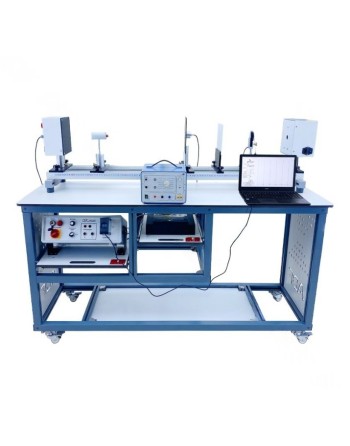
The TE-110 is a complete experimental unit designed for studying the laws of radiant heat transfer. Thermal radiation is an energy transfer mechanism via electromagnetic waves emitted by any body above absolute zero.

This educational system allows investigation of thermal and light radiation, including UV, visible, and infrared radiation, making it ideal for physics and thermal science laboratories.

Main Features

The system includes two radiation sources: a thermal radiator and a light source. Detection is carried out using a thermopile for thermal radiation and a photodiode-based lux meter for light radiation.

Optical components such as filters, diaphragms, and absorption plates can be mounted on a graduated optical bench for precise distance measurements.

Measurement and Analysis

All components can be rotated to analyze the effect of angle of incidence on radiation intensity. Measured values are digitally displayed and transferred to a PC via USB for analysis.

Experiments

  • Lambert’s law (direction and distance)
  • Stefan-Boltzmann law
  • Kirchhoff’s laws
  • Radiation absorption and reflection
  • Thermal and light radiation studies
  • Influence of distance and angle
  • Wide experimental range


TE-121 - Heat Exchanger Training Bench


Logo ADF Didactic

Reference : TE-121


General Description

The TE-121 is an educational laboratory equipment designed for studying the construction, operation, and performance of various types of heat exchangers used in industrial applications.

Educational Applications

Experiments and Studies

  • Study of heat exchanger operating principles
  • Thermal performance analysis
  • Understanding heat transfer mechanisms
  • Evaluation of heat losses

Types of Heat Exchangers Studied

  • Shell and tube heat exchanger
  • Plate heat exchanger
  • Air/water heat exchanger
  • Pipe-in-pipe heat exchanger
  • Jacketed stirred vessel heat exchanger

Included Modules

  • TE-121.01 – Tubular Heat Exchanger Module
  • TE-121.02 – Plate Heat Exchanger Module
  • TE-121.03 – Shell & Tube Heat Exchanger Module
  • TE-121.04 – Jacketed Stirrer Module


TFM-500 – Thermodynamic Cycles of Reciprocating Machines


Logo ADF Didactic

Référence : TFM-500


General Description

The TFM-500 is a complete educational system designed for studying thermodynamic cycles of reciprocating machines, particularly compressed air generation systems. It enables analysis of a two-stage compressor and visualization of compression processes using a p-V diagram.

Applications

  • Technical and engineering education
  • Industrial pneumatic system training
  • Energy and mechanical engineering laboratories
  • Thermodynamic cycle demonstrations

Main Features

  • Recording characteristics of a two-stage compressor
  • Visualization of compression processes (p-V diagram)
  • Measurement of pressure, temperature, and electrical power
  • Determination of intake volumetric flow rate
  • Intercooling between compression stages
  • Touchscreen control with intuitive interface
  • PLC-based system control
  • Remote operation via integrated router (up to 10 devices)
  • Internal data storage via USB


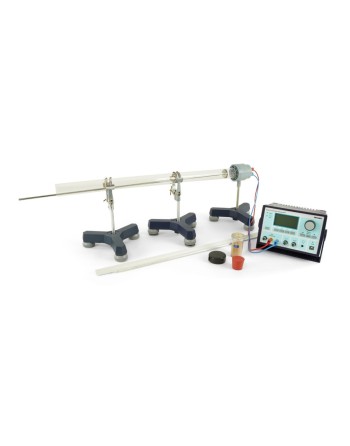
P2150605 - Kundt’s Tube with Digital Function Generator for Measuring the Speed of Sound


Logo Phywe


Reference :

P2150605


This complete educational system is designed to measure the speed of sound in air using a Kundt’s tube and a digital function generator. The experiment demonstrates the formation of standing waves inside an air column and allows direct visualization of pressure nodes through the movement of cork powder inside the glass tube.

When the sound frequency matches one of the natural frequencies of the air volume inside the tube, a standing wave is formed. The cork powder then arranges itself into a pattern showing pressure nodes and areas of maximum vibration. Based on the length of the air column and the number of observed pressure nodes, the speed of sound can be calculated for different natural frequencies.


Educational Applications

This educational setup is particularly suitable for physics laboratories in secondary schools, universities, technical institutes, and higher education institutions.


Possible Experiments

  • Measurement of the speed of sound in air
  • Study of longitudinal waves
  • Observation of standing waves
  • Analysis of the natural frequencies of an air column
  • Study of wavelength
  • Determination of pressure nodes
  • Study of natural vibrations
  • Influence of air column length on resonance frequency

Educational Objectives

  • Determine the speed of sound in air for different air column lengths
  • Understand the relationship between frequency, wavelength, and propagation speed
  • Visualize nodes and antinodes in a standing wave
  • Compare different resonance frequencies
  • Develop experimental and measurement skills


25274-88 - Student TESS Set Heat 1 – Advanced Physics


Logo Phywe


Reference :

25274-88


General Presentation

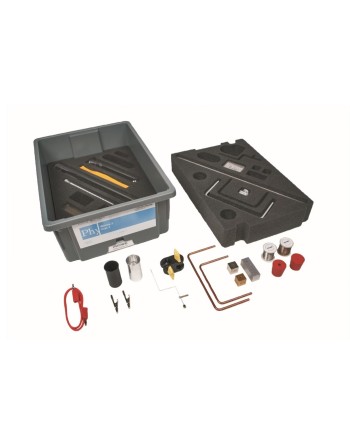
This educational heat set is designed to investigate the fundamental principles of heat through a complete range of practical experiments. It covers phenomena ranging from the expansion of liquids and gases to boiling point elevation.

Designed for advanced physics education, this set provides a complete solution for conducting educational experiments related to temperature, heat transfer, thermal energy, phase changes, and solutions.


Educational Applications

The set enables 21 student experiments covering the following topics:

  • Thermal equilibrium and temperature measurement
  • Thermal expansion
  • Heat transfer
  • Thermal energy
  • Change of state
  • Solutions

Benefits

  • Complete ready-to-use equipment set
  • Minimal preparation time
  • Easy and fast experiment setup
  • Designed in accordance with educational curricula
  • Comprehensive coverage of key heat-related topics


15275-88 - Student TESS Set Heat 2 – Advanced Physics


Logo Phywe


Reference :

15275-88


Function and Applications

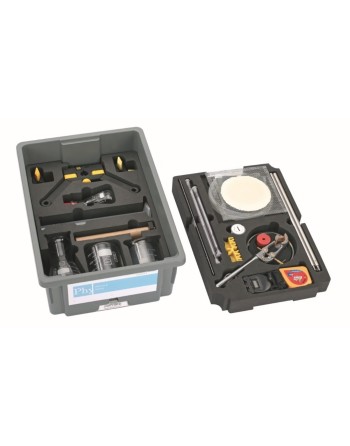
The Student Set Heat 2, TESS Advanced Physics is an advanced educational kit designed for the in-depth study of thermal phenomena. It enables a wide range of experiments, from temperature measurement using a thermocouple to the conversion of mechanical energy into internal energy.

This kit is a supplementary equipment set for the Student Set Heat 1 and, when used together, allows 13 additional student experiments in the following areas:

  • Thermal equilibrium and temperature measurement
  • Thermal expansion
  • Heat transfer
  • Thermal energy
  • Change of state
  • Solutions

Benefits

  • Additional thermodynamics experiments covering heat conduction, heat capacity, and energy conversion.
  • Complete equipment set including all required components for minimal preparation time and fast experiment setup.
  • Digital experiment descriptions available through QR codes.
  • Aligned with educational curricula and covering all key thermodynamics topics.

Technical Specifications

  • Supplied in a durable and stackable storage box.
  • Custom-fit foam insert for secure component protection.
  • Quick and easy inventory checking through organized storage.
  • Includes all essential components required to perform the experiments.
  • Equipment must comply with CE standards.


25271-88 - Student TESS Set, Mechanics 1


Logo Phywe


Reference :

25271-88


25271-88 - Student Set Mechanics 1, TESS Advanced Physics

Function and Applications

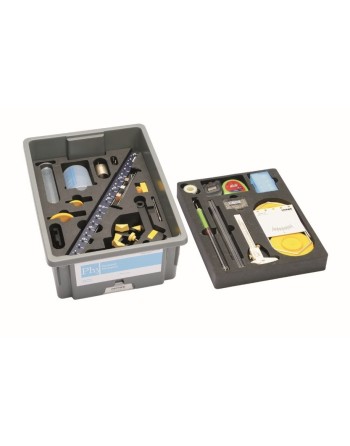
The Student Set Mechanics 1, TESS Advanced Physics is a complete educational kit designed for the study of the fundamental principles of mechanics. It enables a wide range of experiments, from Hooke’s Law to coupled pendulums.

This basic equipment set allows the performance of 32 experiments covering the following topics:

  • Physical quantities and characteristics
  • Forces
  • Elementary machines
  • Liquids and gases
  • Oscillations

Benefits

  • Complete ready-to-use equipment set with minimal preparation time.
  • Digital experiment descriptions available via QR code.
  • Aligned with educational curricula.
  • Modular stand material that is flexible, durable, and stable.
  • Color-coded movable parts to facilitate understanding of mechanical processes.

Equipment and Technical Data

The set is supplied in a sturdy and stackable storage box containing all components required to conduct the experiments.

The storage box includes a precisely fitting foam insert to protect the components and allow quick checking for completeness.