

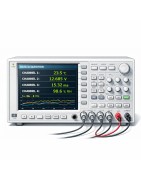

DAQ-9600 - Data Acquisition System

DAQ-9600 Data Acquisition System
The DAQ-9600 Data Acquisition System is a versatile and high-performance solution designed for automated testing, measurement, and data logging in laboratory and industrial environments. With its modular architecture, integrated precision DMM, and multiple connectivity options, it provides a reliable platform for a wide range of measurement applications.
Ordering Information
Mainframes
| Model | Description |
|---|---|
| DAQ-9600 | Data Acquisition System with USB, LAN, and Digital I/O interfaces |
| DAQ-9600/GPIB | Data Acquisition System with USB, LAN, Digital I/O, and optional GPIB interface |
Modules
| Model | Description |
|---|---|
| DAQ-900 | 20-Channel Universal Multiplexer (Solid-State Relay) |
| DAQ-901 | 20+2 Channel Universal Multiplexer (Armature Relay) |
| DAQ-903 | 40-Channel Single-Ended Multiplexer |
| DAQ-904 | 4 × 8 Two-Wire Matrix Module |
| DAQ-907 | Multifunction Measurement Module |
| DAQ-908 | 20-Channel Actuator / General-Purpose Switch Module |
| DAQ-909 | 8+2 Channel High-Voltage / High-Current Multiplexer |
Key Features
- Large 4.3-inch TFT color display for clear and intuitive measurement visualization
- 3-slot mainframe with an integrated 6½-digit digital multimeter (DMM)
- High measurement accuracy with 0.0035% basic DC voltage accuracy
- Compatibility with 7 interchangeable switch modules for flexible configuration
- Voltage measurement capability up to 600 V DC / 400 V AC (with DAQ-909 module)
- High scanning speed up to 450 channels per second
- Internal memory capable of storing up to 100,000 data points
Measurement Capabilities
The DAQ-9600 supports measurement and conversion of 14 different input signal types, including:
- Temperature measurement using thermocouples, RTDs, and thermistors
- DC and AC voltage
- 2-wire and 4-wire resistance
- Frequency and period
- DC and AC current
- Capacitance measurement
- Direct strain and bridge strain measurements
Connectivity and Integration
- Command compatibility with the DAQ970A, enabling easy integration with existing test systems
- USB storage support for data logging and file transfer in standalone operation
- Multiple interfaces including Digital I/O, LAN, USB host/device, and optional mini-GPIB
Software
The DAQ-Data Logger PC software, provided free of charge, allows users to easily configure measurement setups, monitor data in real time, and control test procedures from a computer.