Software

Software

Software

Active filters

FluidLab-PA Closed-Loop


Festo Logo

Reference : 8208217


Step-by-Step Exploration of the Fundamentals of Control Engineering

FluidLab-PA Closed-Loop is an intuitive software platform designed to explore and demonstrate the core principles of control engineering in a structured and practical way.

The software enables measurement, control, and regulation of pressure, temperature, flow, and level control loops using either real or simulated hardware systems, including EduKit PA, MPS PA Compact Workstation, MPS PA Stations, and EDS Water Management systems.


Learning Objectives

  • Master the fundamental principles of control engineering
  • Apply control technology concepts in practical scenarios
  • Integrate hardware components into a complete control system
  • Customize system parameters (sensor values, signal attenuation, simulation modes)
  • Analyze and interpret process data

Key Advantages

  • Provides a realistic and interactive platform that immerses learners in real-world process control scenarios
  • Advanced visualization of complex continuous control and regulation systems
  • Enhances engagement through graphical documentation display and real-time system feedback
  • Customizable parameters to support individualized learning and experimentation
  • Seamless integration with physical training systems for hands-on experience


FluidLab-PA Process


Festo Logo

Reference : 8208223


Introducing Students to Process Engineering with Real or Simulated Training Systems

FluidLab-PA Process is designed to provide an accessible introduction to process engineering using either real or simulated learning systems.

The software supports commissioning, operation, and monitoring of EduKit PA as well as selected workstations from the MPS PA and EDS Water Management systems. It promotes a solid understanding of process control engineering principles through structured and application-oriented learning.


Learning Objectives

  • Understand plant behavior, process operations, and different control strategies
  • Develop commissioning skills to ensure safe and efficient system operation
  • Monitor machine status, manage alarms, and analyze deviations
  • Program process sequences using electrical circuit diagrams, logic diagrams, and GRAFCET

Key Advantages

  • Interactive training that reinforces theoretical knowledge through practical application
  • Redesigned interface ensuring a consistent operating concept across all hardware systems
  • Seamless switching between real and simulated systems, enabling remote learning and curriculum expansion without additional hardware investment
  • Modern software architecture allowing easy integration of additional equipment and updates


FCS3000 - Fuel Cell Simulation Software


Logo ITECH


Reference

FCS3000 Fuel Cell Simulation Software


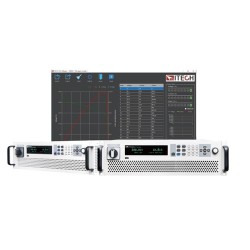
The FCS3000 Fuel Cell Simulation Software, when used in combination with the IT6000C bidirectional DC power supply and the IT6000B regenerative power system, enables accurate simulation of fuel cell stack polarization curves.

The system supports output voltages up to 2250 V and scalable power up to 1152 kW, meeting the requirements of high-power fuel cell simulation applications.

FCS3000 is specifically designed to replace real fuel cell stacks in laboratory environments, providing a highly efficient and flexible simulation platform for hydrogen energy and hybrid propulsion system research.

By eliminating the need for physical fuel cell stacks, the software helps reduce testing costs, simplify platform setup, and avoid performance degradation commonly associated with repeated experimental use of real fuel cell systems.

With its intuitive user interface and comprehensive data reporting capabilities, FCS3000 provides reliable experimental support for both practical testing and theoretical research.


Key Features

  • Automatic wide-range output with voltage up to 2250 V
  • Scalable fuel cell simulation power up to 1152 kW
  • User-defined fuel cell polarization curve with up to 4096 programmable points
  • Support for .csv file import for customized curve simulation
  • Data storage and export functions for analysis and reporting
  • Graphical software interface with real-time display of output voltage, current, and power


SAS1000 - Solar Array Simulation Software


Logo ITECH


References

SAS1000 Solar array software for IT6500C/IT6000B/IT6000C/IT-M3600

SAS1000L Solar array software for IT6500C/IT6000B/IT6000C/IT-M3600 (power ≤15kW)

SAS1000M Solar array software for IT6500C/IT6000B/IT6000C/IT-M3600 (multi-channel)


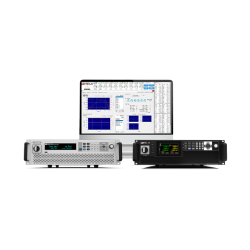
ITECH introduces its latest high-speed, high-performance photovoltaic simulation solution. When combined with high-power DC power supplies, the SAS1000/L solar array simulation software accurately reproduces solar array I-V curves, with output voltage up to 2250 V and scalable system power up to 10 MW.

The system delivers fast dynamic response, excellent control accuracy, high repeatability, outstanding stability, and precision performance. It features built-in simulation models compliant with EN 50530, Sandia National Laboratories PV model, NB/T 32004, CGC/GF004, and CGC/GF035.

Users can easily configure test regulations, material types, Vmp, Pmp, and other parameters to simulate I-V curve characteristics and automatically generate test reports. The software is ideal for static and dynamic maximum power point tracking (MPPT) performance testing of photovoltaic inverters.


Product Features

  • Automatic wide-range output, with voltage up to 2250 V
  • Scalable power up to 10 MW
  • Built-in I-V curve mathematical model for accurate solar array simulation
  • Simulation of various solar cell technologies (monocrystalline, polycrystalline, thin-film), including Fill Factor configuration
  • I-V curve simulation under varying temperature and irradiation conditions
  • Shading simulation for solar panels (e.g., cloud or tree shadow scenarios)
  • Static and dynamic MPPT efficiency testing
  • Built-in EN 50530, Sandia National Laboratories PV model, NB/T 32004, CGC/GF004, and CGC/GF035 test programs with automatic report generation
  • Graphical user interface with real-time MPPT status monitoring
  • Automatic programming of up to 100 I-V curves via Voc, Isc, FF, Pm, and other parameter points
  • Support for 100 × 128-point curves and 4096-point high-resolution programming
  • Adjustable output impedance
  • Independent edge configuration for multiple operating modes, with adjustable rise and fall times
  • Seamless bidirectional current switching for rapid cell charge and discharge simulation/li>
  • Built-in DIN 40839 and ISO 16750-2 compliance
  • Standard USB, RS232, GPIB, and LAN (LXI compliant) interfaces
  • Support for up to 20 solar power supplies for multi-channel MPPT testing

Applications

  • Design and validation of PV inverter MPPT circuits and algorithms
  • Verification of inverter MPP voltage range and full-load MPP voltage range/li>
  • Validation of static maximum power tracking efficiency
  • Dynamic MPPT performance testing according to EN 50530, Sandia National Laboratories PV model, NB/T 32004, CGC/GF004, and CGC/GF035
  • Verification of inverter start-up voltage, maximum input voltage, maximum input current, and related electrical parameters
  • MPPT validation under partial shading conditions
  • DC terminal protection testing (OVP, OPP)
  • Validation of microgrid control centers and photovoltaic energy storage control functions
  • MPPT performance verification from sunrise to sunset operating conditions
  • Total and conversion efficiency testing of inverters when used with the IT9100 power analyzer