
- New
Reference : FXB-X06006 Hybrid Vehicle Intelligent Fault Setting and Detection Platform
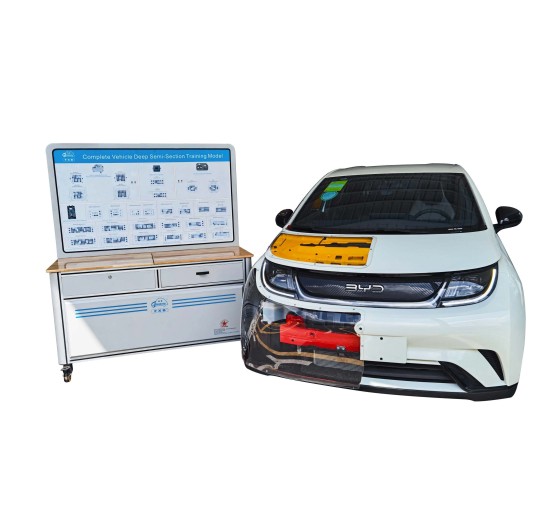
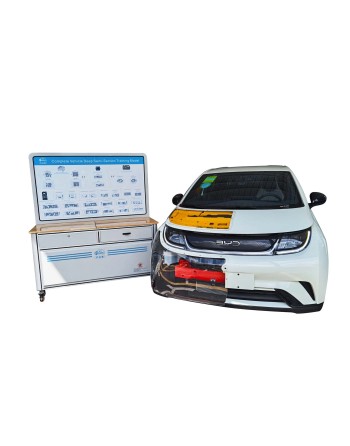
This training platform is based on a brand-new BYD Qin MAX DM-i plug-in hybrid vehicle, modified for automotive technical education and practical training. It enables comprehensive study of hybrid vehicle architecture, electric and thermal propulsion systems, high-voltage circuits, and onboard electronic control systems.
Featuring a pedagogical body cutaway, a dedicated connection and diagnostic platform, and mechanical and electrical fault simulation systems, this equipment allows trainees to examine actual vehicle components, understand their interactions, perform measurements, conduct diagnostics, and develop practical hybrid vehicle maintenance skills.
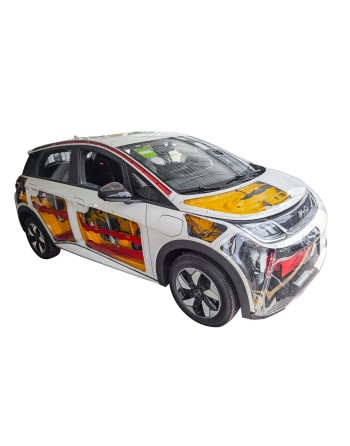
The platform uses a 2026 BYD Qin MAX DM-i 230 km plug-in hybrid vehicle, modified for educational purposes. The vehicle body is partially cut away, particularly on the right-hand side, including sections of the front bumper, hood, roof, trunk lid, and rear bumper. The cutaway sections are color-coded and protected against corrosion, providing clear visibility of the body structure, internal components, and electrical modules.
Components remain in their original positions, enabling trainees to identify equipment, study component locations, and understand the structural relationships between the various vehicle systems.
The vehicle retains its original hybrid propulsion system, integrating a thermal engine and a high-voltage electric propulsion system. This configuration enables the study of connections, control relationships, and operating principles between the main powertrain components.
High-voltage components, including the integrated power assembly, electric motor, transmission, battery management system, and electronic control units, remain installed in their original positions. Trainees can therefore understand the organization of the propulsion system, the operating principles of its components, and the essential safety precautions associated with high-voltage system maintenance.
The platform retains the essential structural characteristics of the original vehicle, including the chassis, track width, and front suspension parameters. The main equipment remains installed in its original positions, including:
The front wheels remain connected to the transmission through the original drive shafts and can be driven when a driving gear is selected.
The vehicle is equipped with a dedicated educational connection, detection, and fault simulation platform, enabling analysis of vehicle data and signals without damaging the original wiring harness.
The platform supports the acquisition, analysis, and diagnosis of dynamic and static parameters from the following control units and systems:
The platform integrates mechanical and electrical fault simulation systems, enabling instructors to create various diagnostic scenarios for practical training exercises.
The mechanical fault simulation system uses gold-plated U-shaped connectors and provides at least 300 fault simulation points. The platform also incorporates a wireless fault simulation system operated through FXB software installed on a tablet, providing at least 30 additional fault simulation points.
The mechanical fault simulation area is located at the front left of the training panel. It features an upward-opening access compartment, facilitating access to the controls and fault simulation points. Dedicated 2 mm jumper wires are supplied for short-circuit fault simulation.
The mobile support frame is manufactured from alloy steel and is designed to withstand oil exposure, corrosion, and intensive use in educational environments. It is equipped with four casters, including two swivel casters and two fixed casters. The swivel casters feature locking mechanisms to secure the platform during practical training. Their outer diameter is at least 4 inches, ensuring convenient mobility and quiet operation.
2026 BYD Qin MAX DM-i 230 km Leading Edition – Front-wheel-drive plug-in hybrid sedan.

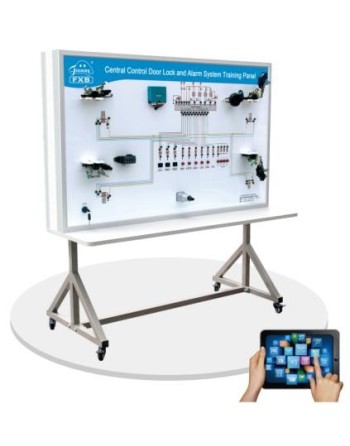
Reference : FXB-I19001 Automotive Central Locking and Alarm System Training Panel
The FXB-I19001 training panel is designed for studying the operation of automotive central door locking and alarm systems, based on the Volkswagen Passat B5. It enables practical exercises covering locking mechanisms, electrical signals, alarm functions, and diagnostic procedures. Equipped with accessible test points and an intelligent fault simulation system, it is a suitable training solution for vocational schools, technical institutes, and automotive maintenance training centres.
The FXB-I19001 training panel is suitable for practical exercises covering automotive security system architecture, central locking operation, alarm systems, associated electrical circuits, fault diagnosis, and troubleshooting methods. It can be used in vocational training centres, technical schools, institutes of technology, and automotive maintenance training facilities.
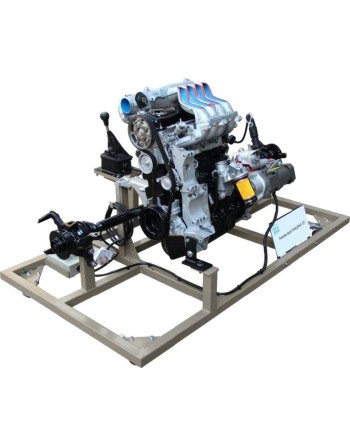
Reference : FXB-D01002 Gasoline Engine and Manual Transmission Cutaway Training Model
The FXB-D01002 training model, based on the transmission system of a Volkswagen Jetta, is designed for theoretical and practical automotive mechanics training. Its cutaway design allows learners to observe internal components and understand the operation of a manual transmission with 5 forward gears and 1 reverse gear. Driven by a single-phase gear reduction motor, the mechanism operates at low speed to facilitate observation of the power flow and gear operation. The training bench also features a protective cover for the drive components and a dedicated support for transmission disassembly exercises.
The model supports the following educational activities:
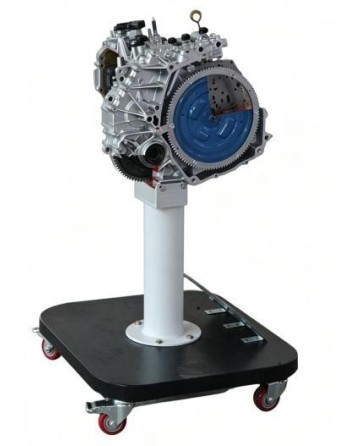
Reference : FXB-B08004 AWD CVT Transmission Cutaway Training Model
The FXB-B08004 training model is designed to demonstrate and explain the operating principles of a continuously variable transmission (CVT) integrated into an all-wheel-drive (AWD) system. Its cutaway components provide a clear view of the main internal mechanisms and help learners understand how the transmission ratio varies continuously.
The model supports the study of the input shaft, planetary gear set, clutch mechanism, and ratio variation through the movement of conical pulleys. It is suitable for vocational training centres, technical institutes, engineering schools, and specialised automotive technology laboratories.
The training model enables learners to:
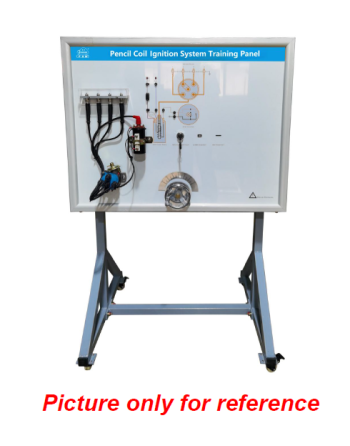
Reference : FXB-A09004 Hall Effect Ignition System Training Panel
The FXB-A09004 training panel is designed to demonstrate and study the operation of an automotive ignition system using a Hall effect sensor. Equipped with real, functional components, it enables learners to analyze the ignition circuit, understand the roles of the distributor and ignition module, perform electrical measurements and practise fault diagnosis. It is suitable for technical education institutions, vocational training centres and automotive maintenance laboratories.
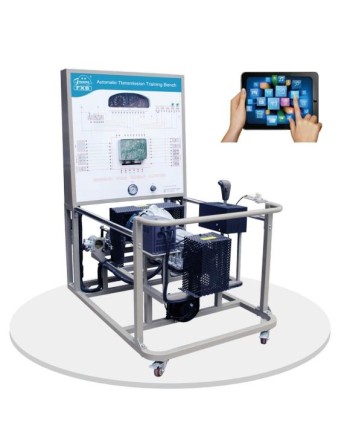
Reference : FXB-B01008 Electronic Automatic Transmission Training Bench
The FXB-B01008 training bench is designed for the practical study of electronically controlled automatic transmissions, including their operation, maintenance, testing, and diagnosis. Based on a functional cutaway automotive transmission corresponding to the Volkswagen 01M architecture, it enables trainees to observe key mechanical and hydraulic components, analyse electrical signals, and study transmission control strategies.
Equipped with an adjustable-speed electric motor, measurement terminals, operating parameter indicators, and a diagnostic interface, this training bench is suitable for technical education institutions, vocational training centres, and automotive technology laboratories.
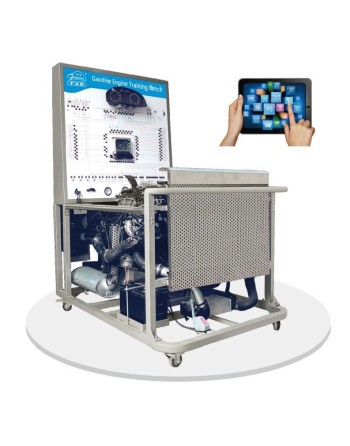
Référence : FXB-A01014 Direct-Injection Gasoline Engine Training Bench
The FXB-A01014 training bench is an educational system designed to study and diagnose electronically controlled direct-injection gasoline engines. Based on the EA211 1.4 T engine, it allows users to simulate different engine operating conditions and analyze the parameters of its control systems.
Designed for technical schools, vocational training centers, and automotive maintenance training institutions, this equipment supports hands-on learning in modern gasoline engine operation, electronic diagnostics, and fault-finding procedures.
The FXB-A01014 training bench is suitable for practical training in the following areas:
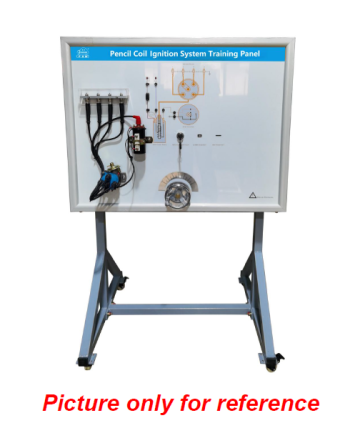
Reference : FXB-A09003 Twin Static Coil Ignition System Training Panel
The FXB-A09003 training panel is designed to demonstrate and study the operation of an electronic ignition system using a twin static ignition coil. Equipped with real, functional components, it enables learners to analyze the ignition circuit, perform electrical measurements, observe ignition timing variations and practise fault diagnosis. It is suitable for technical education institutions, vocational training centres and automotive maintenance laboratories.
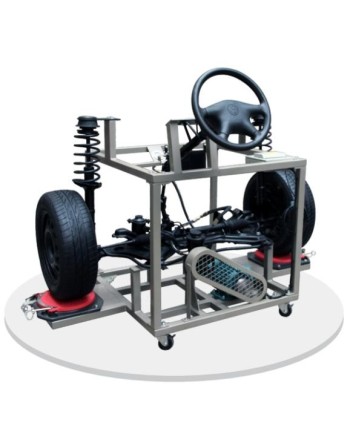
Reference : FXB-F01001 Power Steering and Independent Suspension Training Bench
The Power Steering and Independent Suspension Training Bench is based on the front axle assembly of a Volkswagen Jetta. It is designed to provide a practical demonstration of the structure, operating principles, and functionality of the power steering and front independent suspension systems.
This automotive training equipment is intended for technical and vocational schools, vocational training centers, and institutions specializing in automotive education. It provides a practical teaching platform for theoretical instruction and hands-on training in steering and suspension systems.
The training bench supports component identification, functional demonstrations, operating simulations, and practical assembly and disassembly exercises.
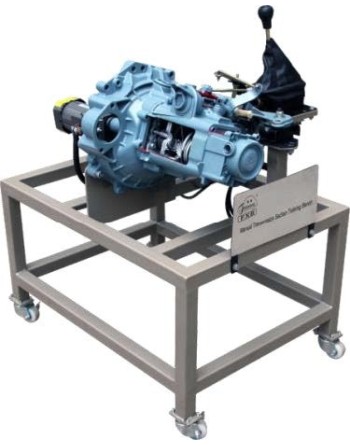
Reference : FXB-B06004 Manual Transmission and Clutch Training Bench
The FXB-B06004 training bench is designed for studying and demonstrating the operation of a manual gearbox combined with a mechanical clutch. Based on an automotive architecture associated with the Volkswagen Jetta, it enables trainees to observe internal transmission components and understand the principles of gear selection, synchronisation, and torque transmission.
Featuring a cutaway gearbox, a complete clutch assembly, and an electric drive for dynamic demonstrations, this training equipment is suitable for technical education institutions, vocational training centres, and automotive technology laboratories.
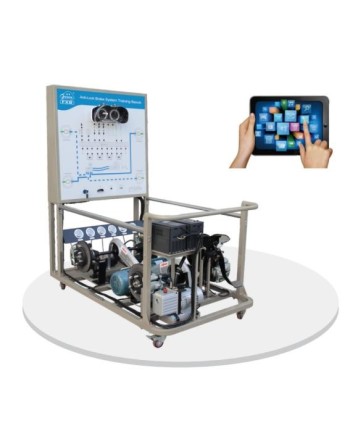
Reference : FXB-E04001 Anti-Lock Braking System (ABS) Training Bench
The FXB-E04001 training bench is designed for the study, demonstration, and diagnosis of the Anti-Lock Braking System (ABS) used in Volkswagen Jetta vehicles. It enables learners to visualize hydraulic braking operation, simulate braking conditions with and without ABS intervention, and perform practical electrical and hydraulic diagnostic exercises.
Designed for technical schools, vocational training centers, and automotive training institutions, this equipment supports the teaching of modern braking systems and helps learners develop practical skills in automotive diagnostics and troubleshooting.
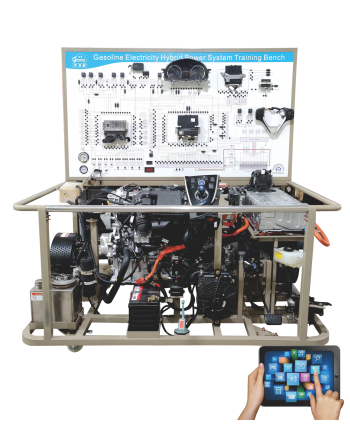
Reference : FXB-A05001 Gasoline-Electric Hybrid Powertrain Training Bench
The FXB-A05001 training bench is based on a Toyota Corolla 1.8 L gasoline-electric hybrid powertrain. It enables students to understand the structure, operating principles, and control strategies of hybrid propulsion systems through practical demonstrations, electrical measurements, electronic diagnostics, and troubleshooting exercises.
Featuring a real, operational hybrid engine system, a measurement panel with test terminals, a diagnostic interface, and a tablet for fault configuration, this training bench is suitable for technical and vocational schools, automotive training institutions, and vehicle maintenance training centers.
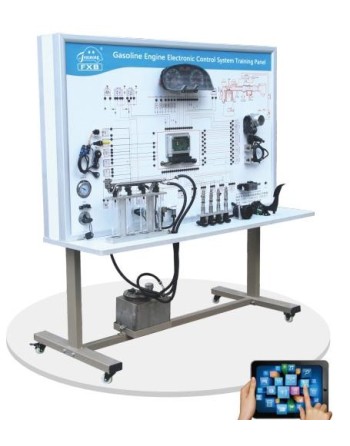
Reference : FXB-A15003 Gasoline Engine Electronic Control System Training Panel
The FXB-A15003 training panel is designed for studying, understanding and diagnosing gasoline engine electronic control systems. Based on actual components from the engine management system of a Volkswagen Jetta 1.6L, it enables trainees to study system architecture, operating principles and the interactions between sensors, actuators and the engine electronic control unit (ECU).
Suitable for technical schools, vocational training centers and automotive training institutions, this training panel supports electrical measurements, component signal analysis and practical fault diagnosis using a compatible automotive diagnostic tool.
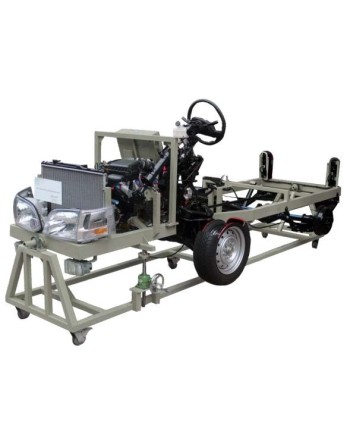
Reference : FXB-G03001 Automotive Chassis Systems Cutaway Training Model
The FXB-G03001 is a comprehensive automotive chassis training model based on the Toyota Hiace. It is designed to demonstrate the layout and operation of major vehicle systems, including the internal combustion engine, transmission, drive shafts, rear axle, steering, braking, suspension, and lighting systems. Its cutaway components and adjustable-speed electric drive allow trainees to observe internal mechanisms and understand the flow of mechanical power. The welded chassis is mounted on a stand with lockable castors and a manual tilt adjustment, providing improved access to components located underneath the vehicle.
This training model supports the study of overall vehicle architecture, interactions between mechanical and electrical systems, drivetrain operation, and the arrangement of chassis components. It is suitable for classroom demonstrations, practical training sessions, and introductory automotive diagnostics and maintenance exercises.
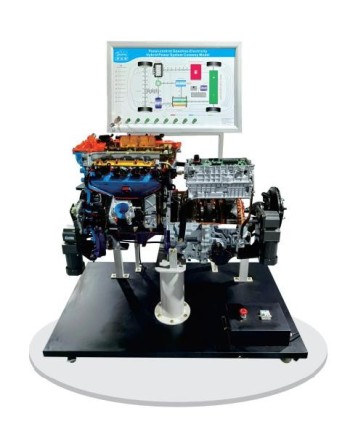
Reference : FXB-X03301 Gasoline-Electric Hybrid Power System Cutaway Training Bench
The FXB-X03301 is a training bench based on an original Toyota Corolla 1.8L gasoline-electric hybrid power system, featuring educational cutaways of its main components. It enables students to study hybrid propulsion operation, energy management strategies, and energy flows between the internal combustion engine, electric machines, and high-voltage battery. Its LED-equipped control panel provides dynamic visualization of the hybrid system's operating modes and energy flow directions.
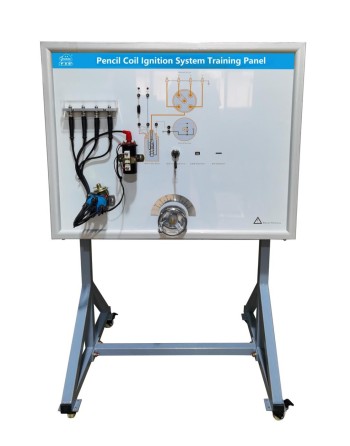
Reference : FXB-A09002 Pencil Coil Ignition System Training Panel
The FXB-A09002 training panel is designed to demonstrate the operation of an automotive pencil-coil ignition system using real components. Suitable for theoretical instruction and practical training, it helps learners study system architecture, analyze electrical signals, examine ignition timing and develop fault-diagnosis skills.
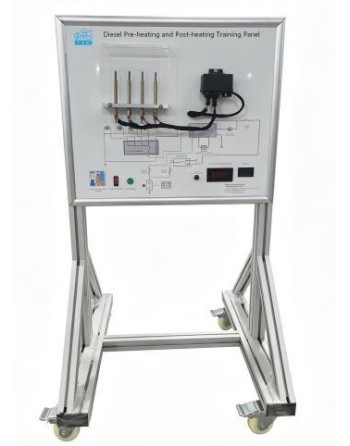
Reference : FXB-A21002 Diesel Engine Preheating and Postheating Training Panel
The FXB-A21002 training panel is designed for studying, demonstrating, and diagnosing diesel engine preheating and postheating systems. Based on a diesel engine configuration, it enables learners to analyze the operating cycles of glow plugs, the glow plug relay, and the electronic control module. Equipped with electrical measurement terminals and a fault simulation system, it allows trainees to perform measurements, identify malfunctions, and conduct diagnostic exercises under different engine temperature conditions. It is suitable for technical education institutions, vocational training centers, and automotive maintenance laboratories.
The FXB-A21002 training panel is particularly suitable for training courses covering:
Reference : FXB-X06006 Hybrid Vehicle Intelligent Fault Setting and Detection Platform
This training platform is based on a brand-new BYD Qin MAX DM-i plug-in hybrid vehicle, modified for automotive technical education and practical training. It enables comprehensive study of hybrid vehicle architecture, electric and thermal propulsion systems, high-voltage circuits, and onboard electronic control systems.
Featuring a pedagogical body cutaway, a dedicated connection and diagnostic platform, and mechanical and electrical fault simulation systems, this equipment allows trainees to examine actual vehicle components, understand their interactions, perform measurements, conduct diagnostics, and develop practical hybrid vehicle maintenance skills.