
- New
Reference : FXB-X06005 Plateforme didactique de diagnostic et de simulation de pannes pour véhicules électrique
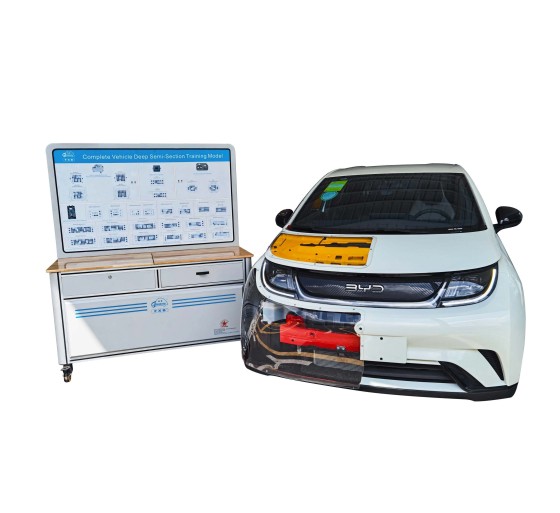
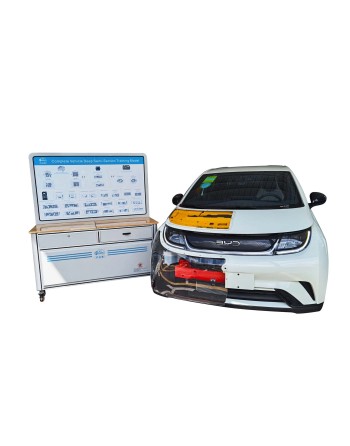
The FXB-X06005 is a professional educational platform designed for studying, analyzing, testing, and diagnosing the electrical and electronic systems of modern electric vehicles. Based on a complete 2025 BYD Dolphin 420 km electric vehicle, the platform features a specially modified and sectioned vehicle that provides direct visibility of major components, their installation positions, and their interconnections.
Combined with a dedicated fault-setting and diagnostic connection panel, this training system enables instructors to demonstrate vehicle operating principles, perform electrical measurements, and conduct practical troubleshooting exercises on the vehicle's main systems.
The FXB-X06005 training platform is developed from a complete 2025 BYD Dolphin 420 km electric vehicle, specially modified for technical education, vocational training, and higher education applications.
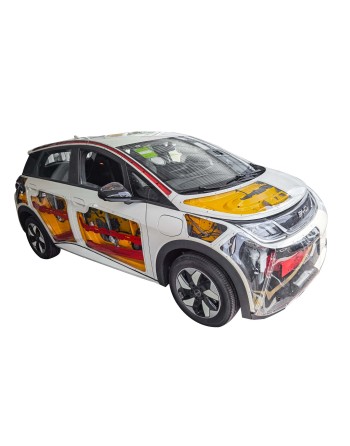
The vehicle is sectioned to provide direct visibility of its main mechanical, electrical, and electronic components. The right-hand side of the body is cut away while maintaining the original component layout. The sectioned areas include the front bumper, hood, roof, rear trunk lid, and rear bumper components. The exposed sections are identified using different colors and receive anti-corrosion treatment. Transparent acrylic protective covers are installed over the high-voltage components to facilitate observation while protecting the exposed areas.
The training vehicle retains the original electric propulsion architecture, including its highly integrated high-voltage multi-in-one assembly. The platform enables students to study the arrangement, connections, functions, and operating parameters of the main components:
The upper cover of the integrated high-voltage assembly is removed and modified to provide a transparent view of its internal structure, allowing students to understand the arrangement and functions of the different modules.
The platform retains the original traction battery and its electronic Battery Management System (BMS). Students can study the energy storage architecture, battery measurement circuits, and the monitoring and management functions of the battery system.
The battery management system includes one Battery Sampling and Actuation Unit (BASU), multiple Battery Information Collectors (BIC), and a dedicated battery data acquisition harness.
The battery thermal management system incorporates a heat-pump-based solution for temperature regulation.
The vehicle also retains its original Cross-Domain Computing Platform, allowing students to study the control functions and interaction between the various onboard electronic systems, including:
All major components retain their original installation positions and connections, providing an accurate representation of the vehicle's functional architecture.
Despite its educational modifications, the vehicle retains its main operating functions. It can be powered on and off and can perform driving operations.
The chassis, front and rear track widths, and front suspension parameters remain consistent with the original vehicle configuration. The front wheels are connected to the transmission through the original drive shafts and can be driven normally when the appropriate gear is engaged.
The platform is equipped with a dedicated educational connection panel for testing, measurement, and diagnosis of the vehicle's various systems. It enables real-time monitoring of vehicle data, static signals, and electrical and electronic parameters without damaging the original vehicle wiring harness.
The system supports measurement and diagnosis of signals from the following components and systems:
The connection panel integrates two complementary fault-setting systems, enabling instructors to prepare practical troubleshooting and diagnostic exercises.
Mechanical Fault-Setting System:
Wireless Fault-Setting System:
The training platform is mounted on a mobile alloy steel frame designed to provide resistance to oil, corrosion, and the demanding conditions of laboratory and workshop environments.
The frame is equipped with four casters, including two swivel wheels and two fixed wheels, allowing convenient movement. The swivel casters feature locking mechanisms to secure the platform during practical training sessions.
The casters have a minimum external diameter of 4 inches and are designed for low rolling resistance, quiet operation, and good wear resistance.
The FXB-X06005 platform supports a comprehensive range of practical training exercises, including:
The FXB-X06005 provides a comprehensive training solution for technical and higher education institutions, engineering schools, vocational training centers, and specialized automotive training institutes. It combines theoretical instruction in electric vehicle technologies with practical exercises using an actual vehicle architecture, providing an effective learning environment for training in modern electric mobility systems.

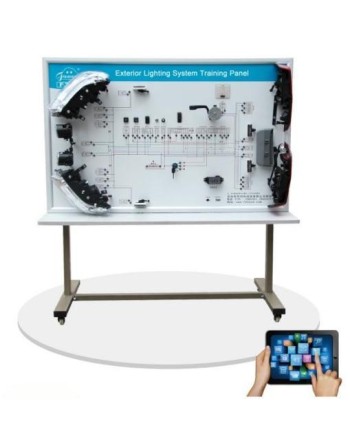
Reference : FXB-I12008 Automotive Lighting and Ignition System Training Panel
The FXB-I12008 is an educational training panel designed for the practical study of automotive exterior lighting and ignition systems, based on the Volkswagen Passat B5 configuration. It enables learners to understand circuit architecture, lighting operation, electrical controls and the main components of the ignition system.
Featuring functional components, electrical measurement terminals and a fault simulation system, this equipment provides a practical training solution for technical schools, vocational training centers and automotive maintenance laboratories.
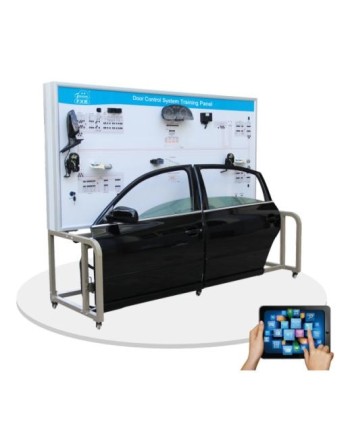
Reference : FXB-I10008 Automotive Door Control System Training Panel
The FXB-I10008 is a didactic training panel designed for studying, demonstrating, and diagnosing automotive door control systems. Based on a Volkswagen vehicle configuration, it incorporates functional components for studying power mirrors, central locking, electric windows, and the anti-theft system. Equipped with electrical test points, LED status indicators, and an intelligent fault simulation system, it is a suitable training solution for technical and vocational education institutions and automotive maintenance training centers.
The FXB-I10008 training panel is particularly suitable for training courses covering:
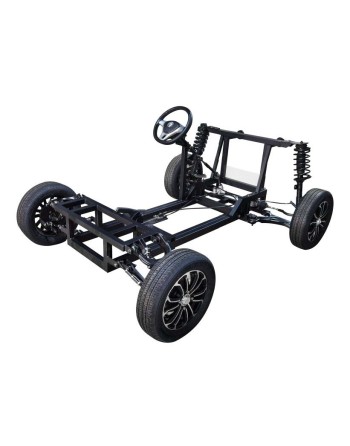
Référence : FXB-G02003 Front and Rear Axle Alignment Training Bench
The FXB-G02003 training bench is designed for studying and practicing front and rear axle geometry inspection and adjustment procedures. Based on the Volkswagen Passat B5, it reproduces the layout of the main suspension and steering components of the actual vehicle, enabling trainees to become familiar with the inspection and adjustment procedures specified by the vehicle manufacturer.
The training bench allows students to study the main angles and parameters involved in wheel alignment.
Front Axle Geometry
Rear Axle Geometry
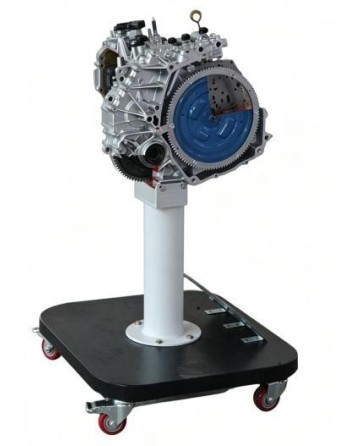
Reference : FXB-B08004 AWD CVT Transmission Cutaway Training Model
The FXB-B08004 training model is designed to demonstrate and explain the operating principles of a continuously variable transmission (CVT) integrated into an all-wheel-drive (AWD) system. Its cutaway components provide a clear view of the main internal mechanisms and help learners understand how the transmission ratio varies continuously.
The model supports the study of the input shaft, planetary gear set, clutch mechanism, and ratio variation through the movement of conical pulleys. It is suitable for vocational training centres, technical institutes, engineering schools, and specialised automotive technology laboratories.
The training model enables learners to:
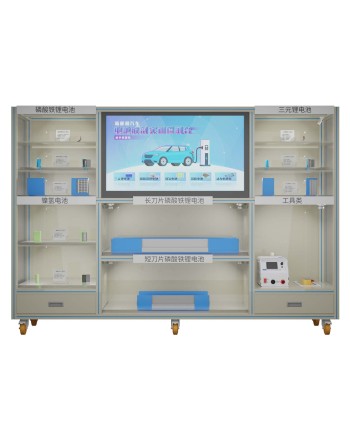
Reference : FXB-X04326 Educational Display Cabinets for Different Traction Battery Technologies
The FXB-X04326 is an educational training system designed for the study, identification and comparison of different battery technologies used in electric and hybrid vehicles. It provides a comprehensive presentation of Lithium Iron Phosphate (LFP), Ternary Lithium-Ion (NMC) and Nickel-Metal Hydride (Ni-MH) batteries in various configurations, including prismatic, cylindrical and pouch cells.
The system integrates three-compartment display cabinets, a built-in touchscreen of at least 43 inches, complete and dissected battery samples, battery charging and discharging equipment, internal resistance testing instruments, and multimedia teaching resources. It enables students to perform practical activities involving battery identification, characterization, electrical measurements, performance testing and comparative analysis of different traction battery technologies.
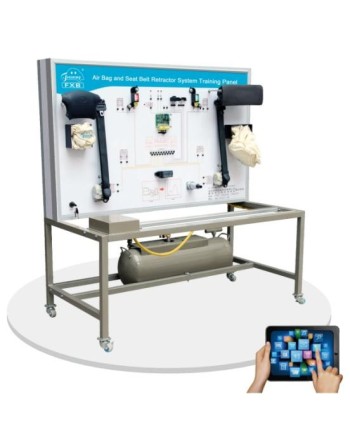
Reference : FXB-I19003 Airbag and Seat Belt Retractor System Training Panel
The FXB-I19003 is an educational training panel designed to study automotive occupant restraint systems, particularly airbags and seat belt retractors. Based on an automotive restraint system architecture, it enables learners to examine the interaction between driver and passenger airbags, seat belts, the airbag control unit, and passenger presence detection sensors. Featuring a simulation system, electrical measurement terminals, an EOBD diagnostic interface, and a fault simulation system, it provides a comprehensive training solution for automotive safety, electronic diagnostics, and restraint system maintenance.
The FXB-I19003 enables learners to study airbag system architecture, the role of seat belts and passenger presence sensors, electronic control principles, electrical measurement methods, and fault diagnosis procedures. It is suitable for practical training in automotive safety and the maintenance of electronic vehicle systems.
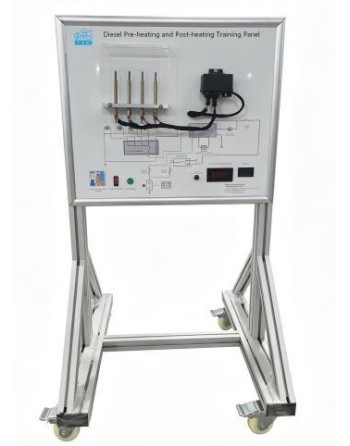
Reference : FXB-A21002 Diesel Engine Preheating and Postheating Training Panel
The FXB-A21002 training panel is designed for studying, demonstrating, and diagnosing diesel engine preheating and postheating systems. Based on a diesel engine configuration, it enables learners to analyze the operating cycles of glow plugs, the glow plug relay, and the electronic control module. Equipped with electrical measurement terminals and a fault simulation system, it allows trainees to perform measurements, identify malfunctions, and conduct diagnostic exercises under different engine temperature conditions. It is suitable for technical education institutions, vocational training centers, and automotive maintenance laboratories.
The FXB-A21002 training panel is particularly suitable for training courses covering:
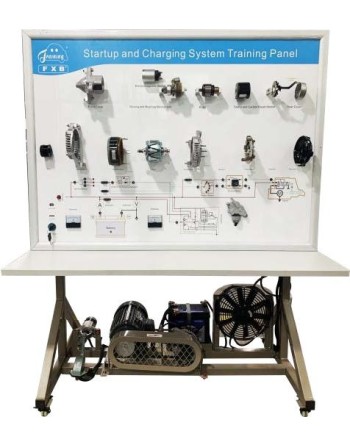
Reference : FXB-A12003FXB-A12003 Automotive Starting and Charging System Training Panel
The FXB-A12003 is a training panel designed to demonstrate the starting and charging systems of Volkswagen vehicles, based on the Volkswagen Magotan architecture. It enables trainees to understand the operating principles of the starter motor, alternator, and 12 V battery while performing electrical measurements and practical diagnostic exercises. Equipped with test terminals and a wireless fault simulation and assessment system, it is suitable for technical education and vocational training in automotive maintenance.
The FXB-A12003 training panel is suitable for vocational training centers, technical institutes, and educational establishments specializing in automotive maintenance. It supports practical training in the following areas:
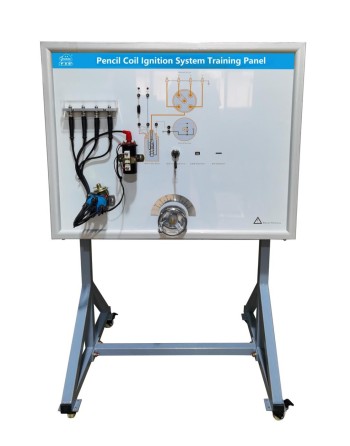
Reference : FXB-A09002 Pencil Coil Ignition System Training Panel
The FXB-A09002 training panel is designed to demonstrate the operation of an automotive pencil-coil ignition system using real components. Suitable for theoretical instruction and practical training, it helps learners study system architecture, analyze electrical signals, examine ignition timing and develop fault-diagnosis skills.
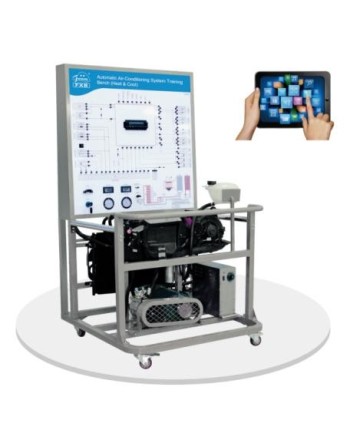
Reference : FXB-I02002 Automatic Automotive Air Conditioning Training Bench
The FXB-I02002 training bench is designed for the study, demonstration, and diagnosis of automatic automotive air conditioning systems incorporating heating and cooling functions. Based on an operational automotive air conditioning system, it enables trainees to analyze refrigeration circuits, control components, and the electronic air conditioning control unit.
Equipped with pressure gauges, thermometers, electrical measurement terminals, and a fault simulation system, this training bench allows trainees to measure pressure, temperature, and electrical signals, as well as perform diagnostic exercises, leak detection, and refrigeration circuit servicing activities. It is suitable for technical education institutions, vocational training centers, and laboratories specializing in automotive maintenance.
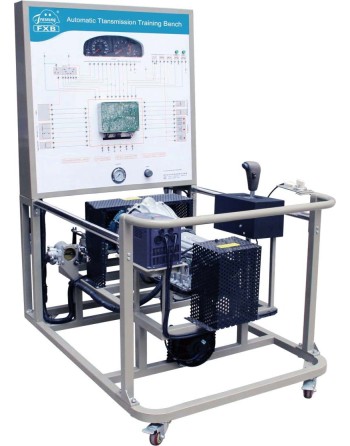
Référence : FXB-B01007 All-Wheel-Drive Automatic Transmission and Differential Training Bench
The FXB-B01007 training bench is designed for practical instruction in the operating principles of all-wheel-drive (AWD) automatic transmission systems. Featuring a cutaway automatic transmission and differential, it enables learners to observe key mechanical components and understand their operation, including the torque converter, planetary gear sets, clutch discs, and gear-shifting mechanisms.
Equipped with an electric motor for dynamic operation, a gear selector lever, and an instructional panel displaying mechanical and hydraulic diagrams, this training bench is suitable for vocational training centres, technical institutes, engineering schools, and automotive training laboratories.
This training bench is intended for practical exercises and demonstrations in automotive mechanics, automatic transmissions, all-wheel-drive systems, and vehicle maintenance. It is suitable for vocational training centres, technical institutes, engineering schools, and specialised automotive technology laboratories.
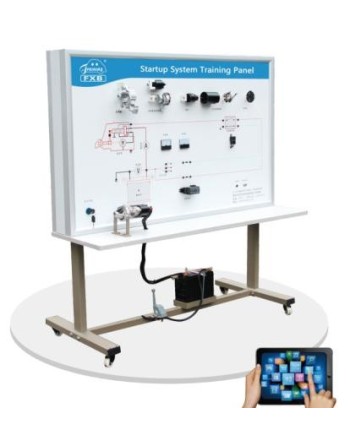
Reference : FXB-A12008 Automotive Starting System Training Panel
The FXB-A12008 is an educational training panel designed for the practical study of automotive starting systems, based on the Volkswagen Jetta configuration. It enables learners to understand starter motor operation, associated electrical circuits and the main stages involved in cranking an engine.
Featuring real components, an ammeter, a voltmeter and electrical measurement terminals, this equipment supports practical training in inspection and troubleshooting procedures. Its fault simulation system makes it suitable for technical schools, vocational training centers and automotive maintenance laboratories.
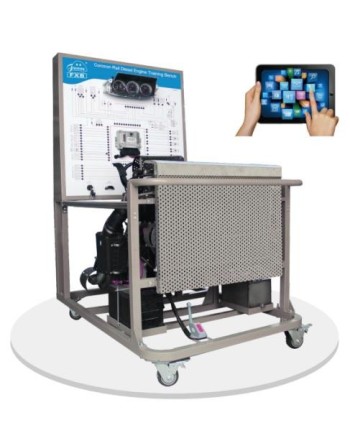
Référence : FXB-A18005 Common Rail Diesel Engine Training Bench
The FXB-A18005 training bench is designed for studying the operation, diagnostics, and maintenance of electronically controlled high-pressure Common Rail diesel engines. Based on an engine from a Great Wall Pickup vehicle, it enables trainees to simulate different engine operating conditions and investigate electronic engine management, fuel injection, and turbocharging systems.
Equipped with measurement terminals, an automotive diagnostic interface, and a wireless fault simulation system, this training bench is suitable for technical schools, vocational training centers, and institutions specializing in automotive maintenance.
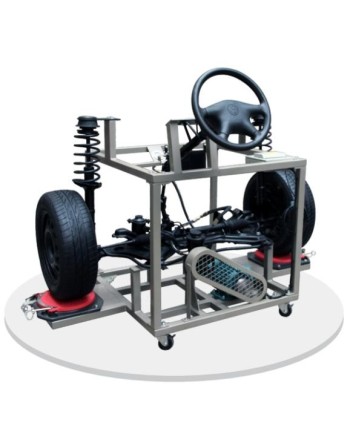
Reference : FXB-F01001 Power Steering and Independent Suspension Training Bench
The Power Steering and Independent Suspension Training Bench is based on the front axle assembly of a Volkswagen Jetta. It is designed to provide a practical demonstration of the structure, operating principles, and functionality of the power steering and front independent suspension systems.
This automotive training equipment is intended for technical and vocational schools, vocational training centers, and institutions specializing in automotive education. It provides a practical teaching platform for theoretical instruction and hands-on training in steering and suspension systems.
The training bench supports component identification, functional demonstrations, operating simulations, and practical assembly and disassembly exercises.
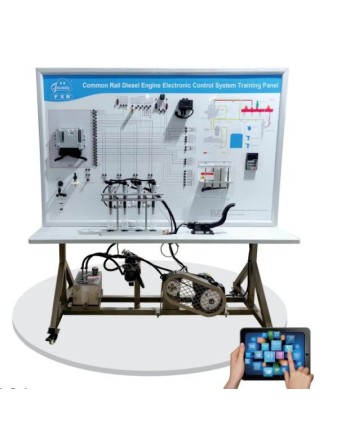
Reference : FXB-A21001 Common Rail Diesel Engine Electronic Control System Training Panel
The FXB-A21001 training panel is designed for learning, studying and diagnosing electronic control systems used in Common Rail diesel engines. Based on a Bosch-type engine management architecture, it incorporates real components to demonstrate the operation of sensors, actuators, the engine control unit (ECU) and the high-pressure fuel injection circuit.
Equipped with measurement terminals, an OBD-II diagnostic interface and an intelligent fault-setting and assessment system, this training panel enables learners to develop practical skills in signal analysis, electronic diagnostics and fault finding. It is suitable for technical schools, vocational training centres and institutions specialising in automotive maintenance.
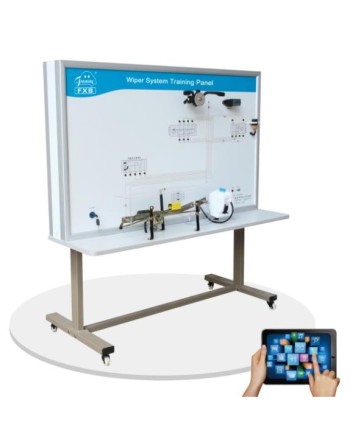
Reference : FXB-I14009
The FXB-I14009 training panel is designed for studying and demonstrating the operation of automotive windshield wiper and washer systems. Based on a Volkswagen vehicle system, it enables learners to operate the main wiping modes, including intermittent, low-speed, and high-speed wiping, as well as the windshield washing function. Equipped with electrical test points and an intelligent fault simulation system, it is a suitable educational solution for technical education institutions, vocational training centers, and automotive maintenance laboratories.
The FXB-I14009 training panel is particularly suitable for training courses covering:
Reference : FXB-X06005 Plateforme didactique de diagnostic et de simulation de pannes pour véhicules électrique
The FXB-X06005 is a professional educational platform designed for studying, analyzing, testing, and diagnosing the electrical and electronic systems of modern electric vehicles. Based on a complete 2025 BYD Dolphin 420 km electric vehicle, the platform features a specially modified and sectioned vehicle that provides direct visibility of major components, their installation positions, and their interconnections.
Combined with a dedicated fault-setting and diagnostic connection panel, this training system enables instructors to demonstrate vehicle operating principles, perform electrical measurements, and conduct practical troubleshooting exercises on the vehicle's main systems.