

References
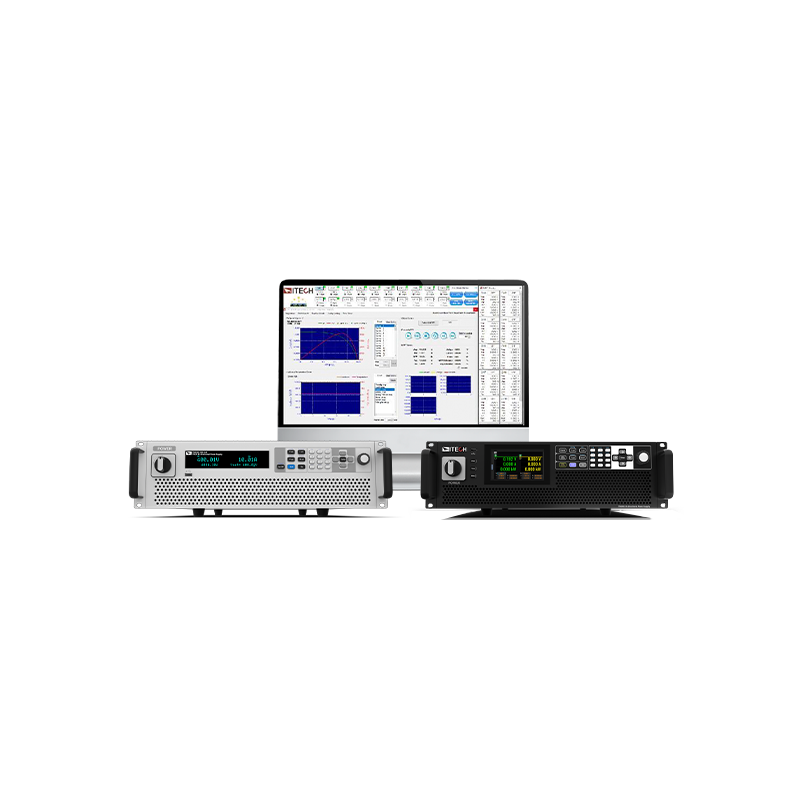
SAS1000 Solar array software for IT6500C/IT6000B/IT6000C/IT-M3600
SAS1000L Solar array software for IT6500C/IT6000B/IT6000C/IT-M3600 (power ≤15kW)
SAS1000M Solar array software for IT6500C/IT6000B/IT6000C/IT-M3600 (multi-channel)
ITECH introduces its latest high-speed, high-performance photovoltaic simulation solution. When combined with high-power DC power supplies, the SAS1000/L solar array simulation software accurately reproduces solar array I-V curves, with output voltage up to 2250 V and scalable system power up to 10 MW.
The system delivers fast dynamic response, excellent control accuracy, high repeatability, outstanding stability, and precision performance. It features built-in simulation models compliant with EN 50530, Sandia National Laboratories PV model, NB/T 32004, CGC/GF004, and CGC/GF035.
Users can easily configure test regulations, material types, Vmp, Pmp, and other parameters to simulate I-V curve characteristics and automatically generate test reports. The software is ideal for static and dynamic maximum power point tracking (MPPT) performance testing of photovoltaic inverters.
ITECH’s high-speed, high-performance photovoltaic simulation power supply integrates advanced high-power DC hardware with the SAS1000 solar array simulation platform.
The solution includes more than 200 models covering a wide voltage and current range, with output capabilities up to 2250 V and 2040 A. A single system can address a broad spectrum of application requirements, simplifying model selection for users.
The photovoltaic simulation power supply supports independently adjustable edge times for each operating mode, seamless two-quadrant current switching, and comprehensive protection functions, including OVP, OCP, OPP, OTP, and reverse Vsense protection.

The system features an intuitive graphical user interface that enables users to easily configure output parameters, perform measurements, monitor the maximum power point tracking (MPPT) status of photovoltaic inverters in real time, and record test data.
Built-in regulatory test procedures compliant with EN 50530, Sandia National Laboratories protocols, NB/T 32004, CGC/GF004, and CGC/GF035 allow users to evaluate both static and dynamic MPPT performance and automatically generate comprehensive test reports for benchmarking purposes.
The solar simulation power supply also includes Shadow Mode and Table Mode:

Solar cell performance is influenced not only by intrinsic electrical characteristics but also by environmental factors such as season, temperature, irradiation, cloud cover, rain, and snow. As a result, I-V characteristics vary over time.
Photovoltaic inverters must dynamically adjust the operating point of the solar array to ensure operation near the maximum power point (MPP)—a process known as MPPT.
ITECH’s photovoltaic simulation power supply enables precise laboratory simulation of real-world solar array behavior, including Fill Factor configuration, allowing comprehensive validation of both static and dynamic MPPT performance under controlled conditions.

MPPT tracking capability is a critical performance indicator for photovoltaic inverters. To ensure consistent evaluation across different products, industry organizations have established standardized test profiles.
The built-in MPPT test programs compliant with EN 50530, Sandia National Laboratories protocols, NB/T 32004, and CGC/GF004 enable users to configure parameters such as Vmp, Pmp, material type, test duration, and maximum power percentage.
During testing, the system displays the I-V curve and real-time tracking process on screen, records data throughout the entire test cycle, and automatically generates detailed reports for MPPT performance verification.

ITECH’s photovoltaic simulation power supply allows users to simulate solar array output under various shading conditions to evaluate real-time maximum power tracking and array performance.
The system provides multiple predefined PV module models from different suppliers and also enables users to create custom PV module configurations.
Users can define:
This advanced shadow simulation capability ensures realistic and repeatable testing of inverter performance under complex environmental conditions.


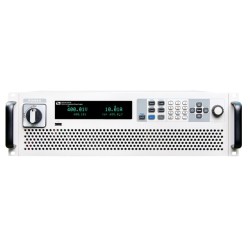
The IT6000C series is a bidirectional programmable DC power supply featuring third-generation SiC (Silicon Carbide) technology. It integrates both source and sink (load) functions into a single unit, enabling multi-quadrant operation.
With its advanced energy regeneration capability, the IT6000C feeds absorbed energy cleanly back into the grid. This significantly reduces overall power consumption and cooling requirements, while maintaining grid stability and power quality.
The IT6000C series provides an output voltage of up to 2250 V and supports parallel operation in a master-slave configuration with balanced current sharing. Total system power can be expanded up to 2 MW.
An integrated waveform generator enables the creation of arbitrary waveforms and supports LIST file import via the front-panel USB port. Combining high reliability, optimized efficiency, and comprehensive protection and measurement functions, the IT6000C is an ideal solution for demanding R&D, validation, and industrial testing applications.
References
IT-N2121 Solar array simulator 80 V, 25 A, 800 W
IT-N2131 Solar array simulator 80 V, 25 A, 1500 W
IT-N2123 Solar array simulator 150 V, 10 A, 800 W
IT-N2133 Solar array simulator 150 V, 10 A, 1500 W
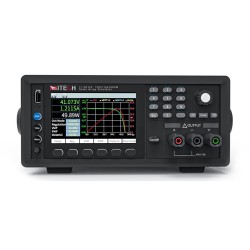
The IT-N2100 Series Solar Array Simulator is a high-performance DC power supply designed to accurately replicate real-world photovoltaic (PV) array behavior. With ultra-fast I–V curve response and advanced simulation capabilities, it enables precise testing of solar microinverters, power optimizers, and PV power systems under dynamic environmental conditions.
The system faithfully reproduces solar panel characteristics across varying temperature, irradiance, shading, and aging scenarios. Its high-voltage architecture, ultra-low ripple performance, and rapid MPPT response make it an ideal solution for R&D, validation, and production testing environments.
The IT-N2100 provides a reliable, flexible, and standards-compliant solution for advanced photovoltaic system validation.
References
SAS1000 Solar array software for IT6500C/IT6000B/IT6000C/IT-M3600
SAS1000L Solar array software for IT6500C/IT6000B/IT6000C/IT-M3600 (power ≤15kW)
SAS1000M Solar array software for IT6500C/IT6000B/IT6000C/IT-M3600 (multi-channel)
ITECH introduces its latest high-speed, high-performance photovoltaic simulation solution. When combined with high-power DC power supplies, the SAS1000/L solar array simulation software accurately reproduces solar array I-V curves, with output voltage up to 2250 V and scalable system power up to 10 MW.
The system delivers fast dynamic response, excellent control accuracy, high repeatability, outstanding stability, and precision performance. It features built-in simulation models compliant with EN 50530, Sandia National Laboratories PV model, NB/T 32004, CGC/GF004, and CGC/GF035.
Users can easily configure test regulations, material types, Vmp, Pmp, and other parameters to simulate I-V curve characteristics and automatically generate test reports. The software is ideal for static and dynamic maximum power point tracking (MPPT) performance testing of photovoltaic inverters.