
- New

Référence :
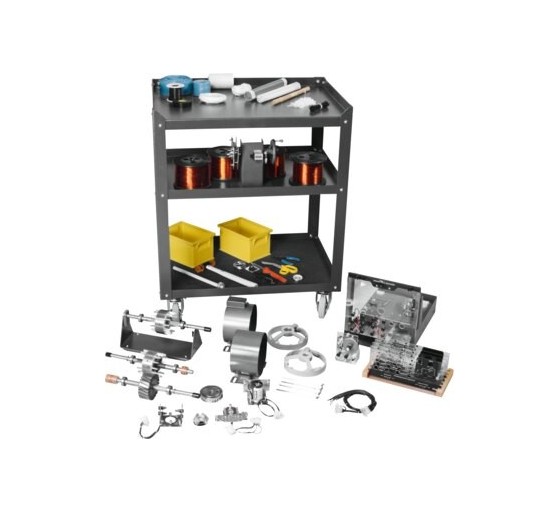
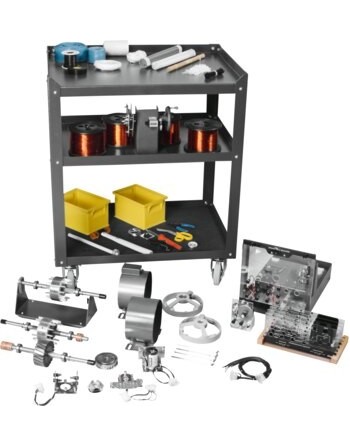
The Motor Winding Kit provides a comprehensive educational solution for learning the manufacturing, winding and assembly techniques used in electrical machines. Starting from basic components such as magnetic laminations, motor end frames and magnet wire, students can construct several types of rotating electrical machines, including three-phase squirrel-cage induction motors, three-phase wound-rotor induction motors, three-phase synchronous machines and single-phase split-phase motors with starting capacitors.
This training kit offers a practical and progressive approach to electrical machine construction, from winding fabrication to mechanical assembly and commissioning. It includes the materials, tools, winding accessories and instructional resources required to repeatedly manufacture and assemble different machine configurations.
The practical training manual describes the winding techniques, assembly procedures and operating principles of the machines constructed. It guides students through every stage, from familiarization with the components to the complete construction of electrical machines.
The Motor Winding Kit is designed to help students understand and master the manufacturing techniques used in rotating electrical machines. It provides a hands-on approach to motor and synchronous machine construction using basic components such as magnetic laminations, shafts, mechanical parts and insulated copper magnet wire.
The kit includes two types of stator laminations for constructing single-phase or three-phase windings. Three rotor configurations are also provided:
The rotors are built around a double-ended stainless-steel shaft, onto which the ball bearings and laminations are permanently assembled. Students can therefore manufacture and assemble several electrical machine configurations by following the instructional procedures provided.
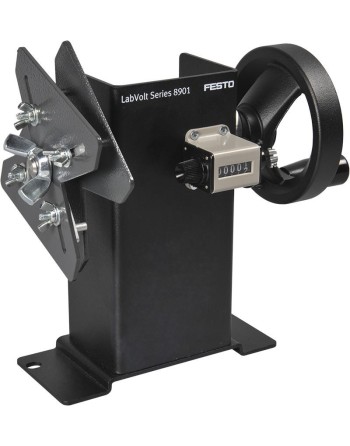
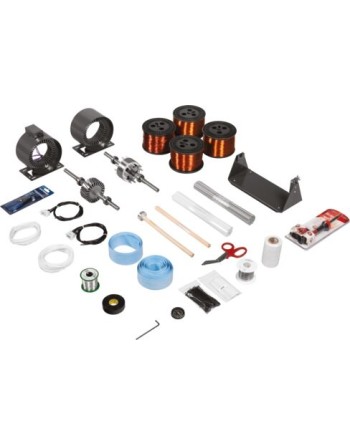
The kit includes a manual coil winder fitted with an adjustable mandrel and a turn counter, facilitating the production of windings according to the technical specifications provided in the manual. All necessary materials are supplied, including insulated magnet wire, slot liners, insulating materials, wooden wedges and lacing cord.
The essential tools required for winding and assembly operations are also included: a plastic mallet, scissors, wire stripper, soldering iron and compass. The supplied materials are sufficient to wind each type of machine at least five times.
Once the stators and rotors have been wound, students follow detailed procedures for mechanical and electrical assembly. The assembled machines can be mounted on a dedicated support module using clamps and wing nuts. Machine windings are connected to the corresponding module terminals through a polarized connector.
Each machine is provided with an interchangeable cover displaying its rated specifications and winding diagrams. Electrical components such as capacitors, centrifugal switches and potentiometers can be attached to the machine or its base using dedicated tool-free fastening systems.
The assembled machines can subsequently be integrated into a compatible EMS training workstation and operated like conventional preassembled electrical machines. This configuration enables students to perform practical experiments and investigate the operating characteristics of different machine types. The workstation and the equipment required to operate the assembled rotating machines are available as optional accessories.
After each experiment, the windings can be removed from the slots, allowing the stator and rotor laminations to be reused for further winding exercises.
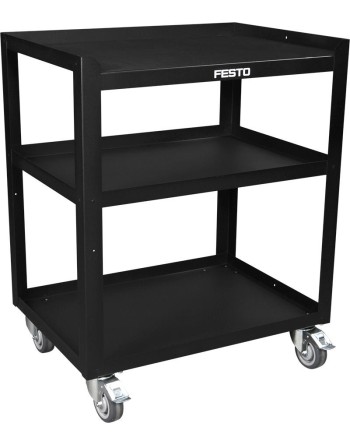
A mobile workbench specifically designed for the Motor Winding Kit. It includes a component storage area and a working surface suitable for winding and assembling electrical machines.
A manual coil winding device equipped with an adjustable mandrel and turn counter, enabling students to manufacture different windings according to the specifications provided in the instruction manual.
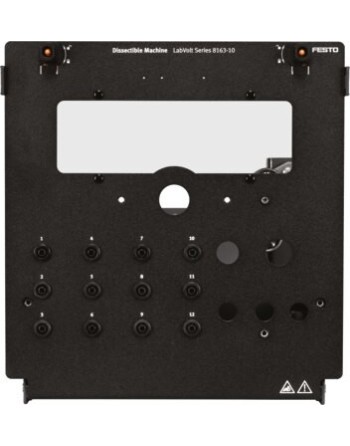
A machine-sized support module specifically designed to accommodate electrical machines constructed using the educational dismantlable machines system or the Motor Winding Kit.
A set of winding materials and consumables including lacing cord, slot liners, insulating materials, wooden wedges and insulated magnet wire. It provides sufficient materials to construct all machines included in the kit five times.
The laboratory manual guides students through the different winding and assembly experiments involving electrical machines.

Reference : 8200388 - Servo Motor Control Technology TP1421
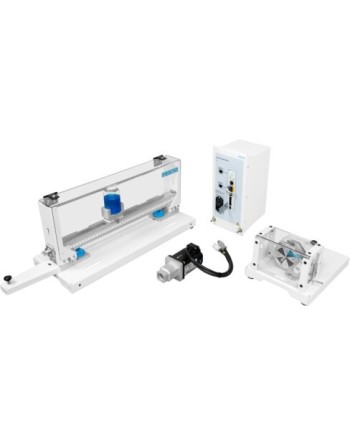
The TP1421 training system provides a flexible, safe, and industry-oriented learning environment for servo motor and stepper motor control technology. This comprehensive solution enables learners to develop practical skills in installation, configuration, commissioning, maintenance, and troubleshooting of industrial drive systems.
The training package is based on the “Servo Motor Control” course, available either as a digital course through Festo LX or as a practical workbook. The learning activities combine theoretical knowledge with hands-on applications to strengthen the technical and operational skills of automation specialists, industrial electricians, maintenance technicians, and electrotechnicians.
Learners gain practical experience in the following areas:

Reference :
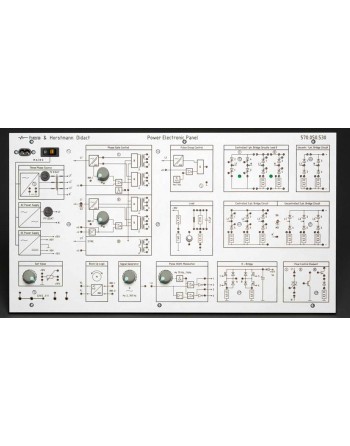
The Power Electronics Panel is a compact training system designed for performing experiments in power electronics on DC, single-phase AC, and three-phase AC circuits using a safe low-voltage approach.
The panel includes integrated resistive, inductive, and capacitive loads, enabling a comprehensive understanding of power electronics behavior and applications.
An optional motor/generator module can be added to extend the system capabilities to electromechanical and control system applications.
Reference :
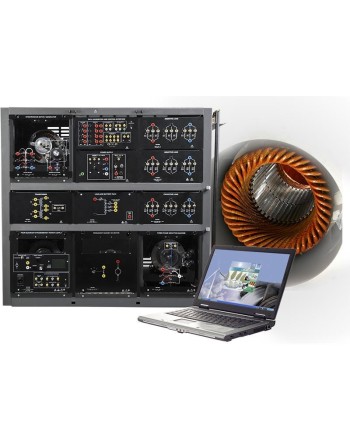
A comprehensive and modular educational solution designed for the study of electrical energy fundamentals, single-phase and three-phase electrical circuits, transformers, rotating electrical machines, and power factor correction. Featuring a four-quadrant dynamometer and computerized data acquisition and control interface, this system provides hands-on electromechanical training for universities, engineering schools, technical institutes, and vocational training centers.
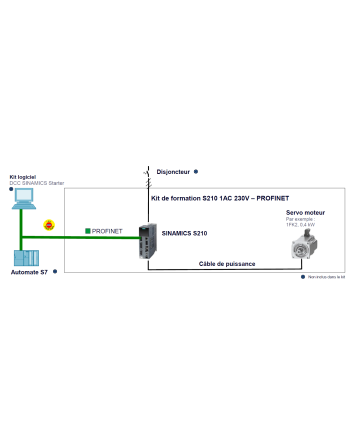

Reference : 6SL5990-0AT30-0AB0 Standard SINAMICS S210 Training Kit for 220 V Single-Phase Power Supply, PROFINET
Educational training kit designed only for engineering schools, universities, technical institutes, and vocational training centers teaching industrial motion control and servo drive technologies. The kit includes a SINAMICS S210 servo drive, a SIMOTICS S-1FK2 servo motor, a pre-assembled connection cable, an 8 GB SD card with a safety license, and SINAMICS Startdrive V21 engineering software.
This training solution enables students to study motion control principles, drive parameterization, industrial PROFINET communication, and integrated safety functions.
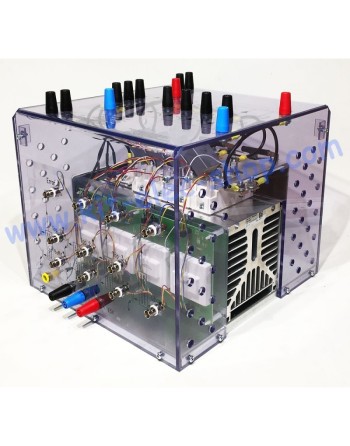

Reference : 08753450 Convertisseur multifonction à IGBT avec commandes rapprochées et protections intégrées
Thanks to its modular and configurable topology, this educational system covers the main industrial applications of power electronics. It provides a comprehensive solution for studying, experimenting with, and understanding the operation of IGBT-based power converters.
Référence :
The Motor Winding Kit provides a comprehensive educational solution for learning the manufacturing, winding and assembly techniques used in electrical machines. Starting from basic components such as magnetic laminations, motor end frames and magnet wire, students can construct several types of rotating electrical machines, including three-phase squirrel-cage induction motors, three-phase wound-rotor induction motors, three-phase synchronous machines and single-phase split-phase motors with starting capacitors.
This training kit offers a practical and progressive approach to electrical machine construction, from winding fabrication to mechanical assembly and commissioning. It includes the materials, tools, winding accessories and instructional resources required to repeatedly manufacture and assemble different machine configurations.
The practical training manual describes the winding techniques, assembly procedures and operating principles of the machines constructed. It guides students through every stage, from familiarization with the components to the complete construction of electrical machines.