
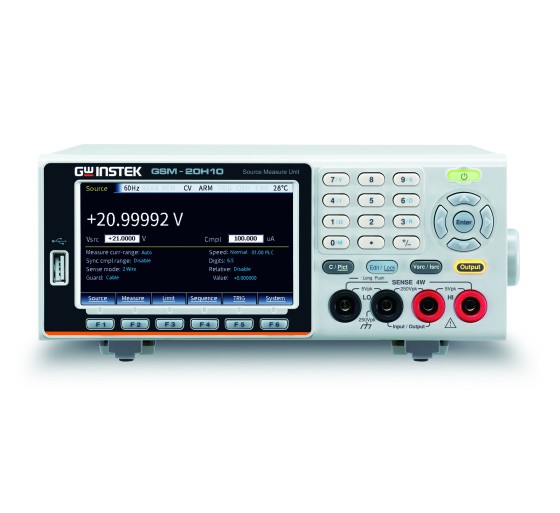
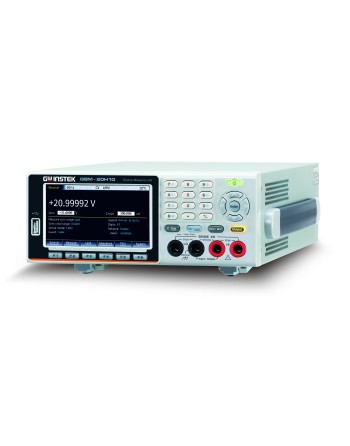

The GW Instek GSM-20H10 is a high-precision Source Measure Unit (SMU) that combines a highly stable DC power source with a 6½-digit precision multimeter.
During operation, the instrument can function as:
This versatility makes it ideal for component characterization and production testing applications, including:
The GSM-20H10 supports four-quadrant operation with a capability of ±210 V / ±1.05 A / 22 W. The first and third quadrants operate as power supplies to deliver power to the load, while the second and fourth quadrants function as electronic loads that internally absorb power.
While operating as either a power supply or load, the instrument can simultaneously measure:
with a basic accuracy of 0.012% and a resolution of:
For data acquisition, the GSM-20H10 supports a sampling rate of up to 50,000 points per second, enabling precise analysis of the Device Under Test (DUT).
Its 4.3-inch TFT color display clearly presents measurement settings, parameters, and results. The SDM (Source Delay Measure) function introduces a programmable delay before measurement, preventing unstable signals during transitions from affecting measurement accuracy.
The instrument also includes four programmable sequence output modes:
These modes allow up to 2500 programmable output sequence points, making the GSM-20H10 suitable for automated testing applications.
For protection, the GSM-20H10 includes:
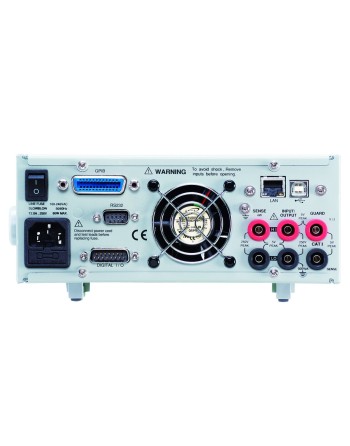
The instrument supports standard SCPI commands and provides multiple communication interfaces: RS-232, USBTMC, LAN, and optional GPIB, ensuring easy integration into automated test systems.
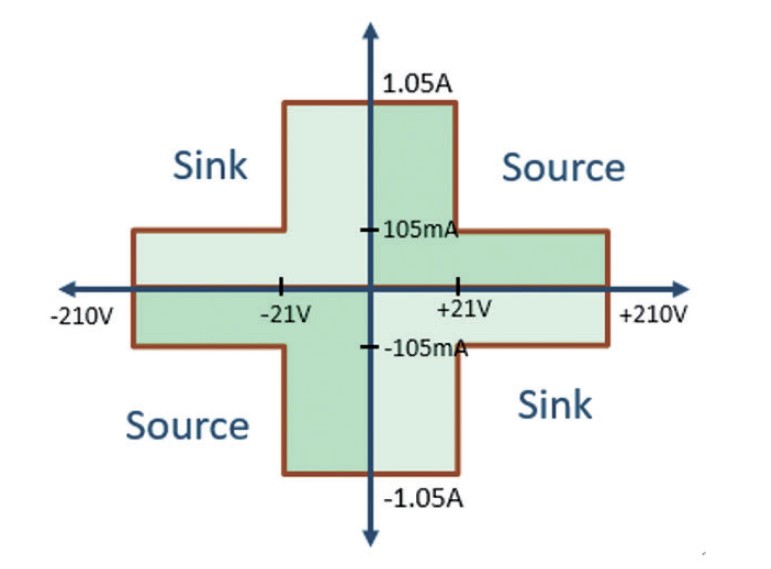
The GSM-20H10 power source provides two operating ranges. The first range offers a voltage output of ±21 V with a maximum current of ±1.05 A. The second range provides a voltage output of ±210 V with a maximum current of ±105 mA. The total power capacity is 22 W. The instrument also supports full four-quadrant operation without duty cycle limitations.
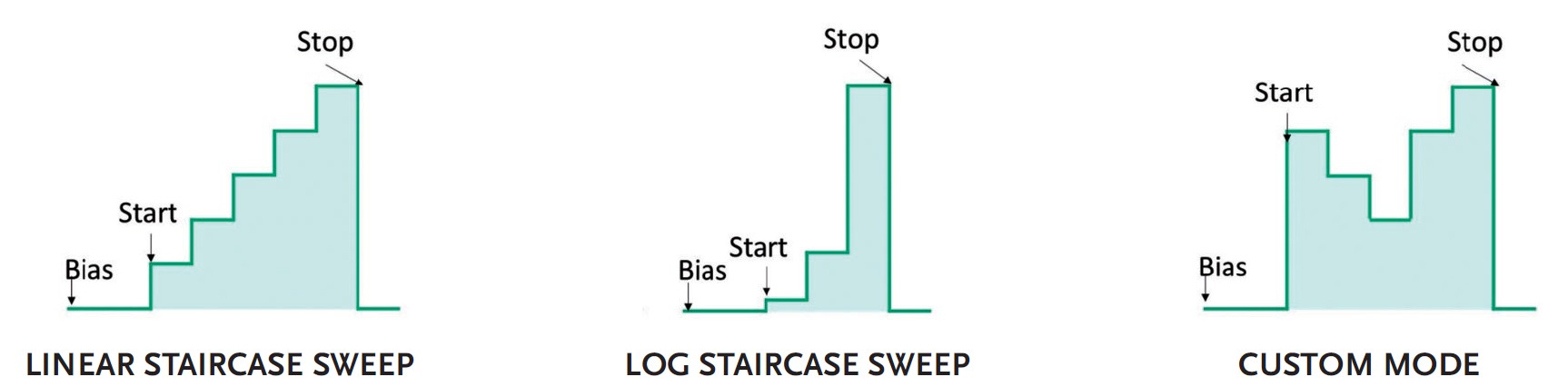
The GSM-20H10 Source Measure Unit includes four sequence output modes: Linear Staircase, Logarithmic Staircase, SRC-MEM (Source Memory), and Custom mode. These modes enable users to quickly generate the required output profiles for their testing applications. The system supports up to 2,500 sequence points in total.
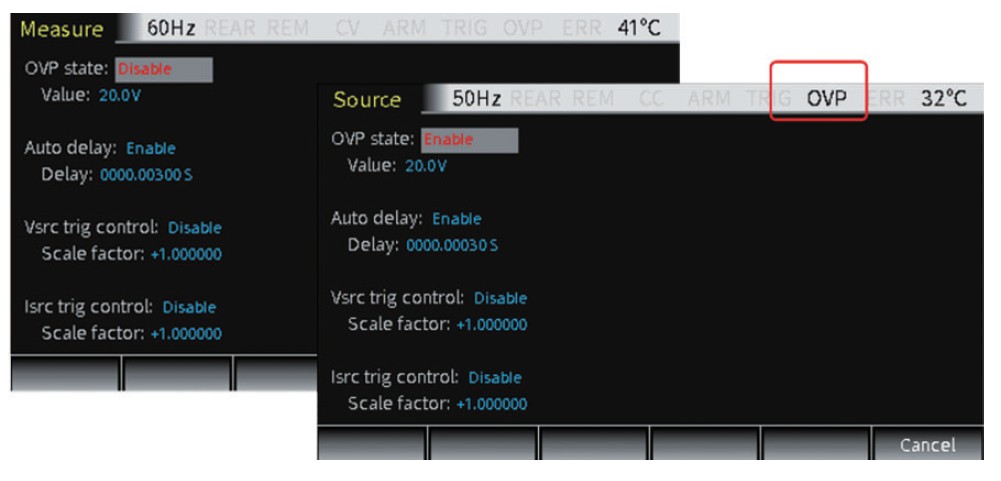
The GSM-20H10 integrates Over Voltage Protection (OVP) and Over Temperature Protection (OTP). The OVP function allows users to define the protection threshold range, while OTP protection helps prevent measurement errors caused by temperature drift during testing.
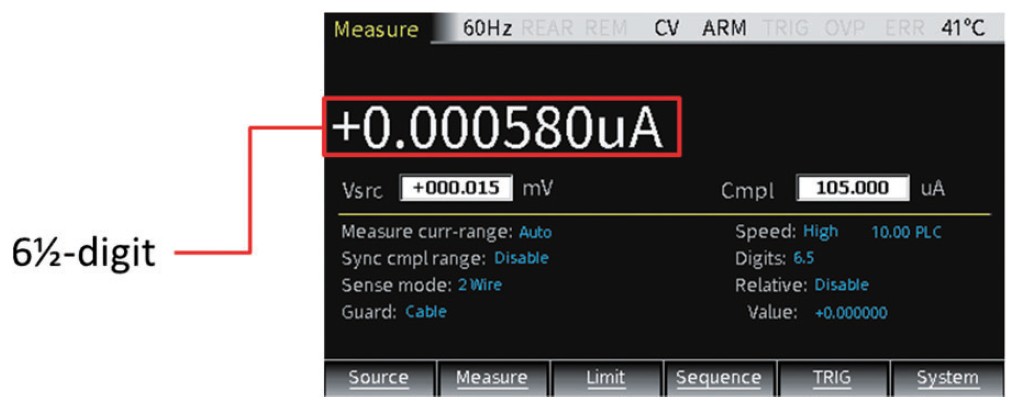
The GSM-20H10 delivers measurement accuracy of up to 0.012%. Its high-resolution display supports up to 6½ digits, enabling highly precise measurements, especially when working with low-level signals.

The sampling rate of the GSM-20H10 is adjustable to meet various measurement requirements. Users can select a rate ranging from 0.01 PLC to 10 PLC. NPLC (Number of Power Line Cycles) represents the number of AC power cycles used for measurement integration. For example, with a 50 Hz AC power frequency, 1 PLC corresponds to 20 ms and 2 PLC corresponds to 40 ms.
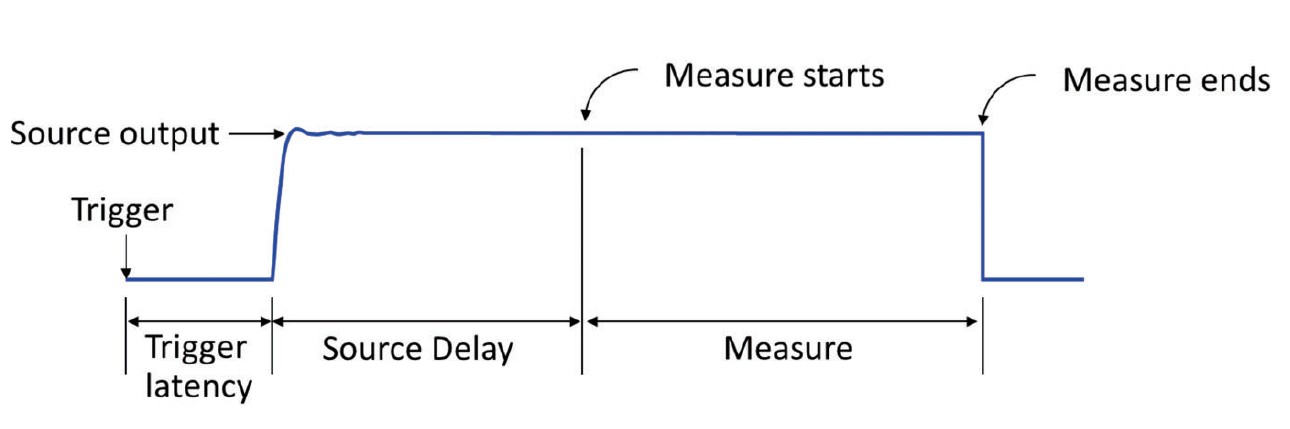
At startup, the source output may experience a brief instability. The GSM-20H10 allows users to configure a delay between the source output and the start of measurement. This delay ensures that measurements are taken only after the output stabilizes, providing more reliable results. The programmable delay range is from 0 to 9999.999 seconds.
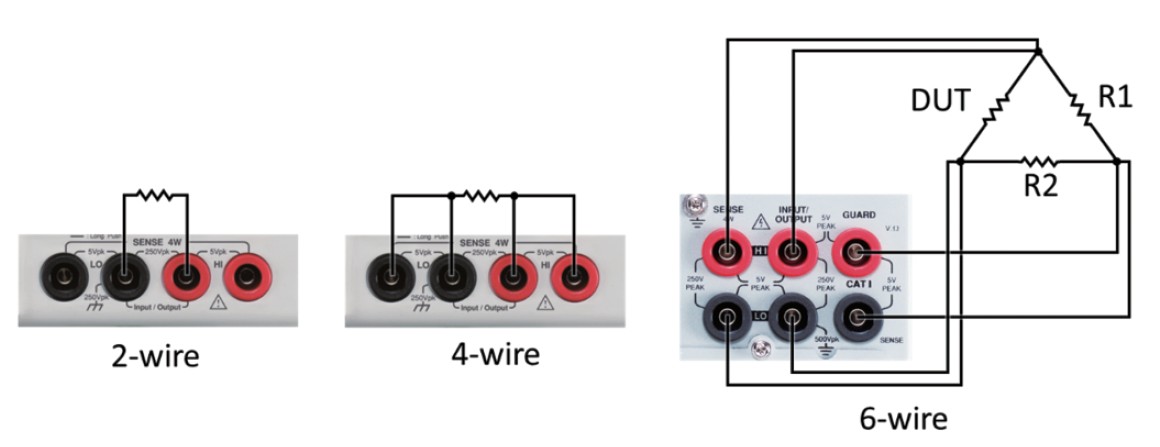
In addition to standard 2-wire measurements, the GSM-20H10 supports both 4-wire and 6-wire resistance measurement configurations. The 4-wire method eliminates the effect of lead resistance, enabling accurate measurement of low resistances below 100 ohms at high current levels. The 6-wire configuration combines the advantages of 4-wire connections with additional protection against internal parallel resistance, allowing precise measurement of extremely small resistances such as thin wires.
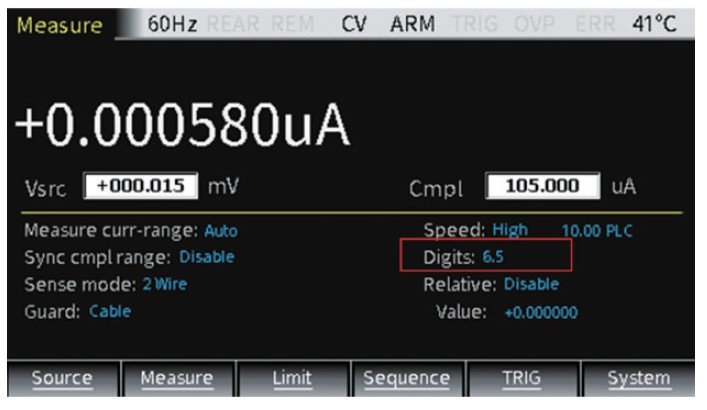
The GSM-20H10 display resolution is configurable. Users can select the number of display digits according to their measurement needs, choosing between 3.5, 4.5, 5.5, and 6.5 digits.
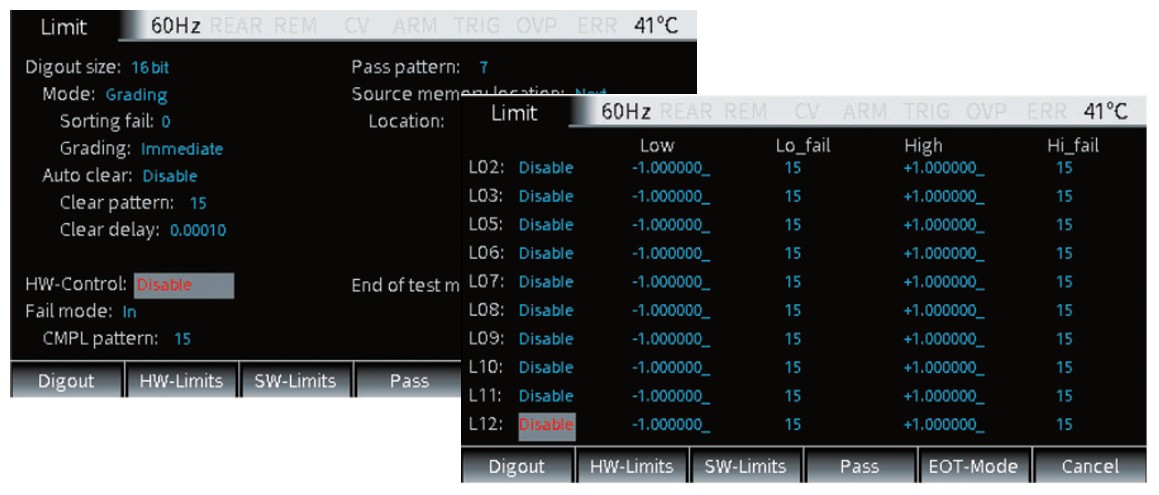
The GSM-20H10 includes a built-in Pass/Fail limit testing function. The instrument provides three limit lines and supports up to 11 configurable test parameter sets.
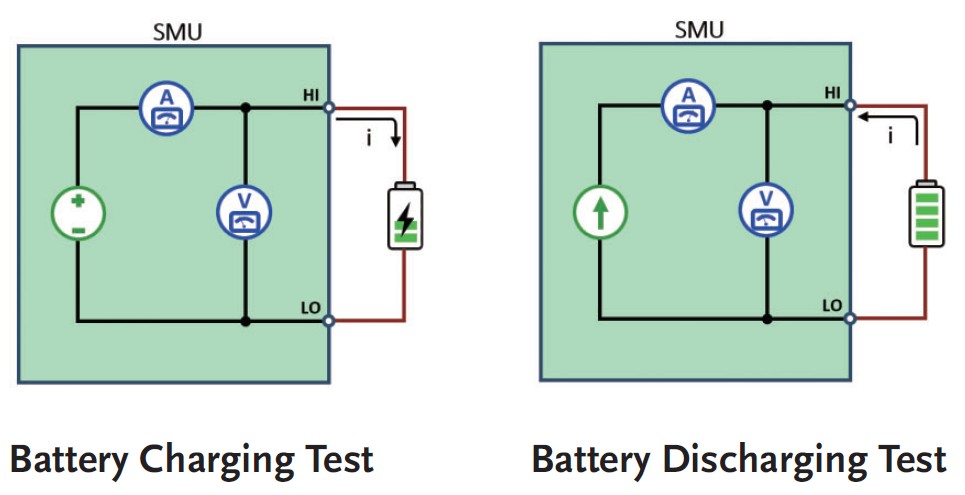
During charging tests, the GSM-20H10 operates as a voltage source with a voltage higher than that of the battery, causing current to flow from the SMU to the battery. During discharging tests, it acts as a load with a voltage lower than the battery voltage, allowing current to flow from the battery to the SMU.
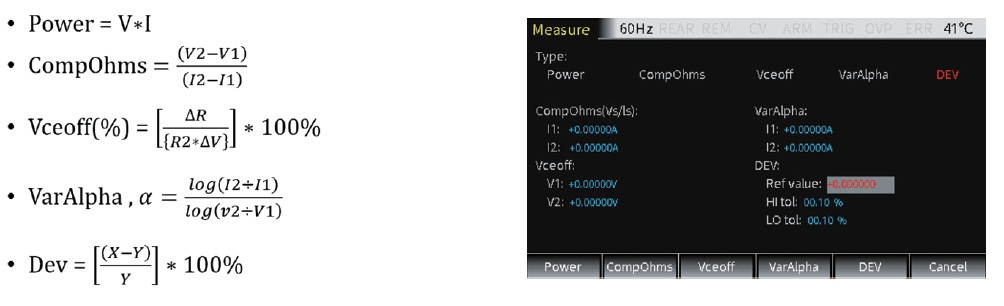
The GSM-20H10 provides five integrated calculation functions to simplify measurement analysis: Power calculation, Offset Compensation Ohms, Voltage Coefficient, Varistor Alpha, and Percent Deviation.


References
IT2801 Graphical Source Measure Unit (SMU) ±1000 V, ±1 A, ±20 W
IT2805 Graphical Source Measure Unit (SMU) ±200 V, ±1,5 A, ±20 W
IT2806 Graphical Source Measure Unit (SMU) ±200 V, ±3 A DC, ±10 A impulsions, ±20 W
IT2801R Graphical Source Measure Unit (SMU) ±1000 V, ±1 A, ±20 W, triaxial connector
IT2805R Graphical Source Measure Unit (SMU) ±200 V, ±1,5 A, ±20 W triaxial connector
IT2806R Graphical Source Measure Unit (SMU) ±200 V, ±3 A DC, ±10 A impulsions, ±20 W triaxial connector
The IT2800 Series is a next-generation Source Measure Unit (SMU) designed to deliver precision, versatility, and performance in a compact benchtop format. By integrating multiple test functions into a single instrument, it enables complete electrical characterization of electronic components with exceptional ease of use.
With true 4-quadrant sourcing and measuring capability, the IT2800 independently sources and measures voltage and current, ensuring highly accurate I–V characterization.
Covering an ultra-wide range from 10 fA to 10 A and 100 nV to 1000 V, the IT2800 supports both ultra-low current applications and high-voltage testing. Its advanced DC and pulsed measurement capabilities help minimize self-heating effects in the device under test (DUT), improving measurement reliability and accuracy.
The intuitive 5-inch touchscreen graphical user interface offers multiple display modes—including Graph View, Scope View, and Record View—significantly enhancing engineering productivity in both R&D and production environments.